CES 2026’s Top 10 Game-Changing Products: How AI Became the Heart of Everyday Tech

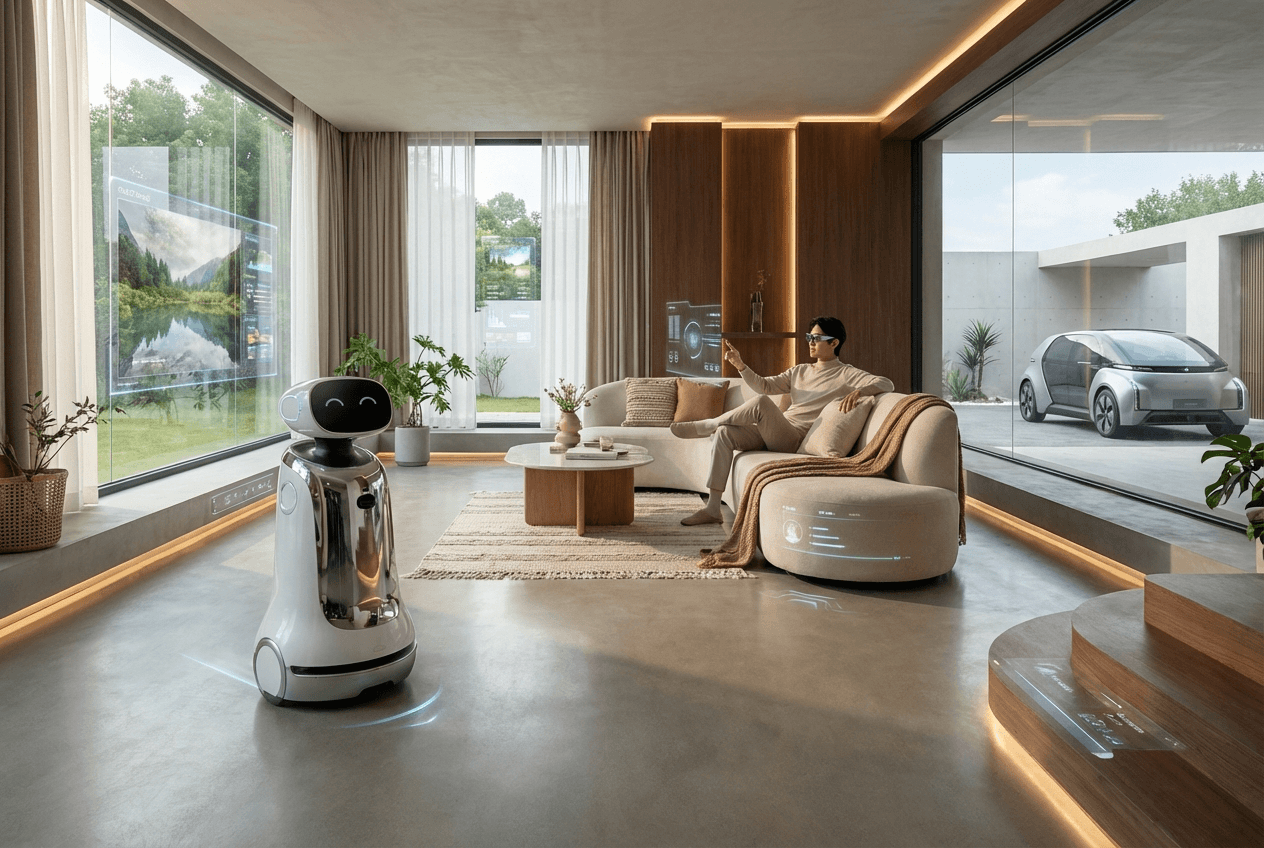
CES 2026: The 10 Products That Actually Matter
In a show defined by spectacle, CES 2026 delivered something rare: substance. Over the years, the Consumer Electronics Show has hosted its share of vaporware and futuristic prototypes, leaving journalists scrambling to distinguish hype from genuine breakthroughs. This year, however, marked a turning point. Artificial intelligence wasn’t just a buzzword peppered through press releases—it was the unifying force behind tangible, market-ready products poised to reshape how we live, work, and play.
This article breaks down the ten products from CES 2026 that genuinely matter—not because they made the biggest headlines, but because they signal real change. Each product was selected based on its degree of innovation, realistic impact on its market, and, most importantly, what it promises for consumers and businesses alike. If you’re a founder, builder, or tech enthusiast, these are the announcements that should be on your radar.
1. Nvidia Vera Rubin Platform
Category: AI Compute / Infrastructure
Why It Matters
The Nvidia Vera Rubin platform wasn’t just another chip launch—it’s a foundational leap for AI development. Until recently, large AI models were limited by massive hardware requirements, astronomical energy costs, and complicated deployment. Vera Rubin changes that, introducing a compute architecture built for trillion-parameter models at reasonable power envelopes.
Think about that for a moment. Trillion-parameter models—once the domain of cloud giants—are now accessible to enterprises and even advanced consumer applications. This opens up:
- Real-time, multimodal AI assistants that can process video, voice, and text simultaneously
- Enterprise AI deployments that don’t require a stadium’s worth of GPUs
- Smarter, context-aware edge devices (from autonomous vehicles to industrial robots)
Vera Rubin is also deeply modular. Companies can scale from developer boards to data center racks using the same ecosystem, unifying training and inference. Nvidia’s support for open-source frameworks and robust developer tools lowers the barrier for startups and enterprises.
Example Use Case:
A telemedicine startup could leverage Vera Rubin to deliver instant, privacy-preserving diagnostics on medical imagery without shipping sensitive data to the cloud—something that would have been unthinkable at consumer scale just a few years ago.
Founder Insight:
If you’re building AI-first products, the choice of hardware shapes your pricing, performance, and even go-to-market. Vera Rubin isn’t just a chip; it’s a platform for rapidly deploying sophisticated AI where your customers need it.
2. Sony–Honda AFEELA Gen 2
Category: Automotive / AI Mobility
Why It Matters
Electric vehicles aren’t new, nor are smart dashboards. What sets the AFEELA Gen 2 apart is its seamless blend of automotive engineering and the AI-driven, entertainment-rich experience Sony is known for.
This EV is a software-defined car in the truest sense. The real-time AI copilot system can:
- Interpret driver intent and adjust controls for comfort and safety
- Provide predictive route suggestions based on weather, traffic, and even driver preferences
- Serve as a personalized concierge, powered by Sony’s content ecosystem (music, movies, PlayStation integration)
What’s especially impressive is the transparency of the AI. Every action the copilot takes is surfaced to the driver, avoiding the dreaded black box experience that’s plagued other systems.
Example Use Case:
On a cross-country trip, the AFEELA’s AI system can preemptively schedule fast-charging stops, suggest locally relevant audio content, and recommend rest breaks based on driver fatigue—all while adjusting cabin conditions for individual passengers.
Founder Insight:
If you’re in automotive or mobility, expect the bar for user experience to rise sharply. The winning OEMs will be those who treat software and content as core differentiators—not afterthoughts.
3. Samsung Ballie Pro
Category: Home Robotics
Why It Matters
Home robots have often felt like solutions looking for problems—quirky, limited, and rarely indispensable. That changed with the unveiling of Samsung’s Ballie Pro. This isn’t a toy; it’s a true AI-powered home assistant.
Ballie Pro can:
- Navigate complex spaces using advanced vision-language models
- Identify household members and pets, adjusting its behavior dynamically
- Manage and orchestrate all connected smart devices, from lighting to appliances
- Proactively monitor the home for security or safety issues
What makes Ballie Pro special is its ability to learn routines and adapt. Forget pre-defined scripts—Ballie can watch, interpret, and optimize your daily life, from reminding you about medication to playing with your dog while you’re away.
Example Use Case:
For a busy family, Ballie Pro handles everything from making sure the doors are locked at night to setting up the living room for movie night, complete with dimmed lights and synchronized audio.
Founder Insight:
Home robotics is finally moving beyond gimmicks. Startups in this space must focus on cross-device intelligence and the ability to genuinely solve everyday pain points—not just showcase autonomy.
4. LG Transparent OLED Flex
Category: Display Technology
Why It Matters
Transparent displays have been teased for years, but LG’s Transparent OLED Flex is the first to hit commercial viability at scale. This isn’t just a party trick—LG solved the durability, brightness, and color fidelity challenges that previously held transparent displays back.
Key use cases include:
- Next-gen retail signage that blends physical and digital merchandising
- Automotive heads-up displays (HUDs) that provide real-time information without obstructing the driver’s view
- Home applications, such as windows that double as entertainment screens or display ambient information
Flexibility is the other breakthrough. The OLED Flex can wrap around curved surfaces, opening the door to immersive in-car dashboards and architectural installations.
Example Use Case:
An upscale boutique installs Transparent OLED Flex displays in its storefront. During the day, the windows remain clear, letting in natural light. After hours, targeted promotions, virtual mannequins, and interactive experiences come alive, all while maintaining a sleek, unobtrusive look.
Founder Insight:
Physical/digital convergence is accelerating. If you’re building products for spaces—retail, automotive, architecture—think about how displays can augment reality subtly rather than replacing it entirely.
5. Roborock OmniBot X
Category: Consumer Robotics
Why It Matters
Robot vacuums and mops have become household staples, but their functionality has always been siloed. Roborock’s OmniBot X marks the beginning of generalist AI home robots—machines that move beyond single-tasking to become true household assistants.
OmniBot X combines:
- Advanced cleaning (vacuum, mopping, spot cleaning)
- Real-time object recognition and hazard avoidance
- Voice-controlled household assistance (delivering items, managing chores, answering questions)
For the first time, consumers get a robot that can not only clean but also respond proactively to events—like fetching a forgotten item or warning you when a stovetop is left on.
Example Use Case:
You’re upstairs working when your child spills soda in the kitchen. The OmniBot X detects the spill, asks you for confirmation via your smartwatch, and cleans it up—all without you leaving your desk.
Founder Insight:
The leap from single-function to generalist home robots has massive implications. Startups should focus on multi-modal perception (vision, language, context) and seamless integration with existing smart home ecosystems.
6. Withings BeamO Health Hub
Category: Health Tech
Why It Matters
The Withings BeamO Health Hub is a shining example of real-world AI in healthcare. It consolidates four essential clinical tools—ECG, temperature scanner, pulse oximeter, and digital stethoscope—into a single, FDA-trackable consumer device.
This is a watershed moment for at-home diagnostics. The AI not only interprets results, but also identifies patterns and flags potential issues for medical review, linking directly to telehealth services when needed.
Example Use Case:
A parent notices their child is unwell. Instead of guessing or waiting for a doctor’s appointment, they use BeamO to check temperature, oxygen levels, heart and lung sounds, and receive an instant, AI-assisted assessment. The report can be sent directly to their pediatrician.
Founder Insight:
The future of health tech is integrated, easy-to-use, and privacy-first. If you’re building in this space, focus on delivering clinically meaningful insights—not just consumer data—and ensure regulatory compliance from day one.
7. Qualcomm Snapdragon X Elite Gen 2
Category: AI Computing
Why It Matters
Qualcomm’s Snapdragon X Elite Gen 2 chip blurs the line between mobile and laptop performance. Laptops powered by Gen 2 offer all-day battery life but are also optimized for on-device AI—think running large language models and generative tools without hitting the cloud.
This is pivotal for:
- Privacy-focused applications (local processing means no sensitive data leaves the device)
- Always-on AI assistants that can work offline
- Seamless, lag-free creative tools for video, music, and design
Snapdragon’s open SDK encourages a new wave of AI-native apps, especially from startups that want to differentiate on speed, privacy, and power efficiency.
Example Use Case:
A traveling business user edits a high-resolution video on their laptop, using AI tools to automatically clean up audio, generate closed captions, and suggest story cuts—all without an internet connection.
Founder Insight:
If your product depends on AI, consider the competitive edge of on-device intelligence. You’ll gain speed, privacy, and lower operating costs, plus a better user experience in bandwidth-constrained environments.
8. Lenovo ThinkBook Rollable AI PC
Category: Productivity / PCs
Why It Matters
Hybrid work demands flexible devices, and Lenovo’s ThinkBook Rollable AI PC is a masterclass in adaptive design. The laptop features a rollable display that expands from a compact, portable size to a full workstation setup at the push of a button.
This, combined with built-in AI features (context-aware meeting summaries, proactive workflow suggestions, and real-time translation), makes it a productivity powerhouse.
Example Use Case:
A startup founder moves from a cramped airplane seat to a coffee shop. On the plane, the ThinkBook is compact for in-flight tasks. At the café, the screen rolls out to provide a dual-monitor experience for deep work, while AI tools organize notes and action items from the morning’s meetings.
Founder Insight:
The line between hardware and software is blurring. Devices that adapt to context and amplify human productivity will define the next decade of enterprise tech. If you’re building productivity tools, think natively about hardware integrations and context-aware AI.
9. Bosch AI Cockpit 2026
Category: Automotive Software
Why It Matters
The car cockpit is becoming the most valuable real estate for technology companies. Bosch’s AI Cockpit 2026 is a holistic, AI-first platform that integrates multiple drivers of value:
- Driver monitoring and alertness detection using computer vision
- Predictive maintenance that learns from vehicle data and driver behavior
- Voice-first controls that reduce distraction and improve accessibility
The AI Cockpit delivers a seamless experience, understanding not just what’s happening with the vehicle, but how the driver is feeling and behaving.
Example Use Case:
A rideshare fleet operator uses cars equipped with the AI Cockpit. The system identifies when drivers are fatigued, suggests breaks, and automatically books service appointments when predictive maintenance detects an issue—minimizing downtime and improving safety.
Founder Insight:
Automotive software is moving fast. To remain competitive, focus on holistic, context-aware experiences—not just adding features but understanding how they work together in real-world driving scenarios.
10. Meta Smart Glasses Pro
Category: Wearables / XR
Why It Matters
Meta’s new Smart Glasses Pro represent a pragmatic turn for AR wearables. Instead of chasing the elusive metaverse, Meta zeroed in on AI that augments daily life.
Key features include:
- Vision recognition for objects, places, and people, surfacing relevant information as you move through the world
- Real-time translation for conversations and signage
- Seamless photo and video capture, organized by AI for easy retrieval and sharing
The glasses are lightweight, stylish, and prioritize privacy by keeping processing mostly on-device and providing clear visual cues when recording.
Example Use Case:
While traveling abroad, a user receives instant translations of street signs and menus, while the glasses quietly catalog memorable moments throughout the day—no phone required.
Founder Insight:
XR’s future lies in subtle, context-aware augmentation—not world replacement. Products that seamlessly blend into daily routines, respect privacy, and solve real problems will win mass adoption.
The Big Picture: AI Is Now the Product
CES 2026 was a turning point. Artificial intelligence isn’t a niche feature anymore—it’s the foundation for the next era of innovation. The most impactful products weren’t the glitzy concept cars or outlandish VR headsets but rather the everyday devices quietly supercharged by AI.
The New Rules of Tech Innovation
For startup founders and product leaders, several critical lessons emerged:
- AI as Infrastructure: The most transformative products treat AI not as a bolt-on but as core infrastructure—powering everything from user experience to hardware efficiency.
- Cross-Device Intelligence: Solutions that span multiple platforms, contexts, and form factors (like Ballie Pro and Roborock OmniBot X) provide far more value than those stuck in a single-device mindset.
- Transparency and Trust: Products like AFEELA Gen 2 and Meta Smart Glasses Pro make AI decisions visible and understandable, building user trust and adoption.
- Privacy-First Design: On-device computation (see Snapdragon X Elite Gen 2, Meta Smart Glasses Pro) is no longer just a perk; it’s a competitive imperative as users demand more control over their data.
- Human-Centered Augmentation: The winners aren’t trying to replace humans but to augment and empower them—whether it’s helping a parent care for a sick child (Withings BeamO) or giving drivers a safer, less stressful commute (Bosch AI Cockpit).
What Comes Next?
Looking ahead to CES 2027 and beyond, the conversation will shift. “AI-powered” will no longer be a differentiator—it will be table stakes. The focus will move to who can make AI:
- More invisible, blending seamlessly into the background
- More adaptive, learning from each user and context
- More trustworthy, with transparent and fair decision-making
Founders who internalize these lessons and build AI not as a marketing headline but as the backbone of a better user experience will shape the next decade of consumer and enterprise technology.
Actionable Insights for Startups and Innovators
To make this future a reality, consider these practical strategies:
- Invest in AI Infrastructure Early: Choose hardware and software platforms that will scale with your ambitions. Don’t get locked into proprietary ecosystems that limit your flexibility.
- Design for Adaptability: Whether it’s a robot, display, or wearable, your product should adapt to changing contexts and users—not force people to adapt to it.
- Prioritize Data Privacy: Bake privacy into your architecture from day one. Users are increasingly sensitive to data sharing; products that offer local processing or clear data controls will gain trust.
- Think Ecosystem, Not Silo: The most successful products at CES 2026 were those that played well with others—integrating with smart homes, health systems, or broader device networks.
- Make AI Transparent: Show, don’t hide, what your AI is doing. Surface insights, explain decisions, and give users control.
- Relentlessly Focus on Usefulness: Don’t chase novelty for its own sake. Every feature should solve a real problem, save time, reduce friction, or create delight.
Final Takeaway
CES 2026 made one thing unmistakably clear: AI is no longer a feature—it’s the product. We saw the rise of truly intelligent devices that are not only useful but indispensable, seamlessly woven into the fabric of everyday life.
As the dust settles, the question isn’t which company has the flashiest demo. It’s: Who is quietly building intelligence into every touchpoint, making technology not just smarter, but more human? The winners of CES 2027 will be those who make AI invisible, essential, and trustworthy—so deeply embedded that users barely notice it’s there. That’s the future worth building.
Ex-Preflect AI, 10+ yrs in marketing, 1 startup exit. Specializes in narrative-driven campaigns and go-to-market playbooks.
Get a free Stack Review.
30 min with Harsha and Matt.
We audit your last 30 days, pinpoint the highest-impact fixes, and hand you the exact playbook we'd run. No deck. No pitch unless there's a fit.