From Idea to Live Feature in Two Hours: Inside Our AI-Native Shipping Process


How Fast Can You Really Ship in an AI-Native Team?
If you’ve ever worked in a traditional software team, you probably know the rhythm: feature requests get logged, prioritized, discussed in roadmap meetings, slotted into sprints, and maybe—just maybe—released weeks or months later. But what happens when you strip away the bureaucracy, arm your builders with AI, and embed a culture that values action over process?
In our case, it means a single customer request can go from idea to live production in about two hours.
This is the story of how we shipped a feature—Claude 4.5 integration for richer HTML reports—before lunch.
The Moment the Request Hit

It started the way most great product improvements start: a simple, specific question.
Someone in our team chat asked: “Could Emma integrate with Claude 4.5 for richer HTML reports?”
There was no formal meeting. No ticket grooming. No endless debate over scope.
What we did have was clarity:
- Why it mattered: Better formatting in reports, stronger copy quality, and improved results for our users.
- Who it was for: Customers already using Emma but looking for more polish and depth in output.
- What success looked like: Reports that didn’t just work—they impressed.
When you have that level of context, the conversation shifts from “should we?” to “how fast can we?”
From Chat to Code
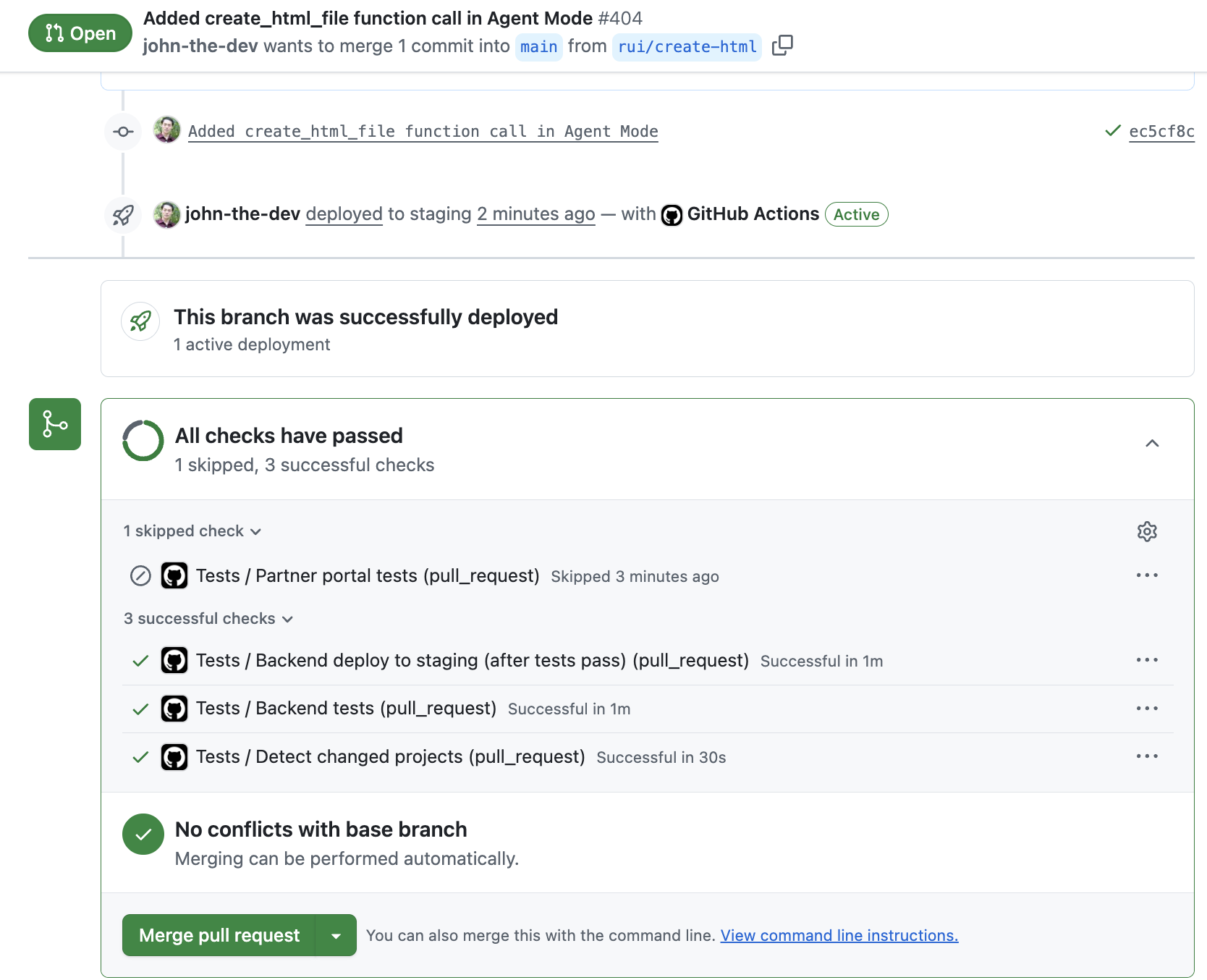
Rui Wang, our CTO, is the kind of builder who prefers action to theory. Within minutes of seeing the request, he popped open the codebase.
Here’s what happened next:
- Defined the feature path – No sprawling architecture diagram, just a quick assessment of where Claude’s API could slot into our existing pipeline.
- Wrote and tested the integration – Leveraging AI-assisted coding tools meant boilerplate was handled quickly, letting Rui focus on the unique parts of the build.
- Opened a pull request – All checks passed. No drama. No waiting for a weekly merge. Deployed to staging within minutes.
The speed wasn’t about cutting corners—it was about removing friction.
Shipping Without the Drag
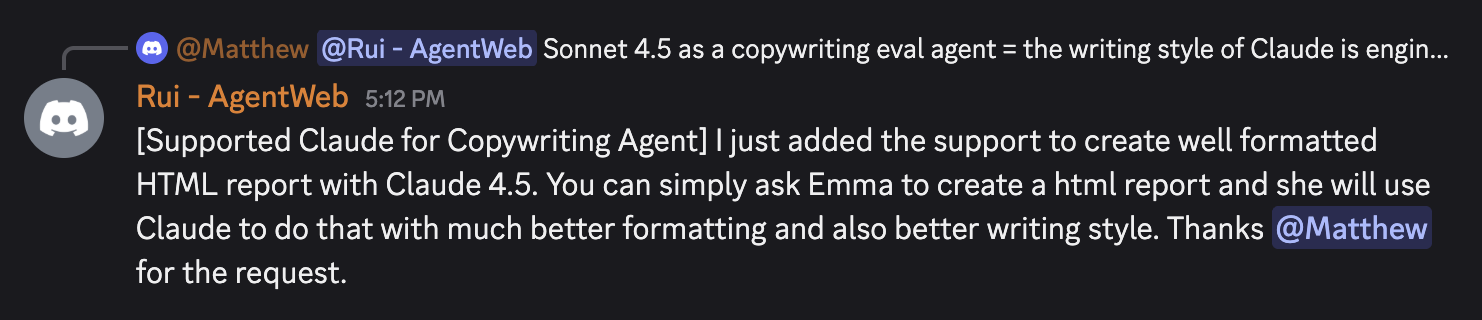
Roughly two hours after that initial message, the feature was in production.
Claude now powered Emma’s HTML report generation. Cleaner layouts, better copy, and a noticeable bump in usability.
For customers, this wasn’t a theoretical improvement buried in a changelog—it was live. Ready to use. Delivering value that same day.
Why AI-Native Speed Compounds
This story isn’t about heroics or working unsustainable hours. It’s about leverage.
AI-native teams operate differently because they treat communication, coding, and deployment as one continuous loop instead of separate silos.
Here’s why that matters:
- Problems are articulated clearly – Instead of vague feature requests, we prioritize understanding the exact customer outcome.
- Context flows instantly – Everyone on the team sees the same thread, the same rationale, and the same end goal.
- Tooling shortens build cycles – AI-assisted development slashes the time needed to write, debug, and integrate code.
When these elements align, execution speed becomes a competitive advantage. You’re not just faster—you’re consistently faster.
And in a world where customer expectations shift overnight, that speed compounds. Every quick release builds trust, momentum, and market differentiation.
The Old Way vs. The New Way
In a traditional environment, this feature might have looked like:
- Week 1: Idea logged in Jira, tagged for product triage.
- Week 2: Discussed in roadmap meeting, slotted into backlog.
- Week 3–4: Assigned to a sprint, implemented over multiple days.
- Week 5: QA testing, staging review.
- Week 6: Production release.
In our AI-native workflow:
- Hour 0: Request appears in chat.
- Hour 0.05: Value and context established.
- Hour 0.5: Code changes underway.
- Hour 1.5: Pull request merged.
- Hour 2: Feature live in production.
The Cultural Layer
Speed isn’t just a result of better tools—it’s a byproduct of culture.
We embrace:
- Bias for action – If something will improve the product and we understand the impact, we move on it.
- Trust in builders – Empowering developers to ship without having to jump through approval hoops.
- Customer proximity – The person building the feature understands exactly who it’s for and why it matters.
This isn’t about skipping quality checks or ignoring process. It’s about designing a process that serves speed without sacrificing reliability.
Why Customers Should Care
If you're using AgentWeb, this is the operating system behind the product.
It means:
- Your feedback doesn’t vanish into a ticket queue.
- You might see your idea in production before your coffee cools.
- Every improvement is driven by real usage and real needs.
For customers, this responsiveness is more than a nice-to-have—it's a core part of the experience. You get a product that evolves in sync with your needs.
Lessons for Startup Founders
If you’re running a startup, here’s how you can replicate this:
- Tighten the feedback loop – Remove layers between customer requests and builders.
- Invest in the right tools – AI-assisted coding, automated tests, and frictionless deployment pipelines.
- Empower your team – Give them the authority to ship improvements without waiting for multiple approvals.
- Make context king – Ensure every team member understands why a feature matters, not just what it does.
The payoff isn’t just faster shipping—it’s the ability to adapt in real time.
Final Takeaway
We didn’t set out to break a record. We set out to make something better for our customers, as fast as possible, without sacrificing quality.
Two hours later, we did exactly that.
In a market where speed and adaptability decide winners, AI-native workflows aren’t just a technical advantage—they’re a cultural one.
Our promise to customers is simple: if it’s worth building, it’s worth building now.
And this is just the beginning.
So, next time you wonder how fast a team can move—remember this story. In the right environment, with the right tools and mindset, the answer might just be: before lunch.
Book a call with Harsha if you would like to work with AgentWeb.
Ex-Google & Microsoft, Ph.D. in security, 1 startup exit. Builds scalable, secure systems and agent infrastructure.
Get a free Stack Review.
30 min with Harsha and Matt.
We audit your last 30 days, pinpoint the highest-impact fixes, and hand you the exact playbook we'd run. No deck. No pitch unless there's a fit.