15 Marketing Tools for Startups in 2026: Lean Stack Guide


15 Marketing Tools for Startups in 2026: Lean Stack Guide
The right marketing tools for startups can cut ramp time, prove traction faster, and help lean teams do more with less. This guide highlights the top 15 tools that form a lean, effective stack, covering core needs like analytics, SEO, email, and web presence. Budgets remain tight, and leadership still expects growth. In 2024 and 2025 average marketing budgets sat at 7.7 percent of company revenue, so every subscription must earn its keep. (gartner.com)
Two channels still deliver dependable returns. Email continues to post industry leading ROI, with benchmarks around 36 to 1 and strong distributions above that range in recent surveys. Organic search continues to drive the largest share of trackable traffic for many sites, and the top organic result earns an average 27.6 percent click through rate. (litmus.com)
This guide explains what counts as a tool, how to choose, and how to assemble a lean stack. It also shows how AI is changing the game, where automation pays off, and how to avoid the common traps that waste money on marketing tools for startups. If you prefer to ship faster with a human plus AI operator, consider partnering with AgentWeb for a Week 0 plan and weekly execution.
What counts as a marketing tool for startups, definition and scope
A marketing tool is any software or service that helps your team research audiences, reach them with the right message, and measure business impact. For most early teams, the practical scope includes:
Audience and market research, ICP definition, competitive intel
Content planning, writing, and repurposing
SEO research, on page optimization, and technical fixes
Website and landing page building, forms, and lead capture
CRM and lead management
Email service provider and outreach sequences
Social scheduling and engagement
Ad platforms and creative testing
Analytics, dashboards, and attribution
The category is crowded. The martech landscape counted 14,106 products in 2024 and 15,384 in 2025, so clarity on must haves matters more than ever. (chiefmartec.com)
How to choose the right tools for your startup
Start with the job to be done, not the logo.
Map your ICP, buying journey, and two primary channels. Then shortlist tools that directly support those moves.
Require native integrations to your CRM and data warehouse so you are not copy pasting between systems.
Confirm deliverability and compliance if you send cold or bulk email. Gmail and Yahoo require authentication with SPF, DKIM, and DMARC, one click unsubscribe, and spam complaint rates below 0.3 percent. (support.google.com)
Evaluate total cost of ownership, subscription plus time to operate. Founders and lean teams cannot afford tools that demand complex maintenance.
Prefer tools with clear workflows over blank canvases. This is where an operator plus agent model like AgentWeb shines.
Build a lean, well rounded martech stack
You can cover most needs with a compact stack. This avoids sprawl and underuse, which is common. Marketers used only about one third of the capabilities in their stacks in 2023. (gartner.com)
Core set for most marketing tools for startups:
Website and landing pages, form capture, speed and basic SEO
Keyword research and technical SEO
CRM with pipeline stages and clear lead ownership
Email platform for newsletters and nurture, plus separate outreach tool if you run outbound
Social scheduler with approval flows
Ad accounts where your buyers already spend time
Analytics, product analytics, and reporting that tie to revenue and cost
If you want this system built and handed back to your team, the AI plus operator model from AgentWeb can be a fit.
AI’s impact on startup marketing in 2026
Budgets are not expanding, yet leaders expect more throughput and faster iteration. AI is filling that gap. In 2025 CMOs reported using AI to improve time efficiency, cost efficiency, and capacity to produce more content. Marketers also reported high adoption of generative tactics across content and campaign workflows. (gartner.com)
Ad spend continues to grow, with forecasts around the trillion dollar mark in 2025. Growth is being helped by AI driven efficiencies and new advertiser categories, which matters when you evaluate paid channels inside your mix. (wsj.com)
AI search is rising but still a small slice of referral traffic. BrightEdge found AI search accounted for less than 1 percent of visits in early 2025, while traditional organic search remained the stronger converter. That means classic SEO still deserves attention in your stack. (brightedge.com)
Marketing automation for startups, concepts and benefits
Automation is not just email blasts. It is trigger-based messaging, progressive profiling, lead scoring, enrichment, and budget reallocation based on results. It gives founders leverage and compounds learning. If you’re new to automation, see how AI agents are rewriting marketing automation.
Expect quick wins from lifecycle triggers, welcome, activation nudges, and reactivation, and from retargeting audiences synced from your CRM.
Use AI to draft variants and accelerate testing, then keep a human review loop for brand and compliance.
Investment signals are strong. In IBM’s State of Salesforce research, respondents reported increased investment driven by AI across front office and back office, including a 64 percent rise tied to marketing automation initiatives. (salesforceben.com)
Email remains a high ROI channel and is often the first automation win for lean teams. Benchmarks show average ROI around 36 to 1 when programs are healthy. (litmus.com)
If you want prebuilt workflows with human review and Slack approvals, AgentWeb offers that pattern.
Top 15 Marketing Tools for Startups
Building on your strategy, this section spotlights a lean, proven stack that spans analytics, SEO, paid acquisition, email/CRM automation, landing page builders, and no-code site creation. These tools are grouped because they offer fast time-to-value, integrate cleanly, and scale from MVP to product-market fit without overtaxing a startup’s budget or team. Use it like a menu, solve today’s bottleneck first, then layer in the next tool as your funnel matures.
1. AgentWeb

AgentWeb blends an AI marketer (Emma) with seasoned operators to plan and run your go-to-market in one place. Approvals happen where you already work, while a central Portal pulls calendars and dashboards together, ending pipeline whiplash and uneven content cadence. See how we go from idea to live in two hours.
Best for: pre-seed to Series A teams that want weekly shipping without hiring, across B2B or B2C channels (Meta, Google, LinkedIn/X, email, SEO) and founder-brand tactics like LinkedIn ghostwriting. See the Nailed It case study for a real-world example.
Agentic execution: Emma selects channels, generates assets, and runs campaigns on a weekly rhythm.
Frictionless approvals: One-click signoff in Slack or Teams; shared calendars in the Portal keep everyone aligned.
Reusable GTM: Templates, workflows, and autopilot chains codify what works so you scale, not reinvent.
Measurement that sticks: Standardized UTMs, GA4, conversion APIs, server-side tagging, plus Apollo for outbound.
Pricing: Self-serve includes a 7-day free trial; done-for-you offers a free GTM audit with currently unlisted pricing.
2. Google Analytics 4

GA4 unifies web and app behavior into event-based reporting so you can see what drives signups, purchases, and retention. With enhanced measurement and Ads linking, it clarifies acquisition and funnels while minimizing custom tagging.
Best for: founder-led PLG or ecommerce teams who need a free, fast setup that supports weekly experiments, baseline metrics now, and deeper analysis later via BigQuery.
Event-driven analytics: Build Funnels, Paths, and use DebugView; enhanced measurement for quick wins.
Attribution your way: Data-driven or last-click models with adjustable lookback windows.
BigQuery export: One-click, unsampled analysis and durable storage for advanced reporting.
Integrations: Google Ads, Search Console, DV360/CM360, Analytics Data API, and Measurement Protocol.
Pricing: Standard GA4 is free; BigQuery export has no transfer fee; 360 enterprise starts ~$50,000/year.
3. Google Search Console
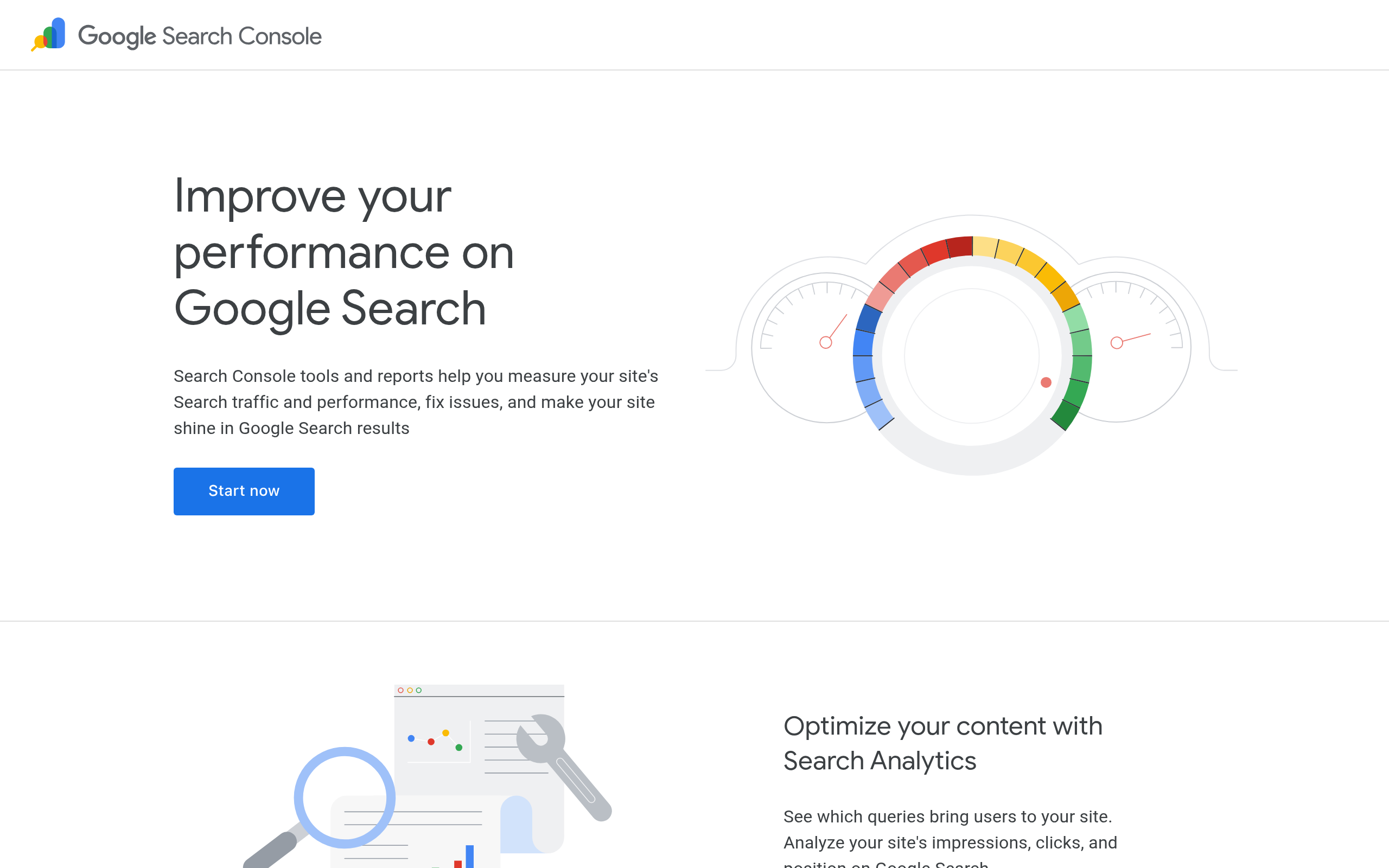
Search Console shows how Google discovers, crawls, and indexes your site and which queries bring people to your pages. It’s the first stop for fixing invisibility in search and validating that new content is actually getting seen.
Best for: 0 to 10 person teams running founder-led or PLG motions who need weekly ship-checks, early organic traction, and clear SEO feedback before spending on ads.
Search Performance: Queries, clicks, CTR, and position by page to spot quick wins.
Indexing control: URL Inspection, Page Indexing, sitemaps, and recrawl requests speed up fixes.
Site experience: Core Web Vitals with INP priorities to keep performance on track.
Integrations: Looker Studio connector, GA4 association, Search Analytics and URL Inspection APIs.
Pricing: Free forever. Verify your domain and start immediately.
4. Google Ads
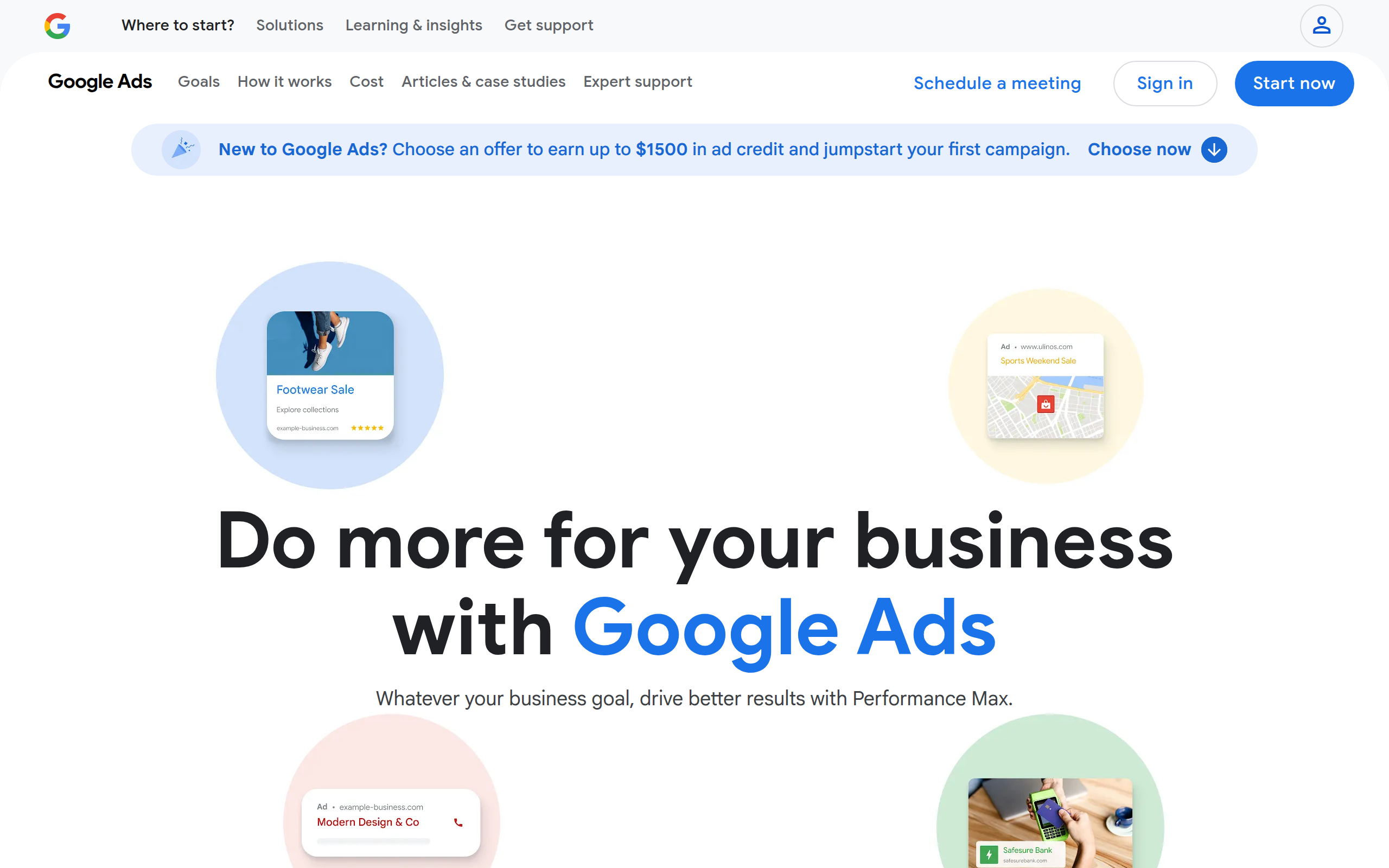
Google Ads puts your message in front of high-intent searchers and audiences across search, display, and video. Auctions, targeting, and conversion tracking work together to turn budget into pipeline with predictable, testable results.
Best for: pre-seed to Series A teams running direct-response or PLG who want tight budget control, rapid experimentation, and clear attribution from click to conversion.
Intent and audiences: Match types, negatives, remarketing, and layered segments capture qualified demand.
Automation that learns: Smart Bidding, rules, and creative rotation to hit CPA/ROAS targets.
Disciplined testing: Experiments, conversion tracking, and analytics for full-funnel clarity.
Integrations: GA4, Shopify, HubSpot, Salesforce, and Zapier for seamless handoffs.
Pricing: The platform is free; typical entry budgets start around $10/day and scale with performance.
5. Semrush
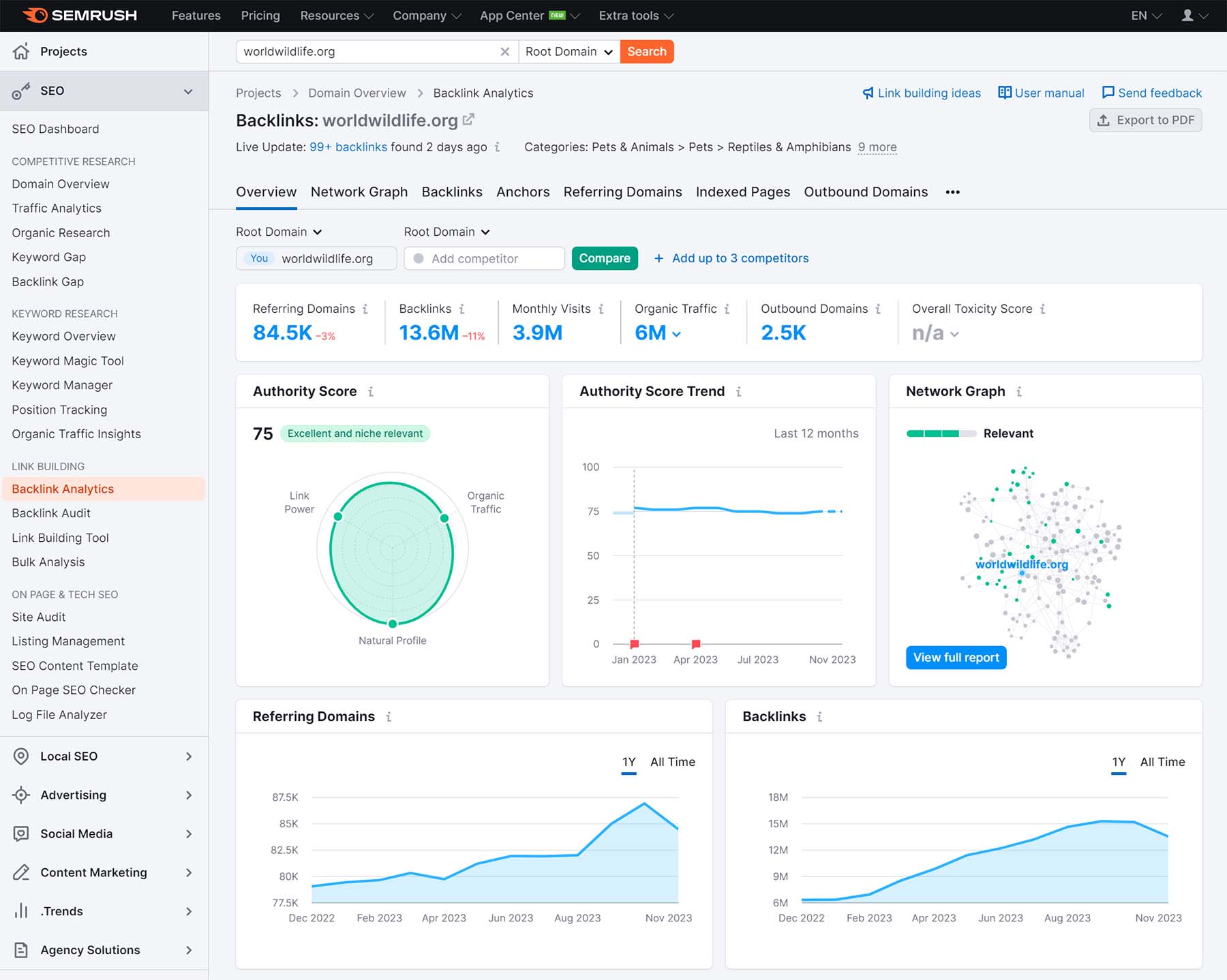
Semrush is a full-stack SEO/SEM suite that prioritizes what to fix, what to write, and where to compete. AI-assisted research, audits, and briefs shorten the path from idea to ranking content, and keep your pipeline and cadence steady.
Best for: lean inbound or PLG teams that need capital-efficient growth and visibility tracking across both SERPs and emerging LLM surfaces.
AI search tracking: Monitor SERPs and LLM visibility to spot opportunities and cannibalization.
Site Audit at scale: JS rendering, cannibalization alerts, and multi-location rank tracking.
Content Toolkit: Briefs and SEO Writing Assistant to go from outline to optimized draft.
Integrations: GA4, Search Console, Looker Studio, Sheets, HubSpot, Salesforce, Zapier/Make, APIs.
Pricing: Free plan and 7-day trials; Pro from $139.95/month, Semrush One from $165/month annually.
6. Ahrefs

Ahrefs crawls the web to surface what to write, who links to whom, and where you can win. With AI suggestions and Brand Radar, it helps you prioritize topics, build links, and protect visibility before rankings slip.
Best for: pre-seed to Series A teams doing content-led GTM (B2B SaaS, PLG, marketplaces) who want weekly shipping and early technical signal without a full SEO hire.
Keyword strategy: Explorer with AI suggestions, clustering, intent, and live SERP snapshots.
Backlink intel: Site Explorer, Content Explorer, SERP history, and broken link prospecting.
Technical guardrails: Site Audit with Ask AI, recrawls, IndexNow, and Rank Tracker.
Reporting & APIs: Dashboards, Looker Studio, GSC Insights, privacy-friendly Web Analytics, Enterprise API.
Pricing: Free Ahrefs Webmaster Tools; Starter ~$29/month; core plans start at ~$129/month (annual savings available).
7. HubSpot Marketing Hub

Built on HubSpot’s Smart CRM, Marketing Hub unifies email, pages, forms, SEO, ads, social, and automation. Breeze AI accelerates creation and personalization so lean teams can orchestrate campaigns and tie every touch back to revenue.
Best for: B2B inbound or PLG teams who want to start simple (Starter), add automation (Professional), and graduate to full multi-touch attribution (Enterprise) without juggling dozens of tools.
Marketing Studio: Orchestrate channels with AI-powered personalization in one canvas.
Revenue clarity: Advanced Marketing Reporting for journeys and multi-touch attribution.
ABM out of the box: ICP tiers, roles, and AI-assisted account discovery.
Integrations: Google, Facebook, LinkedIn ads; server-side conversions; Salesforce two-way sync.
Pricing: Free tools available; Starter from $20/seat, Professional $890/month, Enterprise $3,600/month, with startup discounts up to 90%.
8. Mailchimp
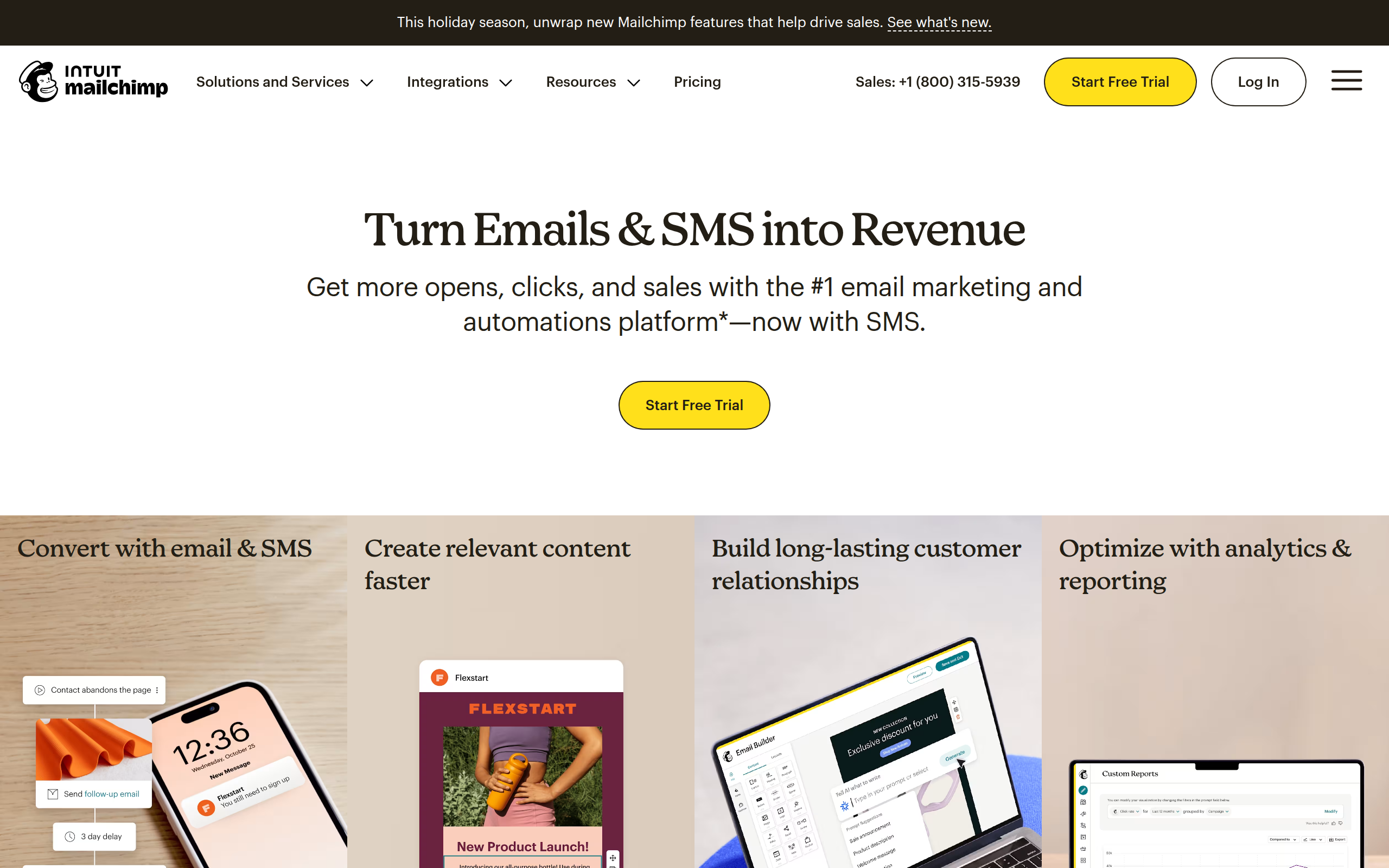
Mailchimp makes email and SMS campaigns feel effortless, from drag-and-drop builders to AI-assisted copy. Automated journeys replace manual follow-ups and rescue abandoned carts, so your lifecycle stays on track without engineering.
Best for: 1 to 5 person GTM teams, founder-led email, and early Shopify/Woo stores that need dependable cadence and quick wins on opens, clicks, and conversions.
Customer journeys: Triggers, splits, delays, SMS steps, and webhooks for end-to-end flows.
AI assist: Copywriting, content optimizer, and send-time optimization boost engagement.
Smarter targeting: Predictive segments, product recommendations, and transactional Email API.
Integrations: Shopify, WooCommerce, Google/Meta Lead Ads, Salesforce, and open APIs.
Pricing: Free tier (250 contacts, 500 emails/month); paid plans from $13/month; nonprofit discounts available.
9. ActiveCampaign
ActiveCampaign combines email, marketing automation, and a lightweight CRM so you can nurture, sell, and service from one system. Predictive sends, AI actions, and Postmark for transactional email fix leaky follow-ups and early pipeline gaps.
Best for: solo marketers and 2 to 5 person GTM teams in B2B or ecommerce who want weekly nurture and founder-style 1:1 at scale without adding headcount.
AI-powered timing: Predictive send and AI actions generate content and trigger the next best step.
Sales alignment: Pipelines, deal scoring, and Win Probability prioritize outreach and close rates.
Commerce signals: Shopify, WooCommerce, and Stripe data drive post-purchase flows; Postmark handles transactional.
Channel syncs: Facebook, Google, LinkedIn audiences; SMS, WhatsApp; 1,000+ integrations.
Pricing: No free plan; 14-day trial; plans from $15/1,000 contacts; startups get 90% off year one; Postmark from $15/10k.
10. Klaviyo

Klaviyo is the ecommerce CRM for email and SMS that turns data into revenue. Plug in your store, sync orders and events, and launch automated welcome, abandon-cart, and winback flows in hours, not weeks.
Best for: pre-seed to Series A DTC teams on Shopify, BigCommerce, Woo, or Magento that need segmentation, fast time-to-value, and attribution that actually reflects lifecycle.
Lifecycle automation: Popups, dynamic product recommendations, welcome/abandon/cart/post-purchase/winback.
Real-time profiles: Unified behavior and orders for pinpoint segmentation across channels.
Predictive metrics: CLV, churn risk, and reorder timing inform offers and sends.
Integrations: Native Shopify/BigCommerce/WooCommerce, Meta/Google Ads syncs, and robust APIs.
Pricing: Free for 250 profiles; Email from $20/month; Email + SMS from $35/month (region-based credits).
11. ConvertKit

ConvertKit (now Kit) is a creator-first email and automation platform that helps you capture, nurture, and monetize. Forms, pages, broadcasts, and visual automations make newsletters and launch sequences easy, and built-in commerce keeps revenue in-house.
Best for: founder-led inbound or newsletter-led GTM that needs to ship weekly, grow via recommendations, and offset tooling costs with native monetization.
Visual automations: Quickly build onboarding, lead magnet delivery, and launch funnels.
Grow together: Creator Network and Recommendations enable free/paid cross-promotions.
Built-in commerce: Sell digital products and paid newsletters (processing fees apply).
Integrations: WordPress, WooCommerce, Shopify tagging, Zapier/Make, and Facebook Custom Audiences.
Pricing: Free up to 10,000 subscribers; 14-day trial; Creator from $39/month; Pro $79/month (annual).
12. Unbounce

Unbounce lets non-developers build, publish, and optimize landing pages and popups fast. Smart Copy speeds writing, while Smart Traffic routes visitors to the best variant, so paid clicks stop leaking after the first tap.
Best for: pre-seed to Series A teams running founder-led B2B lead gen or rapid offer validation who need pages live in hours and tests running after a few dozen visits.
Launch without devs: Drag-and-drop builder, 100+ templates, WordPress publishing.
Optimize early: Unlimited A/B testing, Smart Traffic, and server-side loading for faster learnings.
Ad-to-page match: Dynamic Text Replacement for intent alignment; popups and targeting.
Integrations: Zapier, HubSpot, Salesforce, webhooks, and more.
Pricing: 14-day free trial; paid plans start at $99/month with higher tiers at $149 and $249.
13. Instapage

Instapage is the post-click landing platform built for paid media teams. Drag-and-drop creation, reusable blocks, AI copy, and server-side testing help you ship faster and align every ad with a relevant, high-converting page.
Best for: paid search and social programs where 1 to 5 marketers iterate independently, need precise ad-to-page mapping, and require clean CRM handoffs.
Design at speed: Visual editor with Instablocks and Collections for consistent components.
Optimize at scale: Server-side A/B/n, heatmaps, and dynamic text replacement.
AdMap: Connect Google Ads to pages to maintain granular relevance.
Integrations: HubSpot, Salesforce, Marketo, GA4, WordPress/Drupal, Zapier, and Webhooks.
Pricing: 14-day free trial; plans start at $99/month, with occasional first-year startup discounts.
14. Leadpages

Leadpages is a no-code landing page and mini-site builder with built-in forms, pop-ups, and alert bars. With 250+ templates and unlimited traffic/leads, it’s built for shipping now, so no devs required.
Best for: lean B2B, creators, and services teams that want to validate offers, run ads-to-page funnels, and collect payments quickly and reliably.
Launch rapidly: Drag-and-drop editor, 250+ templates, unlimited traffic and leads.
Proven learning: Built-in analytics and unlimited A/B testing on Pro/Advanced.
Built-in commerce: Stripe-powered Checkouts for one-time or recurring payments (no extra fees).
Integrations: Mailchimp, ActiveCampaign, ConvertKit, WordPress, Zapier; Advanced adds Salesforce, HubSpot, Marketo, Pardot.
Pricing: 14-day free trial; Standard $49/month, Pro $99/month; startup promos appear periodically.
15. Webflow

Webflow is a no-code site and landing builder with hosting and CMS that lets marketing ship production-ready pages without engineering. AI helps with layout, copy, and SEO details so you keep a steady publishing cadence.
Best for: founder-led GTM at pre-seed to Series A, where lowering dev dependency, accelerating experiments, and pairing with GA4/HubSpot for attribution is the mandate.
Design to deploy: Visual designer, CMS, and hosting output clean code with redirects and sitemaps.
AI assist: Speed page creation and CMS workflows with AI builder and helper.
Go global: Localization add-on for translation, locale styling, and SEO-friendly routing.
Ecosystem: Analyze overlays clickmaps; Optimize for A/B tests; native integrations with HubSpot, GA4, and APIs.
Pricing: Free Starter; Site plans from $14/month annually; eligible startups often get first-year CMS free.
Implementation playbook, from zero to first automated wins
Week 0, align and instrument
Define ICP, offers, and top two channels.
Install analytics and event tracking, set a north star metric and weekly scorecard.
Verify email authentication and unsubscribe compliance before any sends, SPF, DKIM, DMARC, one click unsubscribe, spam rate below 0.3 percent target below 0.1 percent. (support.google.com)
Weeks 1 to 3, ship foundational assets
Ship a simple landing page with a clear lead form, add at least one trust element.
Publish two to three SEO-informed pages that answer buyer questions. Use this SEO for founders 80/20 guide. Remember that ranking in the top two or three positions drives the majority of clicks, so aim high for core terms. (backlinko.com)
Launch a weekly founder newsletter and a welcome sequence.
Weeks 4 to 6, add distribution and feedback loops
Turn on retargeting and one prospecting ad test per week, start small. See our Cora digital health case study for a lightweight playbook.
Schedule consistent LinkedIn posts for the founder brand. Here’s a LinkedIn content strategy for B2B SaaS founders.
Create a simple content to email to social loop that repurposes each piece across channels.
Weeks 7 to 12, optimize and automate more
Add lead scoring and lifecycle triggers based on behavior.
Introduce outbound only if your domain health and deliverability are strong and lists are permissioned or high intent.
Run one experiment per week and move budget to winners.
If you want a team to stand up this system in weeks then hand back control, AgentWeb can build, ship, and transition you to a repeatable cadence.
Common mistakes to avoid
Buying too many marketing tools for startups at once. Avoid these 5 AI agent mistakes. Utilization drops fast when stacks grow without operators. A Gartner survey found marketers used about 33 percent of stack capabilities on average. (gartner.com)
Ignoring email sender rules. Failure to authenticate and to maintain low spam complaint rates leads to spam foldering or hard rejections. (support.google.com)
Chasing channels that your ICP does not use. Anchor on where your buyers already spend time.
Measuring vanity metrics only. Tie experiments to qualified pipeline and revenue.
Measure and optimize
Pick a small set of metrics you can manage every week. Many B2B teams track conversions, email engagement, website traffic and engagement, and social analytics, then map these to pipeline. That aligns with how most B2B marketers report measuring content performance today. (contentmarketinginstitute.com)
For SEO, focus on search terms that can realistically reach the top three positions. The first organic result captures about 27.6 percent of clicks, and the top three together take a majority share, so meaningful lifts come from ranking improvements, not only more pages. (backlinko.com)
For email, watch spam complaints, inbox placement, and engagement. Stay under 0.3 percent spam complaints and process unsubscribes within two days to protect reputation. (support.google.com)
Future trends to watch
Ad growth with AI at the edges. Forecasts for 2025 point to more ad spend than initially expected, partly due to AI driven efficiencies and new advertiser categories. (wsj.com)
Creator and retail media shifts. Creator and retail media continue to pull share and will change how startups think about social and marketplace ads. (theguardian.com)
Tool proliferation continues. The number of martech products grew again in 2025, which raises the bar on integration and operator skill. (martech.org)
AI search will rise, yet classic organic optimization still matters while AI referrals remain a small slice. Plan for both. (brightedge.com)
Conclusion, start lean, prove impact, then scale
Start with a compact set of marketing tools for startups that fit your ICP and top channels. Prove impact quickly with email automation, SEO pages that can rank, and simple paid tests. Add only what you can operate well, and keep an approval and iteration loop every week. If you want an experienced team plus an agent to build the engine and hand it back, connect with AgentWeb to get a free GTM diagnostic and a practical 90 day plan.
FAQ
What are the minimum marketing tools for startups to begin with
A website or landing builder with forms, a CRM, an email platform, an SEO research tool, a social scheduler, and analytics. Keep it simple to avoid stack bloat.
How do startups avoid email deliverability problems when scaling outreach
Authenticate your domain with SPF, DKIM, and DMARC, include one click unsubscribe, warm up gradually, and keep spam complaints under 0.3 percent, ideally under 0.1 percent. (support.google.com)
Is SEO still worth it for startups given AI search
Yes. AI search traffic is growing but still under 1 percent of referrals in recent data, while classic organic search remains a top converter. Marketing tools for startups should still include SEO. (brightedge.com)
What benchmarks help judge content performance
Track conversions, email engagement, website traffic and engagement, and social analytics, which are the metrics most B2B teams report using today. Marketing tools for startups should make these metrics easy to monitor. (contentmarketinginstitute.com)
Where does AI help most for lean teams
Drafting and repurposing content, accelerating ad and email testing, building audiences, and automating reporting. Many CMOs report AI delivering time and cost efficiency with higher capacity to produce, which supports the case for AI assisted marketing tools for startups. (gartner.com)
How do we avoid buying tools we never use
Adopt one tool per problem and require weekly use tied to a KPI. Underutilization is common, with marketers using about one third of stack capabilities in 2023, so favor workflows you can run, or bring in an operator like AgentWeb to keep the system shipping. (gartner.com)
When is it time to add paid ads
After you have a clear message, a working landing page, and a basic nurture in place. Given budgets have been flat around 7.7 percent of revenue, treat paid as experiments with weekly reviews. (gartner.com)
Marketing tools for startups work best when they are few, connected, and operated with a weekly shipping mindset. If you want a partner to build that engine and help it run, visit AgentWeb.
Ex-Meta, Google, LinkedIn. 10+ years in ML & data science for GTM. Expert in customer acquisition and growth activation.
Get a free Stack Review.
30 min with Harsha and Matt.
We audit your last 30 days, pinpoint the highest-impact fixes, and hand you the exact playbook we'd run. No deck. No pitch unless there's a fit.