.png)

By Rui Wang, CTO at AgentWeb
The AI Hardware Arms Race Just Got Personal
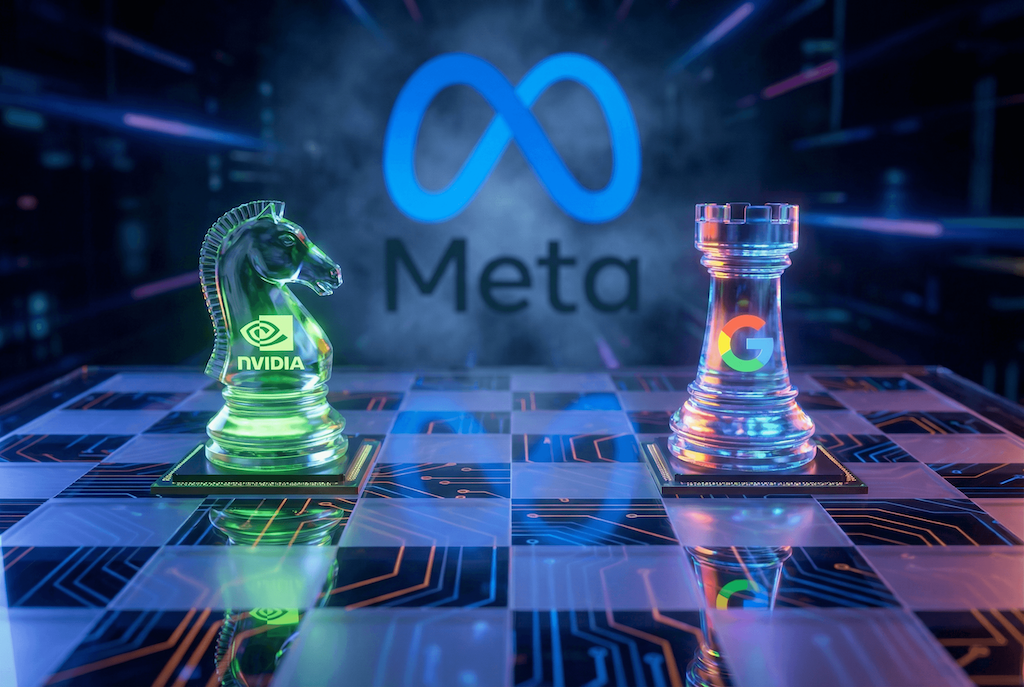
The world of AI infrastructure is changing fast. For years, Nvidia has been the undisputed titan, powering everything from ChatGPT to self-driving car simulations. But recent reports suggest Meta is now in talks to buy Google’s custom AI chips—an unexpected move that signals both a maturing market and a brewing shakeup.
Why does this matter? Because it could redefine who controls the future of artificial intelligence. Let's dive into what's driving this rivalry, the implications for the wider industry, and what founders should watch as the hardware landscape shifts beneath our feet.
How Did Nvidia Become the AI Chip King?
Nvidia’s rise wasn’t overnight. For over a decade, their Graphics Processing Units (GPUs) have fueled the exponential growth in deep learning. With specialized architectures, robust CUDA software ecosystem, and strong industry partnerships, Nvidia made training and deploying large language models possible at scale. Most startups and research labs default to Nvidia-powered compute clusters because:
- Breadth: The CUDA platform is mature and widely supported
- Performance: GPUs consistently deliver top-tier training/inference throughput
- Ecosystem: Pre-trained models, ML frameworks, and cloud instances are built with Nvidia in mind
Enter Google: From TPU to Cloud AI
Google isn’t new to custom silicon. Their Tensor Processing Units (TPUs) have been in production use across Google Search, Photos, and Translate for years. While initially focused on internal workloads, Google Cloud has opened up TPU access to external customers, aiming to differentiate itself from AWS and Azure.
Here’s where the plot thickens:
- TPUs are optimized for massive, parallel deep learning ops
- They offer competitive pricing for large-scale jobs
- Google’s end-to-end software stack (JAX, TensorFlow, Vertex AI) integrates deeply with their hardware
Still, enterprises and startups have been slow to switch, in part due to inertia and the learning curve.
Meta’s Move: More Than Just Chips
According to reports, Meta is seriously considering sourcing Google’s AI chips—potentially for training and inference at immense scale. On the surface, this looks like a procurement decision. But if Meta, one of the world’s largest AI deployers, shifts even a fraction of its workload off Nvidia, several big things happen:
- Nvidia’s pricing power is challenged. When the biggest buyers demand alternatives, suppliers must compete.
- The software stack may diversify. Meta’s engineering teams are known for pushing open-source standards—think PyTorch. If they build tooling for TPU or help optimize open frameworks beyond CUDA, the whole industry benefits.
- Startups gain options. If Google’s chips become mainstream, smaller AI players might finally see price/performance competition and avoid being locked into Nvidia.
Implications for AI Startups and Builders
What does all this mean if you’re building in AI today?
1. Greater Optionality in Hardware Sourcing
For years, the "Nvidia tax" has been a fact of life. Scarce GPU supply has bottlenecked model training and driven up costs, especially for agentic AI platforms and generative startups. With Google TPUs (and perhaps other entrants like AMD, Intel, or even custom silicon), we could see:
- More competitive cloud pricing
- Shorter wait times for high-performance compute
- Less vendor lock-in, fostering agility
2. New Software Stacks—and Growing Pains
Switching hardware isn’t trivial. CUDA optimizations don’t port seamlessly to TPUs or other accelerators. But with giants like Meta investing, we’ll likely see:
- Expanded ecosystem support for PyTorch, JAX, and other frameworks on non-Nvidia chips
- Community-driven tools to ease the transition between hardware platforms
- More standardized APIs for inference and serving
Founders should track which frameworks align with their tech stack—and whether their workloads could benefit from moving beyond Nvidia.
3. The Rise of Agentic AI, Powered by Diverse Chips
Agentic AI—systems that plan, reason, and act independently—demands massive, scalable compute. As hardware diversity grows, startups building agentic platforms (think advanced copilots, autonomous research bots, or AI-driven customer service) can:
- Experiment with hardware-specific optimizations
- Leverage cost savings to scale faster
- Avoid over-reliance on a single vendor’s roadmap
What’s Next? The Broader Industry Impact
The immediate effect of Meta’s talks with Google is pressure on Nvidia’s dominance. But the long-term impact could be much deeper:
- Cloud Providers Will Differentiate: Expect AWS, Azure, and Google Cloud to double down on custom silicon, bundling AI services, and hybrid cloud/on-prem offerings.
- Pricing Wars May Emerge: As competition heats up, cloud credits, special offers, and tiered hardware pricing could make AI compute more accessible.
- Open Standards Will Matter More: Interoperability and portability between hardware stacks will become a selling point. The next Kubernetes for AI infrastructure isn’t far off.
Playbook for Founders: Navigating the New AI Hardware Landscape
If you’re leading an AI startup or managing large-scale deployments, here’s how to respond:
- Stay flexible with your software stack. Favor frameworks and tools that support multiple backends (e.g., PyTorch/XLA, JAX, ONNX).
- Negotiate with cloud vendors. Don’t be afraid to ask for access to beta hardware or custom pricing if you’re scaling aggressively.
- Benchmark early and often. Test your core workloads on different hardware to uncover hidden cost or performance advantages.
- Participate in open standards. Join industry groups or open-source projects pushing for hardware-agnostic APIs.
Final Thoughts: The AI Chip Wars Are Just Beginning
Meta’s reported interest in Google’s AI chips is more than a headline. It’s a sign that the foundation of the AI ecosystem—hardware choice—is about to become a lot more dynamic. For startups, this means more opportunities, some technical growing pains, and a chance to shape the next era of intelligent infrastructure.
The pace of change will be relentless. But for those who stay informed and build flexibly, the AI chip rivalry is an opportunity, not a threat.
Rui Wang is CTO at AgentWeb. Opinions are his own. Read the original news story here. Book a call with Harsha if you would like to work with AgentWeb.