15 SaaS Growth Marketing Strategies for 2026, Ranked


TL;DR
The most effective SaaS growth marketing strategies in 2026 are not the most expensive ones. Organic channels like SEO ($647 CAC) and email ($510 CAC) deliver roughly twice the efficiency of paid channels. Founder-led LinkedIn brand building produces 10 to 20x ROI within six months for B2B companies, and AI-powered marketing automation adoption has jumped from 4% to 45% since 2023. This guide ranks 15 strategies by real benchmarks so you can prioritize based on your stage and budget.
Why Most SaaS Growth Marketing Advice Falls Short
Here is a stat that should bother every SaaS marketer: 96% of tech companies say they have a content marketing strategy, yet only 29% consider it effective. The gap between having a strategy and executing one that works is where most startups stall.
Search for “SaaS growth marketing” and you will find page after page of agency listicles. What you won’t find is a practical breakdown of which strategies actually produce results at different stages, what they cost, and where they break down. That is the article you are reading now.
The median SaaS marketing spend sits at about 8% of ARR, down from roughly 10% the year before. VC-backed companies spend 10 to 20% or more, outpacing bootstrapped peers by about 58%. With tighter budgets and board pressure mounting, every dollar needs to pull its weight.
The data is clear on one point: organic channels cost an average of $942 per customer acquisition, while inorganic channels average $1,907. Organic is roughly 2x more efficient. That doesn’t mean paid is wrong, it means the sequencing matters.
Before exploring each strategy, take a look at the summary below. If you want a deeper breakdown of how these channels interact, the SaaS marketing channels guide covers channel selection in more detail.
At-a-Glance Comparison Table
| Strategy | Best For Stage | Avg. B2B CAC | Time to ROI | Scalability | Difficulty |
|---|---|---|---|---|---|
| SEO & Thought Leadership | Series A+ | $647 | 6 to 12 mo | Very High | Medium |
| Founder-Led LinkedIn | Pre-seed to A | Low (organic) | 2 to 3 mo | Medium | Low |
| AI Marketing Automation | All stages | Lowers existing CAC | 1 to 3 mo | Very High | Medium |
| Email & Nurture Sequences | All stages | $510 | 1 to 3 mo | High | Low |
| Cold Email & Outbound | Seed to A | $1,980 | 1 to 2 mo | Medium | High |
| Paid Search / PPC | Series A+ | $802 | Immediate | High | Medium |
| Product-Led Growth | Seed+ (self-serve) | Varies | 3 to 6 mo | Very High | High |
| Content Distribution | All stages | Low (amplifies existing) | 1 to 3 mo | High | Low |
| LinkedIn Ads | Series A+ (B2B) | $982 | 1 to 2 mo | Medium | Medium |
| Community-Led Growth | Seed+ | Low | 6 to 12 mo | High | Medium |
| Referral Programs | Post-PMF | Very Low | 3 to 6 mo | High | Low |
| Account-Based Marketing | Series B+ | $4,664 | 3 to 6 mo | Low | High |
| Webinars & Events | Seed+ | ~$603 | 1 to 3 mo | Medium | Medium |
| Video & Short-Form Content | All stages | $815 | 2 to 4 mo | High | Medium |
| 90-Day GTM Sprint | Pre-seed to A | Diagnostic cost | 90 days | Framework | Medium |
For a detailed look at how to measure the metrics in this table, the SaaS marketing metrics guide walks through LTV:CAC, churn, and conversion benchmarks.
1. SEO and Thought Leadership Content
Best for: Series A+ companies ready to invest in compounding organic traffic that reduces CAC over time.
SEO is the highest-ROI channel in SaaS growth marketing and it isn’t close. B2B SaaS companies report an average 702% ROI on SEO, with break-even periods as short as seven months. The close rate tells the real story: SEO leads convert at 14.6%, compared to just 1.7% for outbound.
The cost difference is equally dramatic. Organic search generates about 5.8x more leads per dollar than PPC, with an average cost of $31 per lead versus $181 for paid search.
Not all SEO content is equal, though. “Thought leadership SEO,” where content establishes genuine authority on topics your buyers care about, carries a CAC of $647. Generic content marketing (publish-and-pray blog posts) costs $1,254 per customer. That’s nearly double. The difference is strategic focus.
Key execution points:
- Target bottom-of-funnel comparison and alternative keywords first. They convert fastest.
- Publish a minimum of 4 pieces per month. Consistency matters more than individual post quality.
- Build topical authority by clustering content around core problems your ICP faces.
- 53% of SaaS professionals believe content marketing is the most significant growth driver, but only teams that sustain output for 6+ months see the compounding effect.
When this doesn’t work:
- Pre-product-market-fit companies burn cash on SEO before knowing what message resonates. Validate positioning with faster channels first.
- Competitive keywords in established categories (CRM, project management) can take 12 to 18 months to crack. Early-stage teams should target longer-tail terms.
- Without distribution, even well-optimized content will underperform. SEO is not a “publish it and they will come” channel.
One practitioner on Growth Marketing Pro put it directly: “The playbooks that worked in 2020, like pouring money into paid acquisition or relying on aggressive outbound email motions, simply don’t deliver the same ROI anymore.” SEO’s compounding returns explain why it remains the foundation of most successful SaaS growth marketing strategies.
2. Founder-Led Brand Building on LinkedIn
Best for: Pre-seed through Series A founders who want inbound pipeline without a large budget.
This is the most underrated growth channel in B2B SaaS, and the data backs the claim. Personal LinkedIn accounts get 5 to 10x more engagement than company pages. For a founder with an average deal size of $50K, LinkedIn ghostwriting delivers a 10 to 20x ROI within the first six months.
The growth is structural, not anecdotal. An estimated 15 to 20% of funded startup founders now use ghostwriting services, and the LinkedIn ghostwriting market has grown roughly 3x since 2024. Meanwhile, LinkedIn CPMs have risen 35 to 40% year over year since 2023, making organic founder content even more valuable relative to paid alternatives.
Key execution points:
- Post 5+ times per week for 6+ months. Founders who maintain this cadence see 10x the results of those posting once or twice weekly.
- Personal stories with specific numbers generate 3 to 4x more engagement than generic advice. Client success stories have the highest pipeline impact per impression.
- ICP-targeted commenting drives 30 to 40% of total profile visibility. Combine posting with 10+ daily comments to double inbound DMs.
- 93% of B2B tech marketers say LinkedIn delivers the best content results.
When this doesn’t work:
- AI-generated first drafts that are lightly edited see engagement rates 40 to 50% lower than human-first writing. Authenticity is non-negotiable on this channel.
- Founders who treat LinkedIn as a broadcast channel (no replies, no comments, no DMs) miss the relationship layer that drives conversions.
- If your ICP isn’t active on LinkedIn (some developer or consumer audiences), this strategy underperforms.
If you are considering outsourcing this, the guide on how to hire a LinkedIn ghostwriter covers what to look for. For teams that want a done-for-you founder brand program, AgentWeb’s LinkedIn service pairs ghostwriting with broader growth execution.
3. AI-Powered Marketing Automation
Best for: Any SaaS team looking to reduce cost per lead and accelerate campaign velocity without adding headcount.
The adoption curve here is steep. AI agent usage in marketing teams has gone from 4% in 2023 to 45% in 2026. This is no longer experimental. It’s becoming the default operating model for lean teams.
The economics justify the shift. Top-quartile marketing automation programs deliver $8.71 ROI per dollar spent, with a cross-industry median of $5.44. AI agent-enabled programs specifically see 27% faster campaign build times and a 19% reduction in cost per qualified lead.
Key execution points:
- Automated lead routing cuts time from capture to first sales touch by 43%.
- Segmented nurture workflows generate 760% more revenue than broadcast sends. This alone justifies the investment.
- Automation lifts MQL-to-SQL conversion by 38% compared to manual programs, reaching a 26.3% median conversion rate in B2B SaaS.
- 73% of marketing automation buyers now cite AI agent capability as a top-three evaluation criterion, up from 18% in 2024.
The most advanced SaaS teams deploy AI agents managing entire workflows: onboarding campaigns, lifecycle emails, pipeline scoring, and partner activation. The shift from “AI as assistant” to “AI as autonomous executor” is the defining marketing trend of 2026.
When this doesn’t work:
- Automation without strategy just scales bad ideas faster. Teams need clear ICP definitions, messaging, and conversion goals before automating.
- Purely autonomous systems without human oversight produce generic output. The best results come from human-in-the-loop models where people handle strategy and quality control.
- Over-automation of customer-facing touchpoints (especially in high-ACV sales) can feel impersonal and hurt close rates.
For a deeper look at the tools and frameworks driving this shift, the agentic AI marketing tools guide covers implementation specifics.
4. Email Marketing and Automated Nurture Sequences
Best for: Every stage. The lowest-CAC organic channel in B2B at $510 per customer.
Email remains the quiet workhorse of SaaS growth marketing. At $510 B2B CAC, it’s the cheapest organic acquisition channel available. The reason is simple: you own the channel, you control the frequency, and the marginal cost of each additional send approaches zero.
Key execution points:
- Welcome sequences are the highest-performing workflow type, with open rates around 42%. Get these right before optimizing anything else.
- Segmented campaigns beat broadcast sends by a factor of 7.6x on revenue. Segmentation by behavior (product usage, content consumed, feature requests) outperforms demographic segmentation.
- Automated nurture delivers $18.40 average cost per qualified lead versus $26.10 for manual programs.
- Build sequences around the buyer’s timeline, not your sales cadence. Map emails to the specific questions buyers have at each stage.
When this doesn’t work:
- Generic blast emails destroy deliverability. ISPs penalize low-engagement sends, and once your domain reputation drops, recovery takes weeks.
- Small lists (under 1,000 contacts) won’t generate statistically significant results. Pair email with list-building tactics like content upgrades, webinars, or free tools.
- Without clean data and proper segmentation, automation amplifies irrelevance. Bad data in, bad results out.
The email marketing automation tools guide for startups covers tool selection and sequence design for lean teams.
5. Cold Email and Outbound Prospecting
Best for: Seed through Series A companies that need pipeline fast and have a clearly defined ICP.
Cold outbound is polarizing. Global 2025 benchmarks show roughly 42% open rates, 3% reply rates, and about 1% meetings booked. Those are the averages. The top performers blow past them.
One SaaS startup sent 400 targeted emails via Smartlead and booked 61 demos (about 15%) in 8 weeks. The difference between 1% and 15% booking rates comes down to personalization and targeting precision.
Key execution points:
- AI-driven outreach outperforms manual sends by a wide margin: open rates roughly 18 percentage points higher and 2.7x higher reply rates.
- Only about 5% of senders personalize each email, yet those who do see 2 to 3x the replies. The bar is low.
- Domain warm-up is non-negotiable. New domains need 2 to 4 weeks of gradual volume increase before hitting full send.
- Keep sequences to 3 to 5 touches. Beyond that, you’re hurting your domain more than helping your pipeline.
When this doesn’t work:
- A SaaStr survey found that 67% of companies said outsourced SDR programs didn’t work. Only 7% called them highly successful. In-house or agent-led outbound consistently outperforms outsourced.
- At $1,980 average CAC, outbound SDRs are the most expensive inorganic B2B channel after ABM. The unit economics only work for deals above $10K ACV.
- Deliverability is fragile. One wrong move (buying lists, skipping authentication, sending too fast) and your entire sending domain is burned.
- Legal compliance matters. CAN-SPAM, GDPR, and increasingly strict state privacy laws add operational overhead.
For broader context on how outbound fits into a startup’s B2B marketing strategy, that guide covers channel sequencing from zero revenue to first million.
6. Paid Search and PPC
Best for: Series A+ companies with budget to validate messaging quickly and capture high-intent demand.
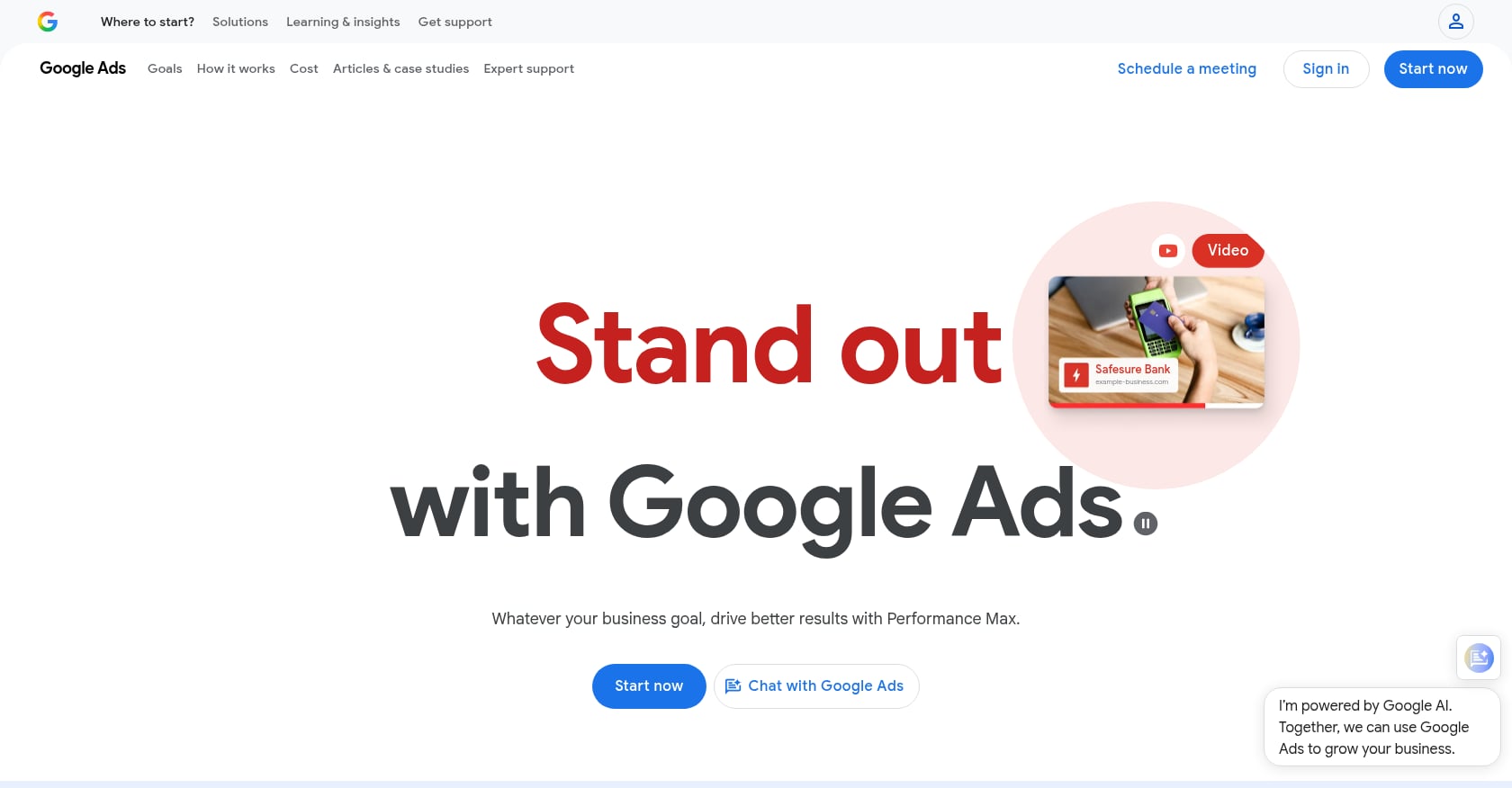
Google Ads and paid search sit at an $802 B2B CAC and deliver roughly a 4x return on investment. That’s half the ROI of SEO’s 8x, but with one critical advantage: speed. You get data within days, not months.
Key execution points:
- Use PPC to validate messaging, ICP segments, and landing page angles before investing in organic content for those same topics.
- Focus budget on bottom-funnel keywords (comparisons, alternatives, pricing queries). Top-funnel brand terms eat budget without converting.
- Set clear CPA targets tied to your LTV:CAC ratio. A healthy SaaS business targets above 3:1.
- Retarget website visitors and content consumers. Retargeting CPAs are typically 50 to 70% lower than cold prospecting.
When this doesn’t work:
- PPC stops producing the moment you stop paying. There is zero compounding effect, which makes it a poor standalone SaaS growth marketing strategy.
- Rising CPCs in competitive SaaS categories squeeze margins. Some B2B software keywords now exceed $50 per click.
- Without strong landing pages and conversion optimization, you are paying for traffic that bounces. Ad spend without CRO is just waste.
Mark Spera, who built Growth Marketing Pro to seven figures in 24 months, has noted that ConvertKit’s founder Nathan Barry couldn’t break past $2K MRR until he started direct selling. Paid channels complement founder-led efforts, but rarely replace them at the earliest stages.
7. Product-Led Growth (Free Trials and Freemium)
Best for: Seed-stage and beyond with a self-serve product that delivers value before requiring a purchase decision.
Product-led growth is no longer a differentiator. It’s table stakes. The winning SaaS companies in 2026 pair PLG with sales-assisted intelligence and brand-led storytelling.
The funnel benchmarks tell the story: website visitor-to-trial signup conversion runs 2 to 5%. Trial-to-paid for freemium models is also 2 to 5%. But requiring a credit card at signup bumps trial-to-paid conversion to 40 to 50%, a dramatic improvement that reveals how many freemium signups have zero purchase intent.
Key execution points:
- Design the onboarding experience to deliver an “aha moment” within the first session. Time-to-value determines trial-to-paid conversion.
- Instrument product usage data to trigger sales-assist touchpoints. When a trial user hits a usage threshold, that’s your signal to introduce human help.
- SaaS buyers now spend less than 20% of their time speaking with vendors. The product has to do the selling before sales enters.
- Test credit card required versus free trial. The volume/quality tradeoff varies by ACV and market.
When this doesn’t work:
- Products without clear, quick value realization (complex enterprise tools, multi-stakeholder workflows) struggle with self-serve.
- PLG without onboarding investment produces high churn. If users don’t reach activation, free trials just generate cost.
- Freemium can attract the wrong audience. If your free tier serves people who will never pay, you are subsidizing non-customers.
8. Content Distribution and Repurposing
Best for: Any team already creating content that isn’t getting the reach it deserves.
Creation without distribution is the silent killer of SaaS content programs. The smartest teams treat every piece of content as raw material for multiple channels: a LinkedIn post becomes a newsletter, becomes a short video, becomes a blog section, becomes a podcast clip.
Key execution points:
- 60% of B2B marketers plan to increase investment in short-form video for content marketing. Repurposing written content into video is the highest-leverage version of this trend.
- Build a content calendar that maps repurposing paths at creation time, not after the fact. Know where each piece will go before writing it.
- Distribute on owned channels (email list, blog) and earned channels (LinkedIn, Reddit, industry Slack groups) simultaneously.
- 71% of SaaS businesses over $5M ARR outsource at least one content function. Distribution and repurposing are the most commonly outsourced tasks.
When this doesn’t work:
- Repurposing poor content just spreads mediocrity across more channels. Quality of the original asset matters.
- Each channel has format norms. Copy-pasting a blog post into LinkedIn without reformatting wastes the opportunity.
- Without tracking which channels drive actual pipeline (not just impressions), you can’t optimize distribution effort.
9. LinkedIn Ads for B2B Pipeline
Best for: Series A+ B2B SaaS targeting specific job titles, industries, or account lists.
LinkedIn Ads carry a $982 B2B CAC, making them one of the pricier paid channels. But the targeting precision is unmatched in B2B: you can reach the exact VP of Engineering at a Series B fintech company with fewer than 200 employees.
Key execution points:
- Use LinkedIn Ads for ABM and retargeting warm audiences, not cold top-of-funnel prospecting. The CPMs are too high for awareness.
- Lead gen forms (native to LinkedIn) outperform landing page redirects by 2 to 3x on conversion rate because they auto-fill user data.
- Pair paid LinkedIn campaigns with organic founder posting. The combination creates a surround-sound effect on target accounts.
- LinkedIn CPMs have increased 35 to 40% year over year since 2023. Budget accordingly.
When this doesn’t work:
- For broad B2C or developer audiences, LinkedIn Ads are an expensive mismatch. Meta or Google typically outperform.
- Small budgets under $3K per month rarely generate enough volume for LinkedIn’s algorithm to optimize delivery.
- Creative fatigue hits fast on LinkedIn. Plan for refreshing ad creative every 2 to 3 weeks.
10. Community-Led Growth
Best for: Seed-stage and beyond, particularly for products with passionate user bases or strong network effects.
Community is a slow-burn growth channel, but it compounds in ways that paid channels never will. 55% of B2B buyers say thought leadership content has significantly influenced their purchasing decisions, and communities are where that thought leadership circulates and gains trust.
Key execution points:
- Owned communities (Discord, Slack) give you a direct line to your most engaged users. Use them for product feedback, beta testing, and peer support.
- Earned communities (Reddit, industry forums, Hacker News) are distribution channels for your best content. Participate genuinely before promoting.
- 70% of B2B marketers believe case studies are the best content format for converting leads. Share these in community spaces where buyers already gather.
- Co-create content with community members. User-generated case studies and integration guides carry more trust than branded content.
When this doesn’t work:
- Community building cannot be faked or outsourced easily. If the founding team isn’t willing to participate directly, don’t start.
- Expect 6 to 12 months before a community generates meaningful pipeline. This is not a quick win.
- Over-moderating or making the community feel like a sales channel drives away the engaged members you need most.
11. Referral and Advocacy Programs
Best for: Post-product-market-fit companies with satisfied customers who would recommend the product unprompted.
Referral programs are the cheapest acquisition channel that exists, but they have a prerequisite: your product has to be good enough that people will stake their reputation on recommending it. No incentive structure compensates for a mediocre product experience.
Key execution points:
- Build referral into the product experience at natural sharing moments (post-onboarding success, after a milestone, when inviting team members).
- Two-sided incentives (reward both referrer and referred) outperform one-sided rewards by 2 to 3x on participation rates.
- Track referral CAC separately. It should be dramatically lower than any other channel and the resulting customers typically have higher LTV.
- Customer advisory boards and case study programs serve double duty as referral pipelines and content assets.
When this doesn’t work:
- Launching referral programs before achieving genuine product-market fit results in low participation and wasted development effort.
- High-ACV enterprise deals rarely come from referral links. The buying process is too complex for a simple “share this link” mechanic.
- Without active promotion and reminders, even well-designed referral programs go unused. They need marketing just like any other channel.
12. Account-Based Marketing (ABM)
Best for: Series B+ companies targeting enterprise accounts with ACVs above $50K.
ABM has the highest CAC of any B2B channel at $4,664 per customer. That number is justified only when the deal sizes are large enough to support it. For enterprise SaaS with six-figure contracts, ABM’s targeted approach consistently outperforms spray-and-pray alternatives.
Key execution points:
- Start with a list of 50 to 100 target accounts, not thousands. ABM works because of focus, not scale.
- Align sales and marketing on the same account list, same messaging, and same success metrics. Misalignment is the most common failure mode.
- Use intent data to prioritize accounts showing active buying signals. Reaching out to accounts not yet in-market wastes the most expensive channel in your mix.
- Layer ABM with LinkedIn Ads retargeting and personalized content experiences for maximum impact.
When this doesn’t work:
- Below $50K ACV, the CAC math rarely works. Use broader demand gen instead.
- ABM requires sales team buy-in and active participation. Marketing can’t run it alone.
- The setup time is significant: 3 to 6 months before pipeline impact. Startups needing immediate results should look elsewhere.
13. Webinars and Co-Marketing Events
Best for: Seed-stage and beyond, especially teams with subject-matter expertise and potential co-marketing partners.
Webinars are underrated. At roughly $603 B2B CAC, they are one of the most cost-effective organic acquisition channels, yet they rarely appear in SaaS growth marketing strategy lists.
Key execution points:
- Co-marketing webinars with complementary (non-competing) SaaS companies let you tap into their audience at zero acquisition cost.
- Position webinars around specific pain points, not product demos. “How to reduce churn in your first year” outdraws “See our new features” every time.
- Record every webinar and repurpose it into blog posts, social clips, email sequences, and YouTube content. One webinar should produce 5 to 10 content assets.
- Follow up within 24 hours with attendees and no-shows separately. No-shows often watched the recording later, so don’t write them off.
When this doesn’t work:
- Webinars require thought leadership credibility. If your team can’t teach the audience something genuinely useful, attendance and engagement will suffer.
- Low registration rates (under 100 signups) make the investment in preparation hard to justify. Build your email list and LinkedIn following first.
- Over-reliance on webinars as a sales pitch vehicle erodes trust and repeat attendance.
14. Video Marketing and Short-Form Content
Best for: Any team ready to invest in the format buyers increasingly prefer for learning and evaluation.
Landing pages with video see 86% higher conversion rates. The B2B CAC for video marketing sits at $815, which places it in the middle of the cost spectrum but with above-average engagement potential.
Key execution points:
- Short-form video (under 60 seconds) works for awareness and social distribution. Long-form video (product walkthroughs, customer stories) drives conversion.
- Founder-narrated product videos build trust faster than polished corporate productions. Authenticity outperforms production value in B2B.
- 60% of B2B marketers are increasing short-form video investment. The teams moving first in underserved SaaS niches are capturing attention before competition intensifies.
- Embed video throughout the buyer journey: homepage, pricing page, onboarding emails, and help documentation.
When this doesn’t work:
- Video production without a distribution plan yields expensive assets that nobody sees. Plan distribution before hitting record.
- AI-generated video is improving fast but still feels off for spokesperson-style content. Use AI for editing, captioning, and repurposing, not for replacing human presenters.
- Tracking video’s direct pipeline impact is harder than other channels. Build attribution into your CRM from day one.
15. The 90-Day GTM Sprint Framework
Best for: Pre-seed through Series A founders who need a structured system to execute multiple strategies simultaneously.
Individual strategies are useful. But SaaS growth marketing produces results when strategies work together inside a coordinated system. The 90-day sprint framework ties everything above into a phased execution plan.
Week 0: Diagnostic
Run a full GTM audit. Identify your ICP with precision, map your current channel performance, and pinpoint the two or three bottlenecks killing growth. Budget allocation should roughly follow: 40% demand generation, 25% content and SEO, 15% events and partnerships, 10% referral, 10% experimental.
Weeks 1 to 4: Foundation
- Launch founder LinkedIn presence (strategy #2) and begin posting 5x per week.
- Set up email nurture sequences (strategy #4) with proper segmentation.
- Publish initial SEO content targeting bottom-funnel keywords (strategy #1).
- Configure marketing automation and lead routing (strategy #3).
Weeks 5 to 8: Execute
- Layer in one paid channel (PPC or LinkedIn Ads) with strict CPA caps to validate messaging.
- Begin outbound prospecting if ACV supports it.
- Run first co-marketing webinar.
- Repurpose all content across channels.
Weeks 9 to 12: Optimize
- Review channel-level CAC and pipeline contribution. Kill underperformers.
- Double down on the two channels producing results.
- Document the system: templates, sequences, content calendars. This becomes the repeatable engine that runs beyond the sprint.
For a step-by-step walkthrough of building this plan, the 90-day go-to-market plan guide covers the solo founder version, while the GTM framework for planning, launching, and scaling addresses team-based execution.
When this doesn’t work:
- Sprints fail when the diagnostic is skipped. Building on wrong assumptions wastes 90 days.
- Founders who try to run all 15 strategies simultaneously in the first sprint spread too thin. Pick 3 to 4 and execute deeply.
- Without weekly performance reviews and willingness to shift budget mid-sprint, the framework becomes a static plan instead of an adaptive system.
Putting It Together: What the Data Says About SaaS Growth Marketing Priorities
The numbers point to a clear hierarchy. SEO and email deliver the lowest CAC and highest long-term ROI. Founder-led LinkedIn and community building compound trust over time. Paid channels and outbound provide speed but at higher cost and with no compounding benefit.
The most successful SaaS companies don’t pick one channel. They build a system where organic content feeds SEO, which feeds email, which warms leads for sales, while founder brand-building creates awareness that makes every other channel more effective.
The gap isn’t knowing which strategies exist. It’s executing them consistently, week after week, with the data discipline to double down on what works and cut what doesn’t. For teams that need that execution capacity without hiring a full department, AgentWeb combines AI-powered marketing automation with senior operators who ship campaigns weekly across channels.
If you want to identify which of these 15 strategies will move the needle fastest for your specific stage and ICP, get a free GTM diagnostic. It maps your current performance to the benchmarks in this article and produces a 90-day execution plan.
FAQ
What is SaaS growth marketing?
SaaS growth marketing is the practice of acquiring, activating, and retaining software subscribers through a combination of organic and paid channels, product-led mechanics, and data-driven experimentation. It differs from traditional marketing by focusing on the full customer lifecycle (not just awareness), optimizing for metrics like CAC, LTV, and monthly recurring revenue rather than just leads or impressions.
How much should a SaaS company spend on marketing?
The median SaaS company spends about 8% of ARR on marketing. VC-backed companies at growth stage often spend 10 to 20% or more. Many SaaS businesses allocate 30 to 50% of total revenue to sales and marketing combined, with roughly 30% of the annual budget going directly to marketing activities. The right number depends on your stage, runway, and growth targets.
Which SaaS growth marketing channel has the lowest customer acquisition cost?
Email marketing has the lowest B2B CAC at $510, followed by public speaking at $518 and thought leadership SEO at $647. On the other end, SDR-driven outbound averages $1,980 and account-based marketing reaches $4,664. Organic channels overall average $942 per customer, roughly half the $1,907 average for paid channels.
How long does SEO take to work for a SaaS company?
B2B SaaS companies typically see SEO break even within seven months, with an average 702% ROI over time. However, results vary significantly by competition level. Companies in established categories may need 12 to 18 months for competitive keywords, while those targeting longer-tail terms in emerging niches can see traction within 3 to 4 months.
Is product-led growth still effective in 2026?
PLG is effective but no longer sufficient on its own. It’s table stakes. The winning approach combines PLG with sales-assisted intelligence and brand storytelling. Key benchmarks: visitor-to-trial conversion runs 2 to 5%, trial-to-paid is 2 to 5% for freemium, and requiring a credit card at signup lifts trial-to-paid conversion to 40 to 50%.
Should SaaS startups invest in paid ads or organic growth first?
Start with organic. The data is clear: organic channels deliver roughly 2x the efficiency of paid channels on a CAC basis. Use paid ads (PPC, LinkedIn) to validate messaging and ICP targeting quickly, then shift proven angles into organic content for long-term compounding. Paid is a testing tool early on and a scaling tool later, not a foundation.
How effective is cold outbound for SaaS in 2026?
Cold email averages about 3% reply rates and 1% meeting booking rates, but AI-personalized outreach achieves 2.7x higher replies. The critical caveat: 67% of companies say outsourced SDR programs didn’t work. In-house or AI-agent-driven outbound consistently outperforms third-party services. Cold outbound makes economic sense primarily for deal sizes above $10K ACV.
What is a good LTV:CAC ratio for a SaaS business?
A healthy SaaS business targets an LTV:CAC ratio above 3:1, meaning each customer generates at least three times the cost of acquiring them. Combined with monthly customer churn between 3 to 5% and a demo-to-close rate of 15 to 25%, these benchmarks indicate sustainable unit economics.
Get a free Stack Review.
30 min with Harsha and Matt.
We audit your last 30 days, pinpoint the highest-impact fixes, and hand you the exact playbook we'd run. No deck. No pitch unless there's a fit.