Why AI Agents Are the New Interface (And Why Most Teams Are Building Them Wrong)

The Shift From Features to Systems
I've been following a16z's latest writing on AI agents closely, and one observation cut through all the noise: we're no longer building "AI features" — we're building systems that act.
This distinction matters more than most teams realize. An AI feature responds to input. An AI agent initiates, executes, and completes work. The difference isn't semantic—it's architectural, operational, and ultimately what separates demos from production-ready systems.
What a16z describes as the new AI stack maps almost exactly to what we see every day at AgentWeb. Models are table stakes now. GPT-4, Claude, Llama—they're all incredibly capable. The hard part is everything around them: memory, tool integration, workflow orchestration, and maintaining context across multi-step processes.
An agent that can't remember context from previous interactions, trigger the right tools at the right time, or operate inside a real workflow isn't an agent—it's a demo with an impressive first impression and no follow-through.
Why Orchestration Is the Real Moat
Here's what I've learned building AI systems that actually ship work: the model is maybe 20% of the challenge. The other 80% is orchestration.
Orchestration is how agents hand off work between steps. It's how they reason across a multi-stage process—research, then planning, then execution, then review. It's how they stay aligned with brand guidelines, data sources, and business goals over time, not just within a single interaction.
Most teams are still treating AI like a better autocomplete. They're building copilots that suggest, but don't complete. They're creating assistants that answer questions, but don't own outcomes.
The companies winning with AI right now are doing something fundamentally different: they're building agents that take responsibility for entire workflows. Not just "help me write an email," but "manage this entire email campaign from research through deployment."
This requires a completely different technical architecture. You need:
- Persistent memory systems that maintain context across sessions, not just within a chat thread
- Tool integration layers that let agents actually do things—query databases, update CRMs, publish content, trigger workflows
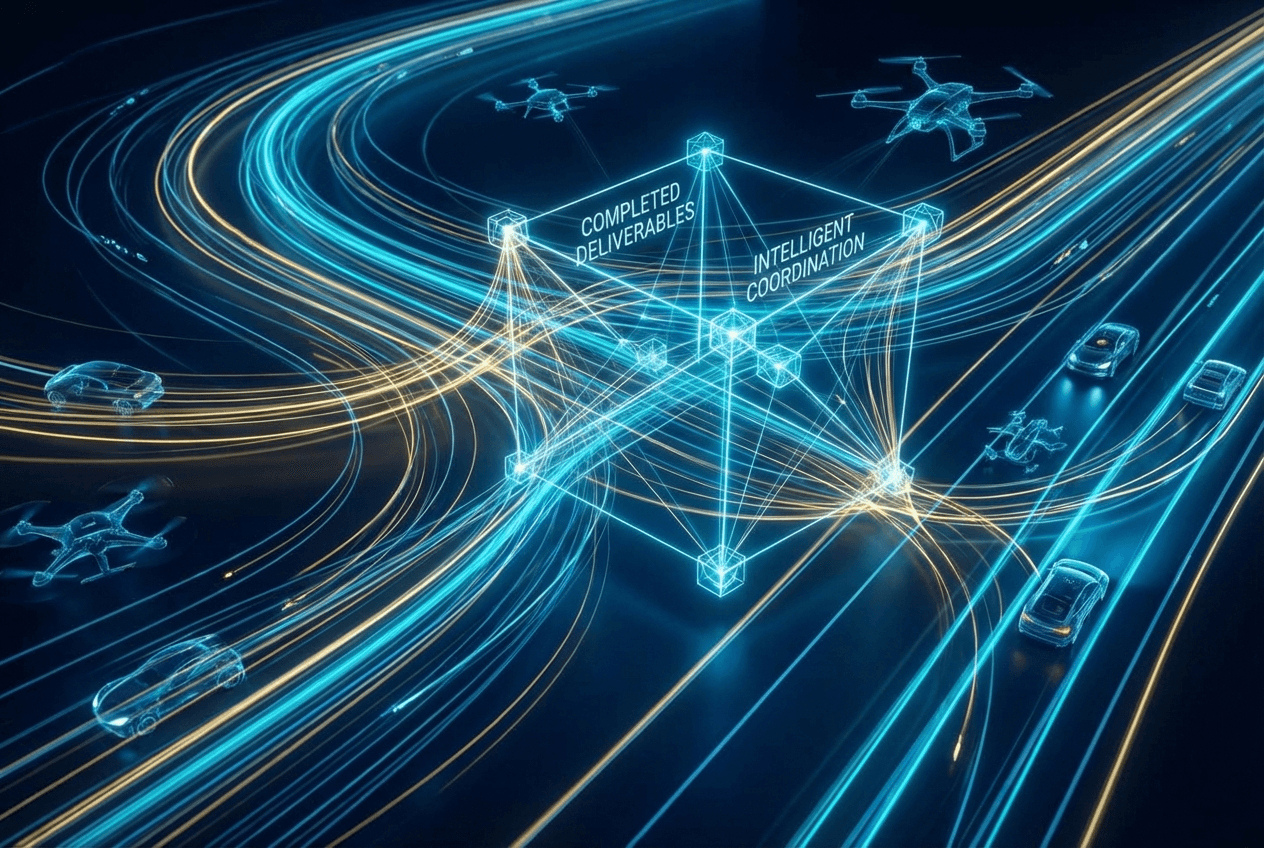
- Multi-agent coordination where specialized agents collaborate on complex tasks, each bringing domain expertise
- Feedback loops that let agents learn from outcomes and improve over time
- Guardrails and validation that ensure quality without requiring human review of every output
None of this is trivial. It's why you see so many AI products that wow in the demo but disappoint in production.
From Horizontal Copilots to Vertical Agents
What excites me most about where AI is heading is the shift from horizontal copilots to vertical, outcome-driven agents. In practice, that means AI designed for a job, not a prompt.
Marketing is a perfect example. No CMO wakes up wanting "better prompts." They want campaigns shipped, tested, optimized, and explained. They want to brief an agent on Monday and review finished work on Wednesday, not babysit a chatbot through 47 iterations of the same blog post.
This is the difference between a tool and a teammate. A tool requires constant direction. A teammate understands the goal and figures out how to get there.
We're seeing this play out across industries:
- In sales, the winning AI isn't the one that "helps write better emails"—it's the one that researches prospects, personalizes outreach, follows up appropriately, and books meetings
- In customer support, it's not about "AI-assisted responses"—it's about agents that resolve issues end-to-end, escalating only when genuinely necessary
- In operations, it's not "AI-powered analytics"—it's agents that identify problems, propose solutions, and implement fixes
The pattern is consistent: outcomes over assistance. Completion over suggestion. Execution over intelligence.
Why Most Teams Are Thinking Too Small
Here's the uncomfortable truth: most teams are building AI that's too polite.
They're building systems that ask permission at every step. That present options instead of making decisions. That assist rather than execute.
This comes from a good place—nobody wants AI making consequential decisions without oversight. But it also reveals a fundamental misunderstanding of how to build useful agents.
The goal isn't unsupervised autonomy. It's supervised execution. You define the parameters, the quality standards, the brand guidelines. The agent executes within those boundaries, making the hundreds of micro-decisions required to ship work.
Think about how you work with a skilled human team member. You don't review every sentence they write or every decision they make. You set clear expectations, provide context and constraints, then let them work. You review the output, provide feedback, and trust them to improve.
That's the model for AI agents. Not "help me do this," but "here's what done looks like—go make it happen."
The Technical Reality of Production Agents
Building agents that actually work in production requires solving problems most teams haven't encountered yet:
Context management across sessions. Chat interfaces reset with each conversation. Real work doesn't. Your agent needs to remember that the campaign launching next week targets enterprise customers in financial services, uses case study social proof, and avoids certain topics due to compliance requirements. Not because you re-explain it every time, but because it's part of the working context.
Tool reliability and error handling. When your agent needs to query a database, call an API, or update a system, those operations need to be robust. Network failures, rate limits, authentication issues—production agents need to handle these gracefully, not crash and lose all context.
Quality assurance without bottlenecks. You can't review every agent output manually, but you also can't ship garbage. This requires automated quality checks, confidence scoring, and intelligent escalation. The agent should know when its output meets standards and when it needs human review.
Multi-step reasoning with course correction. Real work rarely goes perfectly. Sources don't have the data you expected. Initial approaches don't work. Production agents need to recognize when they're stuck and try different approaches, not just fail and wait for human intervention.
What This Means for How We Build
At AgentWeb, we think of agents as teammates, not tools. They research, plan, create, and learn—inside the same systems humans already use. This isn't just philosophy; it shapes every technical decision we make.
When you're building a tool, you optimize for ease of use. When you're building a teammate, you optimize for capability and reliability. You invest in memory systems that maintain context. You build tool integrations that actually work under production load. You create orchestration layers that coordinate complex, multi-step workflows.
You also think differently about the user interface. Chat is fine for giving instructions, but it's a terrible interface for managing work. Real agents need dashboards that show what they're working on, surfaces for reviewing output, and controls for adjusting behavior based on results.
The a16z piece reinforces something we believe strongly: the winning AI companies won't be the ones with the biggest models, but the ones who turn intelligence into execution. Models are commoditizing rapidly. What's not commoditizing is the ability to build agents that reliably ship high-quality work in complex, real-world environments.
The Future Is Action, Not Chat
The future of AI isn't chat. It's action.
It's agents that take your marketing brief and return finished campaigns. That take your sales targets and return qualified pipeline. That take your support tickets and return satisfied customers.
This requires a fundamental rethinking of how we build AI systems. Not features bolted onto existing products, but new architectures designed for autonomous execution within defined boundaries.
The companies getting this right are the ones asking different questions. Not "how do we add AI to our product?" but "what work can we fully automate with AI agents?" Not "how do we make our tool smarter?" but "how do we build agents that actually complete work?"
If you're building AI products, this is the shift to internalize. Your users don't want better prompts. They want finished work. They want to brief an agent and review results, not babysit a process.
At AgentWeb, we're building for that future—agents that don't just assist with marketing, but actually ship it. If you're thinking about how AI agents could transform your marketing operations, let's talk about what execution-focused AI actually looks like in practice.
Ex-Preflect AI, 10+ yrs in marketing, 1 startup exit. Specializes in narrative-driven campaigns and go-to-market playbooks.
Get a free Stack Review.
30 min with Harsha and Matt.
We audit your last 30 days, pinpoint the highest-impact fixes, and hand you the exact playbook we'd run. No deck. No pitch unless there's a fit.