Why AI Personal Shoppers Signal the Age of Autonomous Agents—And What This Means for Marketing

By Rui Wang, CTO of AgentWeb
AI Personal Shoppers: More Than a Retail Revolution
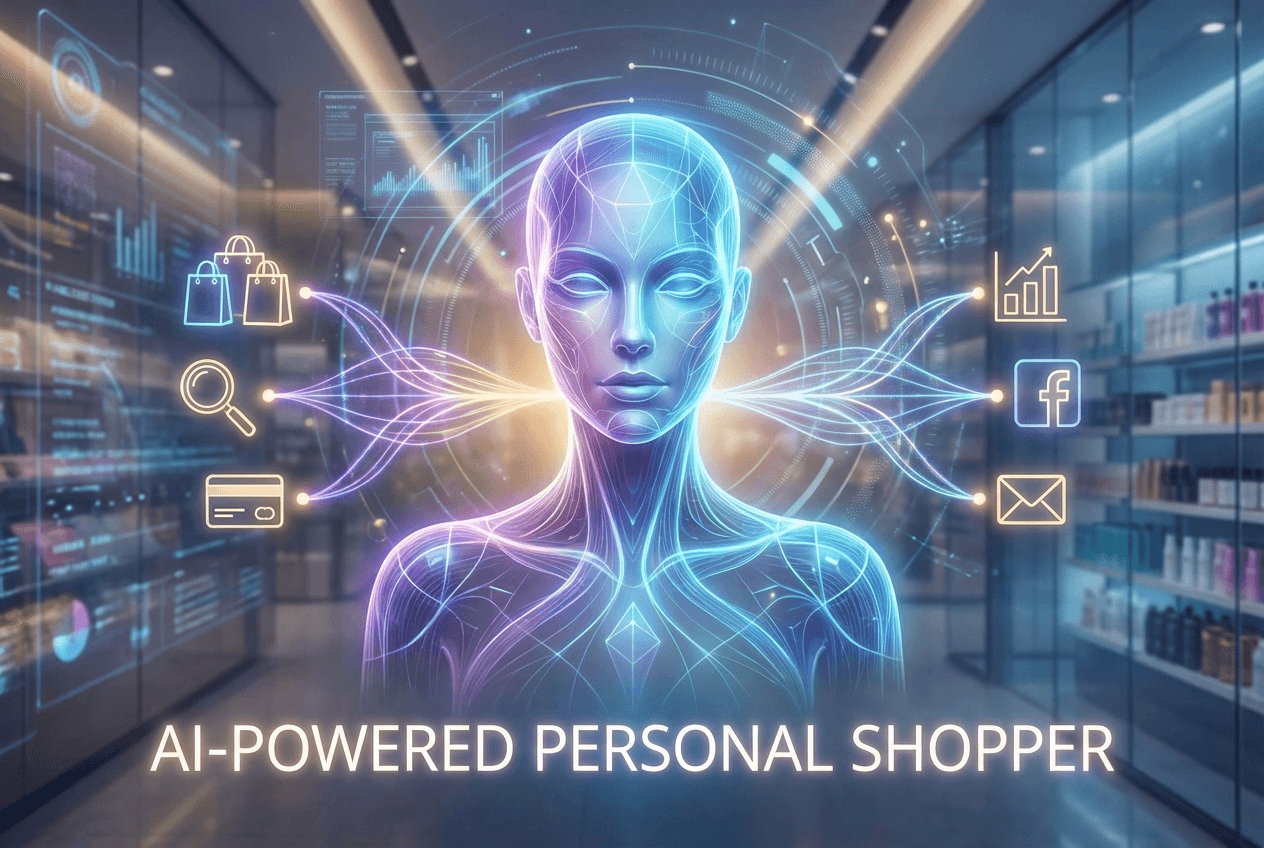
A quiet but profound shift is underway in commerce and marketing. The UK’s Information Commissioner’s Office recently stated that AI-powered personal shoppers could become a mainstream reality within the next five years (The Independent). Most headlines focus on the retail angle—imagine an AI buying gifts for you or restocking your pantry. But this is just the tip of the iceberg.
What’s actually emerging is a new class of autonomous agents: AI systems that don’t just suggest, but act. These aren’t glorified recommendation engines—they’re trusted digital representatives empowered to make decisions and execute tasks on our behalf. The personal shopper is simply the first avatar you’ll meet in a wave of agentic transformation poised to disrupt marketing, operations, and beyond.
From Intelligent Suggestions to True Delegation
For years, AI in consumer tech has primarily played the role of an assistant. Spotify curates playlists, Amazon recommends products, and Google nudges you to check the weather before your commute. These systems assist, but they don’t decide.
The next evolution is agentic AI—tools that cross the threshold from recommendation to autonomous delegation. A personal shopper agent, for instance, must go far beyond searching SKUs by keyword. It needs to:
- Understand your underlying intent, not just parse a shopping list. Are you preparing for a birthday, a trip, or a lifestyle change?
- Balance real-world trade-offs—like cost, delivery time, quality, and brand preferences—all while honoring constraints you set (e.g., only cruelty-free products, or never exceeding a weekly budget).
- Act within guardrails you control. The agent shouldn’t sign you up for subscription boxes you didn’t authorize, or splurge on luxury goods unless permitted.
- Learn continuously from feedback and outcomes. If it picks a brand of coffee you dislike, it needs to adjust next time—just like a great human assistant would.
Imagine the leap from “Alexa, recommend a new phone charger,” to “Alexa, please buy the best charger for my needs and have it delivered by Friday.” This same architecture that enables personal shoppers can drive entirely new workflows in marketing—running campaigns, negotiating ad buys, and optimizing funnels—automatically, with intent.
Real-World Example: Autonomous Ad Buying
Consider programmatic advertising. Today, marketers set goals and budgets, then rely on platforms to automate bidding. With agentic marketing, an AI agent could negotiate media buys across multiple platforms, adapting strategies in real time. Instead of setting and forgetting, the agent experiments, learns, and iterates—optimizing spend and creative choices continually, far faster than any team could.
Trust: The Invisible Bottleneck
The opportunity is massive, but the limiting factor isn’t technology. It’s trust.
The Independent’s report highlights concerns around data protection and consent. But the real challenge is deeper: Will consumers and organizations trust autonomous agents to act on their behalf? Without robust mechanisms for control, transparency, and reversibility, adoption will stall.
For agentic AI to operate at scale, three pillars are essential:
- Clear Boundaries: Users must set explicit limits—what the agent can do, spend, or access. For example, an agent shouldn’t be able to purchase high-ticket items or access sensitive data without further approval.
- Transparent Reasoning: Users need to know not just what the agent did, but why. Was a product chosen for price, quality, or a specific user preference? Decision logs must be accessible and understandable, not a black box.
- Reversibility: Users should be able to audit actions, roll back unintended outcomes, and provide corrective feedback. Think of it as an “undo” button for agentic decisions.
Without these, risk outweighs convenience. Trust collapses, and so does user adoption.
Actionable Insight: Build for Trust from Day One
If you’re building agentic systems—especially in marketing—design for control and transparency from the start. Don’t treat trust as an afterthought. Bake in settings that empower users to set boundaries, view decision histories, and reverse actions. These features won’t just reduce support tickets—they’ll drive adoption.
Agentic Systems in Marketing: Why This Matters Now
Marketing is uniquely positioned to harness the power of autonomous agents. Modern marketing demands:
- Continuous experimentation—A/B testing creative, offers, and audiences across channels.
- Rapid feedback loops—Reacting to market shifts, competitor moves, and real-time analytics.
- Cross-channel coordination—Aligning budgets, messaging, and timing across search, social, email, and programmatic.
Humans, even large teams, struggle to execute this at the required tempo and scale. Autonomous marketing agents, by contrast, can:
- Launch and optimize campaigns automatically, pausing underperformers and reallocating spend.
- Test hundreds of micro-variations in messaging or creative—learning what works in real time.
- Coordinate actions across platforms, maintaining consistency and maximizing ROI without manual syncing.
At AgentWeb, we see this not as mere automation, but as intent-driven delegation. Agentic systems act with your goals and constraints in mind, reporting back outcomes and recommendations. The marketer shifts from operator to orchestrator.
Practical Example: Delegated Email Campaigns
Suppose you want to re-engage inactive customers. A traditional workflow might involve segmenting lists, drafting copy, scheduling sends, and monitoring open rates—hours of work. An agentic system could:
- Analyze your database for likely responders.
- Generate personalized email variants.
- Schedule and send at optimal times for each recipient.
- Automatically tweak subject lines and content based on live results.
- Summarize learnings and next steps at the end of the campaign.
The marketer retains strategy control and reviews outcomes, but the execution is handled by the agent.
Beyond the Hype: Designing for Accountability
The rush to showcase flashy AI demos often obscures a hard truth: The real value in autonomous agents isn’t just their intelligence, but their accountability. The companies that win this new era won’t necessarily have the most dazzling interfaces or cleverest LLM-powered chatbots. They’ll be the ones that invest early in:
- Robust governance tools for users and admins.
- Clear documentation of agent behavior and boundaries.
- Seamless integration with existing systems and workflows.
- Strong data protection and privacy practices, not just for regulatory box-ticking, but as a default user expectation.
The Big Picture: A Platform Shift, Not a Feature
AI personal shoppers are simply the visible tip of a much larger transformation. As agents move from suggestion to action, every facet of business—especially marketing—will be redefined around trust, control, and accountability.
For startup founders, the lesson is clear: Don’t just automate tasks. Delegate intent. Build systems that act, learn, and adapt, but always within boundaries users trust. Prioritize governance as much as innovation. The winners in this new era will be those who understand that autonomy isn’t about replacing humans—it’s about empowering them with safe, transparent, and effective digital agents.
The real work ahead isn’t just deploying agentic AI; it’s designing entire organizations for a world where software acts, not just suggests. That’s where the next generation of category leaders will emerge.
Ex-Google & Microsoft, Ph.D. in security, 1 startup exit. Builds scalable, secure systems and agent infrastructure.
Get a free Stack Review.
30 min with Harsha and Matt.
We audit your last 30 days, pinpoint the highest-impact fixes, and hand you the exact playbook we'd run. No deck. No pitch unless there's a fit.