Best AI Copywriting Tools for 2026: Top 15 + Guide


Best AI Copywriting Tools for 2026: Top 15 + Guide
AI copywriting is no longer a futuristic concept, it’s a practical tool that startups and lean marketing teams are using to scale content creation, personalize messaging, and accelerate growth. It involves using artificial intelligence platforms to draft and refine written materials for everything from social media posts and ad campaigns to landing pages and blog articles. The rapid adoption is driven by a simple need: businesses must produce more high quality, personalized content across numerous channels, often with limited resources. The global AI content generation market is a testament to this, projected to grow from $4.81 billion in 2025 to $7.09 billion in 2026 alone. For fast moving teams, leveraging AI isn’t just about efficiency, it’s about maintaining a competitive edge.
Understanding and Evaluating AI Copywriting Generators
At their core, most AI copywriting tools are powered by large language models (LLMs). These models are trained on vast amounts of text and data from the internet, allowing them to recognize patterns, understand context, and generate human like text based on a user’s instructions, known as a prompt. When you ask an AI to write an ad, it predicts the most likely sequence of words to fulfill your request based on its training.
When evaluating which AI tool is right for you, consider these key factors:
- Output Quality and Relevance: Does the copy sound natural? Is it accurate and aligned with the prompt’s intent?
- Ease of Use: How intuitive is the interface? Can you generate and refine copy quickly without a steep learning curve?
- Features and Integrations: Does it offer templates for specific formats (e.g., Google Ads, blog posts)? Can it integrate with your existing marketing stack, like your CRM or social media scheduler?
- Brand Voice Customization: Can you train the AI on your specific brand tone, style, and vocabulary to ensure consistency?
Top 15 AI Copywriting Tools
To help you navigate the rapidly evolving landscape of digital creation, we have compiled a definitive list of the industry’s most effective platforms for generating high-quality text. These tools are grouped together because they offer unique balances of creativity, SEO optimization, and speed, catering to a wide range of marketing and editorial needs. Exploring these options will allow you to find the specific software that best aligns with your brand voice and production goals.
1. Emma by AgentWeb
Emma is an AI marketing operator that plans, drafts, and publishes on-brand copy across social, SEO, and email. It’s built for founder-led B2B SaaS teams that need high-velocity GTM without adding headcount.
Why startups pick it: One-click Slack approvals, brand-safe guardrails, and direct publishing let lean teams ship multi-channel campaigns in days, not months. Many founders go live within two weeks and then compound output with consistent SEO and executive-brand content.
What you’ll use it for:
- Brand voice controls with automated editorial guardrails
- Multi-channel workflows for LinkedIn, SEO, and email
- Direct CMS/CRM integrations for publishing and personalization
- A/B testing for ad copy and creative optimization
- Slack approval workflows and centralized performance dashboards
Pricing fast facts:
- Free trial: 7 days (self-serve)
- Self-Serve: From $199/month for DIY workflows
- Custom/Done-For-You: Contact sales for human-led growth ops and 90-day sprints
2. Jasper
Jasper is a marketing copilot that turns one brief into on-brand copy for landing pages, ads, and email, ready to deploy. It’s a strong fit for founder-led B2B SaaS teams that want coordinated, channel-ready assets fast.
Why startups pick it: Jasper scales production while enforcing style guides, so teams can generate campaign suites in one pass and keep tone locked. With Chrome, Google Docs, and Slack integrations, it cuts review cycles and keeps everyone moving in the tools they already use.
What you’ll use it for:
- Multi-channel Campaign Agent for unified asset creation
- Brand Voice and Style Guide for tone guardrails
- SEO tools for entity mapping and AI-readiness
- Collaboration workflows with role-based permissions
- Integrations for Chrome, Slack, and Webflow
- Localization support for 30+ languages
Pricing fast facts:
- Trial: 7 days on Pro
- Pro: $69/mo monthly or $59/mo annually per seat
- Business: Custom pricing for API and advanced agents
- Note: Fair use generation policy applies
3. Anyword
Anyword is a performance-focused AI that generates and scores marketing copy with a 0 to 100 Predictive Performance Score. It’s ideal for lean GTM teams that need data-backed iterations across ads, email, and landing pages.
Why startups pick it: Use the Insights Panel to identify winners before you spend on traffic, then push variants to Google, LinkedIn, and HubSpot with native integrations. Brand voice guardrails and the Blog Wizard keep outputs consistent and SEO-smart.
What you’ll use it for:
- Predictive Performance Score for data-driven iteration
- Brand Voice and Vocabulary controls
- SEO-aware Blog Wizard with optimization scores
- Direct integrations for Google, Meta, and HubSpot
- Bulk generation via CSV for rapid A/B testing
- Chrome extension for scoring copy anywhere
Pricing fast facts:
- Free trial: 7 days (2,500 credits)
- Starter: From $39/mo (billed yearly); 1 seat
- Data-Driven: From $79/mo (billed yearly); 3+ seats
- Business/Enterprise: Contact sales for custom models, API, and SSO
4. ChatGPT
ChatGPT is a versatile AI assistant that drafts and refines multi-channel copy, from ads to long-form blogs, using advanced reasoning. It suits founders and lean GTM teams that need fast, on-brand content with collaborative workflows.
Why startups pick it: Custom GPTs and instructions lock in brand voice, while Deep Research speeds up brief creation and long-form drafting. Projects and collaboration modes organize multi-channel work, and enterprise-grade privacy means your data isn’t used for training.
What you’ll use it for:
- Custom GPTs and Instructions for brand-safe tone
- Deep Research mode for data-backed briefs and drafts
- Collaborative workspaces with shared projects and canvas
- 60+ integrations including Slack, Google Drive, and SharePoint
- Advanced data analysis to tailor copy to customer insights
Pricing fast facts:
- Free: $0/mo; basic model access
- Plus: $20/mo; higher limits and Deep Research
- Business: From $20/user/month (annual); admin controls
- Enterprise: Contact sales for scale and security
5. Copy.ai
Copy.ai turns prompts and brand assets into on-brand ads, emails, and landing-page copy at speed. It’s designed for founder-led B2B SaaS teams that want scalable, multi-channel production without heavy ops.
Why startups pick it: A no-code workflow builder and deep template library automate repetitive tasks so weekly ship cadence is simple. “Brand Voice” and “Infobase” keep messaging tight, while model-agnostic options (OpenAI, Anthropic, Gemini) optimize output quality.
What you’ll use it for:
- Brand Voice controls for tone and ICP alignment
- No-code Workflow builder for bulk ad/email generation
- Content Agent Studio for always-on brand-trained agents
- Infobase grounding to store product facts
- Integrations with Google Docs, Zapier, and CRMs
Pricing fast facts:
- Free: 2,000 Chat words/month and 200 one-time Workflow credits
- Chat Plan: $29/mo for 5 seats; unlimited words
- Agents Plan: $249/mo for up to 10 seats; 10,000 Workflow credits
- Enterprise: Custom pricing with API and dedicated support
6. Grammarly
Grammarly is a cross-app AI assistant that drafts, rewrites, and polishes copy while enforcing brand voice anywhere you write. It’s ideal for lean GTM teams that need clean, consistent, on-brand content across tools.
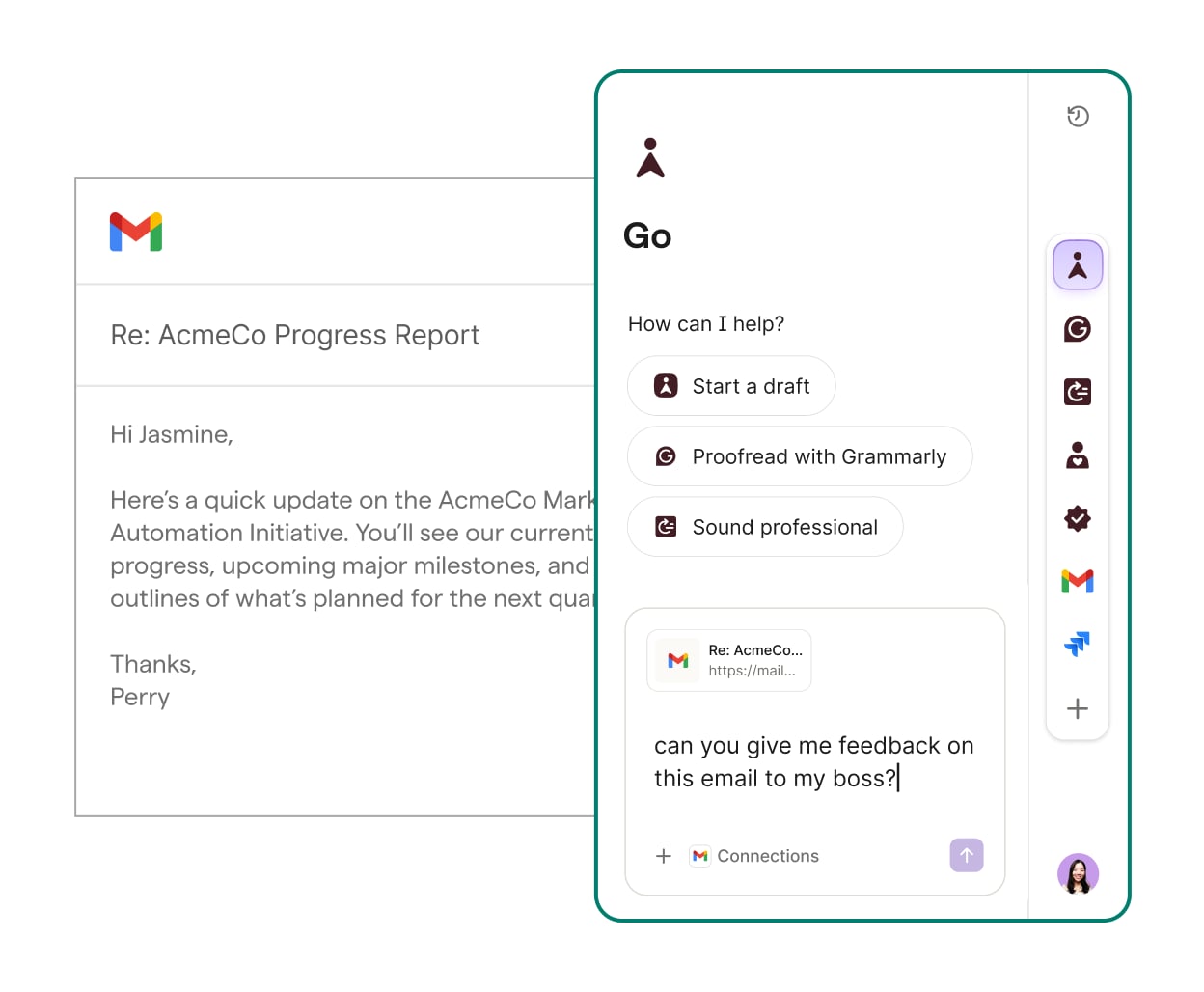
Why startups pick it: One-click rewrites and tone controls live inside Gmail, Docs, and your CMS, with no tool switching. Centralized style guides keep growing teams on-brand, while generous AI prompt limits power multi-channel publishing.
What you’ll use it for:
- AI rewriting, tone adjustment, and clarity controls
- Centralized Style Guides and Brand Tone guardrails
- Plagiarism and AI-generated text detection
- Shared Snippets and Knowledge Share
- Native integrations across 1M+ browser/desktop apps
- Multilingual support with in-line translation
Pricing fast facts:
- Free: $0/mo; basic spelling; 100 AI prompts
- Pro: $12/member/mo; 7-day trial; 2,000 AI prompts
- Enterprise: Contact sales; unlimited prompts and SSO
- Notes: Annual discounts available; no standard refund policy
7. Claude
Claude is a writing assistant and research copilot known for nuanced, brand-safe long-form output. It shines for founder-led B2B SaaS teams needing thoughtful drafts for pages, emails, and content hubs.
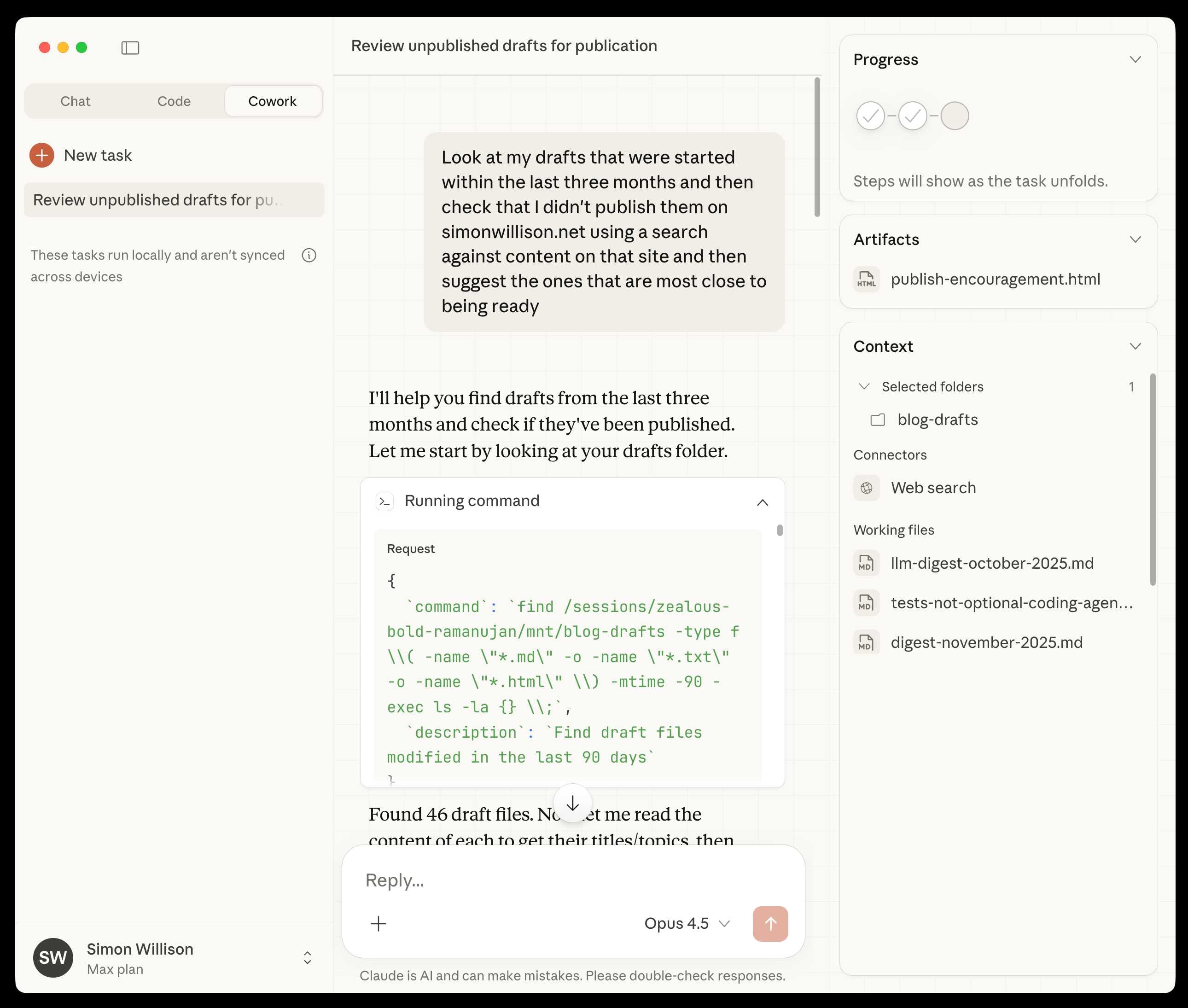
Why startups pick it: Styles preserve voice across assets, while Projects organize shared briefs and references to reduce rework. Built-in web search and app connectors help create authoritative, cited content right in Slack or Microsoft 365.
What you’ll use it for:
- Styles to define tone and maintain brand safety
- Projects for shared context and guidelines
- Research tools for cited summaries from web/internal docs
- Artifacts for live, collaborative drafting
- Multilingual output for global copy localization
Pricing fast facts:
- Free: Limited usage
- Pro/Max: Individual tiers from $20 to $100+/mo
- Team: From $25/seat/mo (monthly); 5 to 150 users
- Enterprise: Custom pricing with advanced admin and SCIM
8. Surfer
Surfer is an AI SEO platform for planning, drafting, and optimizing long-form content that ranks. It’s built for content-led startups and founder-led B2B SaaS teams growing through organic search.
Why startups pick it: Move from keyword research to optimized drafts fast, then monitor rankings and brand presence in AI search (ChatGPT, Perplexity) with the AI Visibility Tracker. Brand Knowledge and automated internal linking keep output on-tone and efficient.
What you’ll use it for:
- Content Editor with real-time NLP guidelines and Content Score
- Surfer AI for one-click drafts in 11 languages
- Keyword Research and Topical Maps for strategy
- AI Visibility Tracker for brand presence in AI search
- Integrations with Google Docs, WordPress, and Zapier
Pricing fast facts:
- Plans: Discovery ($49/mo), Standard ($99/mo), Pro ($182/mo), Peace of Mind ($299/mo)
- Limits: 1–10 seats; 120 to unlimited document optimizations
- AI credits: On-demand for one-click drafts
- Trial: No free plan; cancel anytime
9. Writesonic
Writesonic is an AI SEO and copy platform for fast, on-brand ads, landing pages, and long-form. It’s a pragmatic choice for founder-led B2B startups that want multi-channel output without heavy lift.
Why startups pick it: Prebuilt templates and AI Article Writer 6.0 accelerate idea-to-draft, while Writing Styles keep tone consistent. WordPress and Zapier integrations streamline distribution, with AI Traffic Analytics and audits for an edge.
What you’ll use it for:
- Multi-channel templates for ads, emails, and LPs
- AI Article Writer 6.0 for long-form SEO drafts
- Custom Writing Styles for brand voice
- Built-in SEO Agent and optimization tools
- One-click WordPress publishing and Zapier integrations
- Multilingual support (24+ languages)
Pricing fast facts:
- Free: AI Traffic Analytics (beta), no card
- Starter: From $79/mo (annual) for 1 user
- Basic/Growth: From $199/mo; more users/styles
- Notes: ~20% savings on annual
10. INK
INK is an AI writing and SEO workspace that unifies research, drafting, optimization, and originality checks. It’s best for founder-led B2B SaaS teams that want search-ready blogs in one tool.
Why startups pick it: INK bundles keyword clustering, real-time SEO scoring, and plagiarism/AI-detection safeguards so content ships fast and risk-aware. A direct WordPress plugin turns drafts into published posts without juggling multiple apps.
What you’ll use it for:
- Real-time SEO Optimizer with actionable task cards
- Keyword clustering and automated topic briefs
- Content Shield for plagiarism and AI-detection scanning
- 70+ AI writing templates for varied formats
- WordPress plugin for streamlined CMS publishing
- Integrated AI image generator for visuals
Pricing fast facts:
- Free: AI words and 3 SEO articles
- Professional: From $39/mo; SEO scoring
- Enterprise: $99/mo for 3 seats; full access
- Note: Brand transition to SmythOS may affect pricing
11. Hypotenuse AI
Hypotenuse AI generates on-brand ecommerce and marketing copy at scale, from SEO blogs to product descriptions. It’s great for lean teams that need CMS-ready content and bulk production.
Why startups pick it: Bulk workflows process up to 10,000 items via spreadsheet imports, turning catalogs into pages quickly. Custom voice models and an AI guideline checker add brand and legal safety, with direct CMS publishing to keep ops light.
What you’ll use it for:
- Bulk generation (10,000 items) via CSV/XLSX
- Custom brand voice and style guide controls
- SEO toolkit with SERP research, PAA, internal linking
- Templates for ads, emails, and landing pages
- Publishing to WordPress, Webflow, Medium, Shopify
- Plagiarism checks and real-time factual research
Pricing fast facts:
- Free trial: Available, no card
- Paid plans: From $19/mo (annual) or $29/mo (monthly)
- Tiers: Essential ($56/mo) and Blog Pro ($150/mo)
- Notes: 1–3 seats; Shopify integration enterprise-only; no public money-back guarantee
12. SmartWriter
SmartWriter automates prospect research to craft personalized icebreakers and cold outreach at scale. It’s ideal for founder-led B2B SaaS teams and agencies that need context-rich outbound without manual lift.
Why startups pick it: It scrapes LinkedIn and news to create bespoke openers that drive replies, then syncs to CRMs like HubSpot. Credits roll over, and bulk workflows make it easy to spin up large campaigns quickly.
What you’ll use it for:
- Automated LinkedIn/website research for personalization
- Multi-variant output, with up to 21 lines per credit
- Bulk CSV workflows; integrations with CRMs/ESPs
- Templates for cold email, backlinks, social outreach
- Email finder, verification, and quality checks
Pricing fast facts:
- Free trial: 7 days; no card
- Paid plans: From $49/month for 400 lead credits
- Pro: Higher-volume tiers include Chrome extension
- Note: Unlimited credit rollover; 1 credit per lead
13. NeuralText
NeuralText combines keyword discovery, SERP-driven briefs, and an AI editor to streamline SEO content. It’s a practical pick for founder-led B2B SaaS teams building high-intent organic pages.
Why startups pick it: It compresses the SEO lifecycle: find opportunities via clustering, build briefs, draft, and track rankings through Google Search Console. Bulk brief creation helps small teams launch campaigns on a weekly cadence.
What you’ll use it for:
- SERP-backed briefs with outlines and entity extraction
- AI Smart Editor for expand/shorten/rephrase
- Keyword clustering to plan hubs and avoid cannibalization
- 40+ marketing templates for ads, headlines, frameworks
- Google Search Console integration for performance tracking
Pricing fast facts:
- Trial: 5 days; 5,000 AI words and 3 SERP analyses
- Starter: $19/month; 100k AI words and 5 briefs
- Pro: $119/month; 3 seats and 100 briefs
- Notes: Save 15% annually; cancel anytime
14. 8Designers Ads Generator
8Designers Ads Generator is a lightweight ad ideation tool that suggests templates and headlines from a quick brief. It’s perfect for solo founders and lean teams that want rapid, low-cost performance copy experiments.
Why startups pick it: Validate angles fast with niche-specific templates and a streamlined, form-based workflow. It’s a budget-friendly way to spin up lots of variants, making it best for teams comfortable with manual copy-paste handoffs.
What you’ll use it for:
- Templates tailored to SaaS, E-commerce, Health, and more
- Headline packs and full ad example libraries
- Fast brief-to-suggestion workflows for ideation
- Cross-channel extras (email titles, high-impact keywords)
- Unlimited template access for high-volume testing
Pricing fast facts:
- Monthly: $2.99/month; unlimited template access
- Lifetime: $46.99 one-time
- Refunds: 15-day window for memberships
- Notes: No credit caps or seat limits specified
15. Rytr
Rytr is a budget-friendly AI writer with 40+ templates for fast short-form marketing copy. It serves founder-led B2B SaaS teams that need quick drafts for ads, emails, and landing pages.
Why startups pick it: Unlimited generations and a Chrome extension make on-the-fly writing easy. “My Voice” preserves brand tone, while built-in SEO tools and a flexible API help teams weave Rytr into internal workflows.
What you’ll use it for:
- 40+ templates for ads, emails, and LPs
- My Voice custom tone matching for brand consistency
- Chrome extension for cross-platform editing
- SEO keyword extractor and meta generators
- Copyscape plagiarism checker
- Flexible API for automated content ops
Pricing fast facts:
- Free: $0/month; 10,000 characters; basic tones
- Unlimited: ~$7.50/month (annual); unlimited generations
- Premium: ~$24.16/month (annual); multiple custom tones; 35+ languages
- Team: $19/month per additional seat
Measuring the ROI of AI Copywriting
Measuring the return on investment of AI copywriting goes beyond simply tracking word count. The real value is found in tangible business outcomes. Companies that effectively leverage AI in marketing can see a 10 to 20% improvement in sales ROI.
Here are the key areas where AI delivers returns:
- Increased Efficiency: AI dramatically reduces the time spent on first drafts, brainstorming, and creating variations of copy for A/B testing. This frees up your team to focus on higher level strategy and creative thinking.
- Higher Content Velocity: With AI assistance, teams can produce significantly more content, increasing their presence on SEO, social media, and email channels. This leads to more opportunities for engagement and conversion.
- Improved Campaign Performance: AI can generate and test numerous ad variations to find the most effective messaging, often boosting click through rates and lowering customer acquisition costs. AI driven personalization can deliver five to eight times the ROI on marketing spend.
- Cost Savings: By automating repetitive writing tasks, businesses can scale their content efforts without immediately needing to hire more writers, directly impacting the bottom line.
For startups that need to connect AI powered execution directly to their growth metrics, services like AgentWeb can build and manage the entire go to market system for you. See the Nailed It case study for attribution and ROI details.
A Practical Workflow for AI Assisted Content Creation
The most successful teams don’t just “press a button.” They use AI as a collaborator within a structured workflow that keeps humans in control. This “human in the loop” approach ensures quality, accuracy, and brand alignment.
A simple yet effective workflow looks like this:
- Human Strategy & Briefing: A marketer or founder defines the campaign goal, target audience, key message, keywords, and desired tone.
- AI First Draft Generation: Use a detailed prompt to ask the AI to generate an initial draft, an outline, or a set of ideas.
- Human Review & Refinement: This is the most critical step. A human editor must review the AI output for factual accuracy, edit for brand voice and nuance, and add unique insights or stories that an AI cannot invent.
- AI Optimization: Use AI tools to suggest SEO improvements, generate alternative headlines, or create social media snippets from a longer piece of content.
- Final Human Approval: The final piece is approved by a human stakeholder before being published.
This hybrid model combines the speed of AI with the strategic and creative oversight that only a human can provide. It’s the core principle behind integrated services that pair AI agents with senior operators, a model offered by platforms such as AgentWeb; learn more in our story.
Expert Tips for Better AI Copywriting Results
Getting high quality output from an AI copywriting tool is a skill. Here are some best practices to get the most out of your efforts:
- Master Prompt Engineering: The quality of your output is directly tied to the quality of your input. Provide as much context as possible: describe your audience, specify the tone (e.g., “witty and informal” or “professional and authoritative”), provide examples, and state the goal of the copy.
- Use It as a Brainstorming Partner: If you’re stuck with writer’s block, ask an AI to generate ten headlines or a blog post outline. This can be a great way to kickstart the creative process.
- Develop a Brand Voice Guide: Create a detailed guide for your brand’s style and feed it to the AI. This helps ensure consistency across all generated content. If LinkedIn is a core channel for your founder brand, see our LinkedIn ghostwriter guide.
- Never Publish Unedited Drafts: Always treat the AI’s output as a first draft. It needs a human touch to ensure quality, accuracy, and originality.
Navigating Legal and Ethical Waters with AI Content
As AI copywriting becomes more common, it’s crucial to be aware of the legal and ethical landscape. The primary concerns revolve around copyright, plagiarism, and accuracy.
Current legal frameworks generally require human authorship for copyright protection, meaning purely AI generated content may not be protectable. Furthermore, because AI models are trained on vast amounts of internet data, there’s a small risk they could generate text that is “substantially similar” to copyrighted work, potentially leading to infringement claims.
Another significant issue is “hallucinations,” where an AI confidently states false information. Publishing inaccurate content can damage your brand’s reputation and even lead to legal trouble. Also consider security risks in AI marketing automation that can expose sensitive data or workflows. The best practice is always to have a human fact check any claims and review content for originality before publication.
Recognizing Limitations and Ensuring Quality
While incredibly powerful, AI copywriting tools have limitations. They lack genuine human experience, emotion, and deep strategic understanding. An AI can’t interview a customer to get a compelling testimonial, nor can it create a truly novel marketing angle based on a deep understanding of your business goals.
To safeguard quality, implement these measures:
- Rigorous Human Oversight: Every piece of AI assisted content must be reviewed by a human editor.
- Use AI for Structure, Not Substance: Let the AI build the scaffolding (like an outline or a rough draft), while your team adds the unique insights, data, and stories. For a broader framework that connects content to pipeline, see our GTM strategy and operations guide.
- Cross Reference All Data: If an AI provides a statistic or a factual claim, independently verify it from a reputable source.
For teams wanting to leverage AI speed without sacrificing quality, using a managed service like AgentWeb provides a built in layer of human strategic and creative review.
Common AI Copywriting Mistakes (And How to Avoid Them)
As teams adopt AI copywriting, some common pitfalls can compromise content quality and effectiveness.
- Overreliance on Automation: The biggest mistake is publishing AI generated text without any human review or editing.
- Using Vague Prompts: Giving the AI a generic prompt like “write a blog post about marketing” will yield generic, low quality content. Instead, use detailed briefs and a review loop. Here’s how to combine human and AI tools for faster content.
- Forgetting Your Brand Voice: If you don’t guide the AI, it will produce copy that sounds robotic and disconnected from your brand’s personality.
- Ignoring the Audience: AI doesn’t inherently understand the nuanced pain points and desires of your specific audience. Your prompts must provide that context.
- Failing to Fact Check: AI models can and do make things up. Always verify any data, statistics, or claims.
The Future of Copywriting: Collaboration, Not Replacement
Will AI replace human copywriters? The consensus is no, but the role is evolving. AI is exceptionally good at handling repetitive, data driven tasks, but it struggles with the creativity, empathy, and strategic thinking that define great copywriting.
In a recent survey, 55% of copywriters expressed concerns about job displacement, while 52% worried about a lack of creativity in AI generated content. The future of the profession lies in leveraging AI as a powerful assistant. The copywriter of tomorrow will be a strategist, an expert prompter, and a skilled editor who uses AI to produce better work, faster. The most successful marketing teams will be hybrid, combining human creativity with machine efficiency to drive superior results.
Putting AI Copywriting to Work for Your Startup
AI copywriting is a transformative technology that allows startups and lean teams to punch above their weight. It accelerates content production, enhances personalization, and provides valuable insights. However, it’s a tool, and like any tool, its effectiveness depends on the skill of the person using it. The best approach is a hybrid one, where human strategists guide powerful AI agents to execute campaigns efficiently.
Ready to move from experimenting with tools to building a complete AI powered growth engine? Explore how AgentWeb combines agentic AI with senior marketing operators to drive results. Start with an AI GTM evaluation.
Frequently Asked Questions About AI Copywriting
What is AI copywriting?
AI copywriting is the process of using artificial intelligence tools to generate and refine written content for marketing purposes, such as ads, emails, social media posts, and blog articles.
Is AI generated copy plagiarism free?
While AI tools aim to create original content, they learn from existing data. This means there is a small risk they might produce text that is very similar to their training material. It is always best practice to use a plagiarism checker and have a human review the content.
How can I make my AI copy sound more human?
To make AI copy sound more human, provide very specific prompts that include details about your target audience, desired tone of voice, and brand personality. Additionally, always have a human editor review and refine the text to add nuance, emotion, and unique insights.
Can Google detect AI generated content?
Google’s focus is on the quality and helpfulness of content, not on whether it was written by a human or an AI. As long as the content is high quality, original, and serves the user’s intent, it can rank well.
What is the best AI copywriting tool for startups?
The “best” tool depends on your specific needs. Startups should look for a tool that is easy to use, offers templates relevant to their marketing channels (like social media and ads), and provides a good balance of features and affordability.
Does using AI for copywriting save money?
Yes, AI copywriting can save money by reducing the time it takes to create first drafts and content variations, allowing smaller teams to produce more content without immediately increasing headcount. Many companies report that AI helps lower their customer acquisition costs and improves overall campaign ROI.
Or run a free AI Marketing Eval to see where your GTM has gaps.
Ex-Meta, Google, LinkedIn. 10+ years in ML & data science for GTM. Expert in customer acquisition and growth activation.
Get a free Stack Review.
30 min with Harsha and Matt.
We audit your last 30 days, pinpoint the highest-impact fixes, and hand you the exact playbook we'd run. No deck. No pitch unless there's a fit.