10 Best AI GTM Agent Platforms for Startups & Teams (2026)


TL;DR
AI GTM agents help teams execute go-to-market work (prospecting, enrichment, outreach, content, analytics) faster and with fewer people. The category is crowded and confusing, with everything from AI email writers to enterprise ABM platforms calling themselves “agents.” For early-stage startups, the best AI GTM agent is one that actually ships campaigns and keeps humans in the loop, not one that promises full autonomy on a broken data foundation. This guide compares 10 options across pricing, features, tradeoffs, and real user sentiment so you can pick the right one for your stage and budget.
What Is an AI GTM Agent?
An AI GTM agent is software (or an AI-assisted service) that helps execute go-to-market work: account research, prospecting, lead enrichment, campaign generation, outreach, signal monitoring, content creation, attribution, and pipeline reporting.
That definition sounds simple. The problem is that the term covers wildly different things. Two platforms can both call themselves AI-powered GTM agents while doing almost nothing in common under the hood, as Demandbase notes in their 2026 platform guide. One might be an AI SDR that sends cold emails. Another might be an enterprise ABM platform that scores accounts and runs advertising.
Here is the taxonomy that actually matters:
AI + human GTM execution partner. Combines AI workflows with senior operators who own strategy, creative quality, and campaign shipping. Best for startups without a marketing team.
AI SDR. Automates prospecting, outreach, and meeting booking. Best for teams with a defined ICP and outbound volume.
Enrichment and workflow agent. Runs data enrichment, lead scoring, and research workflows. Best for teams with a GTM engineer.
Account intelligence / ABM platform. Scores accounts, tracks intent signals, and orchestrates ABM campaigns. Best for enterprise teams with mature sales-marketing alignment.
Analytics and attribution agent. Connects campaigns to revenue. Best for teams with enough pipeline data to analyze.
Understanding which type you need matters more than comparing feature lists. A founder who needs shipped multichannel campaigns is buying something fundamentally different from an enterprise team that needs account-based advertising.
How to Choose the Right AI GTM Agent
Before comparing tools, answer four questions:
1. Do you need output or infrastructure?
If you need campaigns shipped this month, choose an execution partner. If you need a data layer your team will build on, choose a workflow tool or ABM platform.
2. Do you have someone to own workflows?
Clay and Relevance AI are powerful but require someone to design and maintain logic. If nobody on the team wants that job, avoid tool-heavy orchestration.
3. Is your ICP validated?
If your ideal customer profile is still fuzzy, avoid high-autonomy outbound. AI SDRs amplify whatever inputs you give them, including bad targeting. A solid go-to-market strategy framework should come before automation.
4. Can you measure results weekly?
If you cannot track what is working, scaling campaigns is guessing. Build performance tracking before you buy tools that scale execution.
Here is a simple decision tree:
Need campaigns shipped → AI + human execution partner
Need more outbound volume → AI SDR or sales engagement tool
Need better lists and enrichment → Clay, Apollo, or Persana
Need custom internal agents → Relevance AI
Need ABM and account intelligence → Demandbase or Landbase
Need attribution and pipeline visibility → HockeyStack
Quick Comparison: Best AI GTM Agents
Tool | Best For | Execution Model | Starting Price | Free Tier/Trial | Main Strength | Main Tradeoff |
|---|---|---|---|---|---|---|
AgentWeb | Startups needing shipped campaigns | AI + human execution | $199/mo (self-serve) | 7-day free trial | Weekly GTM output with human oversight | Custom/done-for-you pricing not public |
Clay | GTM engineers building workflows | Enrichment/orchestration | $149/mo | Free (100 credits) | Flexible multi-source enrichment | Requires workflow design skills |
Apollo | Budget prospecting | Database + sequences | ~$49/user/mo (annual) | Free plan | Large contact database, low entry price | Data accuracy issues at scale |
Persana AI | Affordable AI prospecting | AI SDR / enrichment | $68/mo (annual) | Free (50 credits) | Lower cost AI research + outreach | AI SDR features locked to higher tiers |
Relevance AI | Custom AI agent building | No-code agent builder | $199/mo | Free plan | Build any workflow without code | Not a done-for-you GTM system |
Regie.ai | SDR team productivity | AI sales engagement | $180/user/mo | Not listed | High-volume personalized outreach | Per-user pricing scales fast |
11x | Autonomous AI SDR | AI SDR | ~$5,000/mo (estimated) | No | Full autonomous prospecting | High cost, opaque pricing |
Landbase | Consolidated agentic GTM | AI GTM platform | ~$2,000-5,000/mo (estimated) | No | All-in-one agentic execution | Low review volume, early-adopter risk |
HockeyStack | Revenue analytics | Attribution + intelligence | $2,200/mo | No | Campaign-to-pipeline attribution | Not a prospecting agent |
Demandbase | Enterprise ABM | Account intelligence | Custom (enterprise) | No | Intent data + account scoring | Months to implement and see ROI |
Best AI GTM Agents Compared
1. AgentWeb
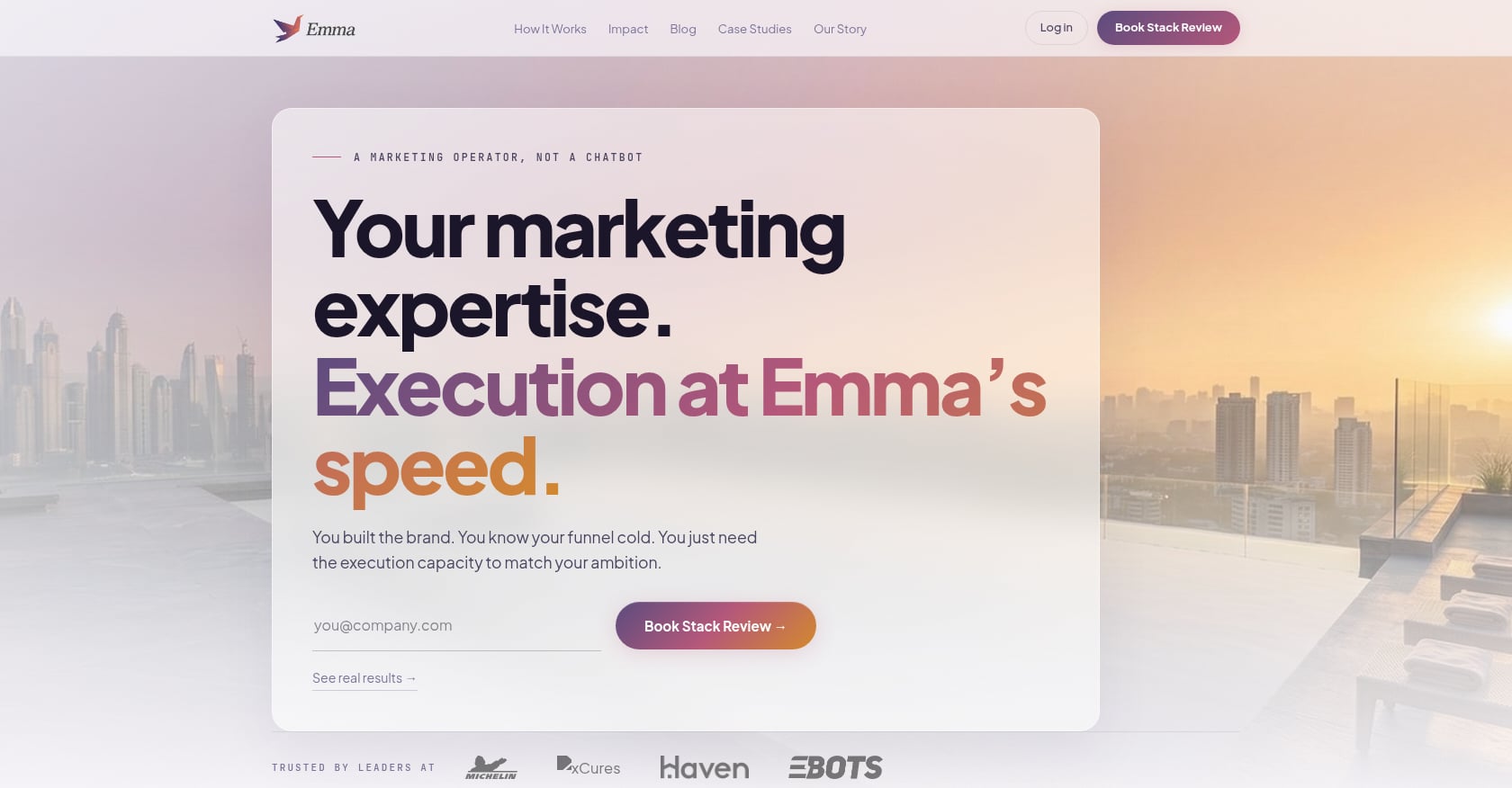
Best for: Pre-seed to Series A startups that need traction without hiring a full marketing team.
AgentWeb is not a standalone software tool. It is an AI + human go-to-market execution service and platform. Its agentic AI marketer, Emma, handles content, research, campaign workflows, engagement emails, and performance tracking, while senior human operators own strategy, creative judgment, and iteration quality.
Pricing:
Self-serve platform: 7-day free trial, then $199/month
Custom workflows (AI-led co-pilot): seasonal pricing, contact founders@agentweb.pro
Done-for-you Growth Ops: seasonal pricing, contact founders@agentweb.pro
Done-for-you runs in 3-month sprints, with the option to continue or transition to DIY
Key features:
On-brand content generation and engagement emails
Prebuilt GTM workflows and templates
Custom workflow creation
GTM research, calendars, audits, and campaign planning
Weekly campaign assets (social, blog, short-form video)
Founder brand support
SEO foundation
Multichannel execution across paid, organic, email, and SEO
Creative asset production (ads, lead magnets, landing pages)
Weekly performance reviews
Management via AgentWeb Portal
Human-led strategy and Slack collaboration on higher-touch plans
Why it stands out:
The category is full of tools that require someone to run them. AgentWeb fills a different gap: it acts as the GTM engine for teams that do not have a marketing department. The done-for-you tier functions as an outsourced creative and growth team, while the self-serve tier gives founders control over prebuilt workflows. That range matters because early-stage GTM is still ambiguous, and teams need a path from execution support to self-sufficiency.
This matters more than it sounds. Practitioners on Reddit’s r/AI_Agents argue that early-stage GTM often needs people who deeply understand the buyer’s pain, not generic SDRs that burn through leads before the company has learned enough. AgentWeb’s human-in-the-loop model addresses that directly.
Tradeoffs:
Custom and done-for-you pricing is not publicly listed
Self-serve teams still need to approve, execute, and monitor outputs
The done-for-you model is a service engagement, not a plug-and-play software purchase
May be broader than needed for teams that only want a cheap contact database
Verdict: AgentWeb is the strongest fit for startups that need a GTM engine, not another dashboard. If your problem is “we need campaigns shipped this week and nobody to run marketing,” this is where to start. Evaluate your AI GTM readiness to see which tier makes sense.
2. Clay
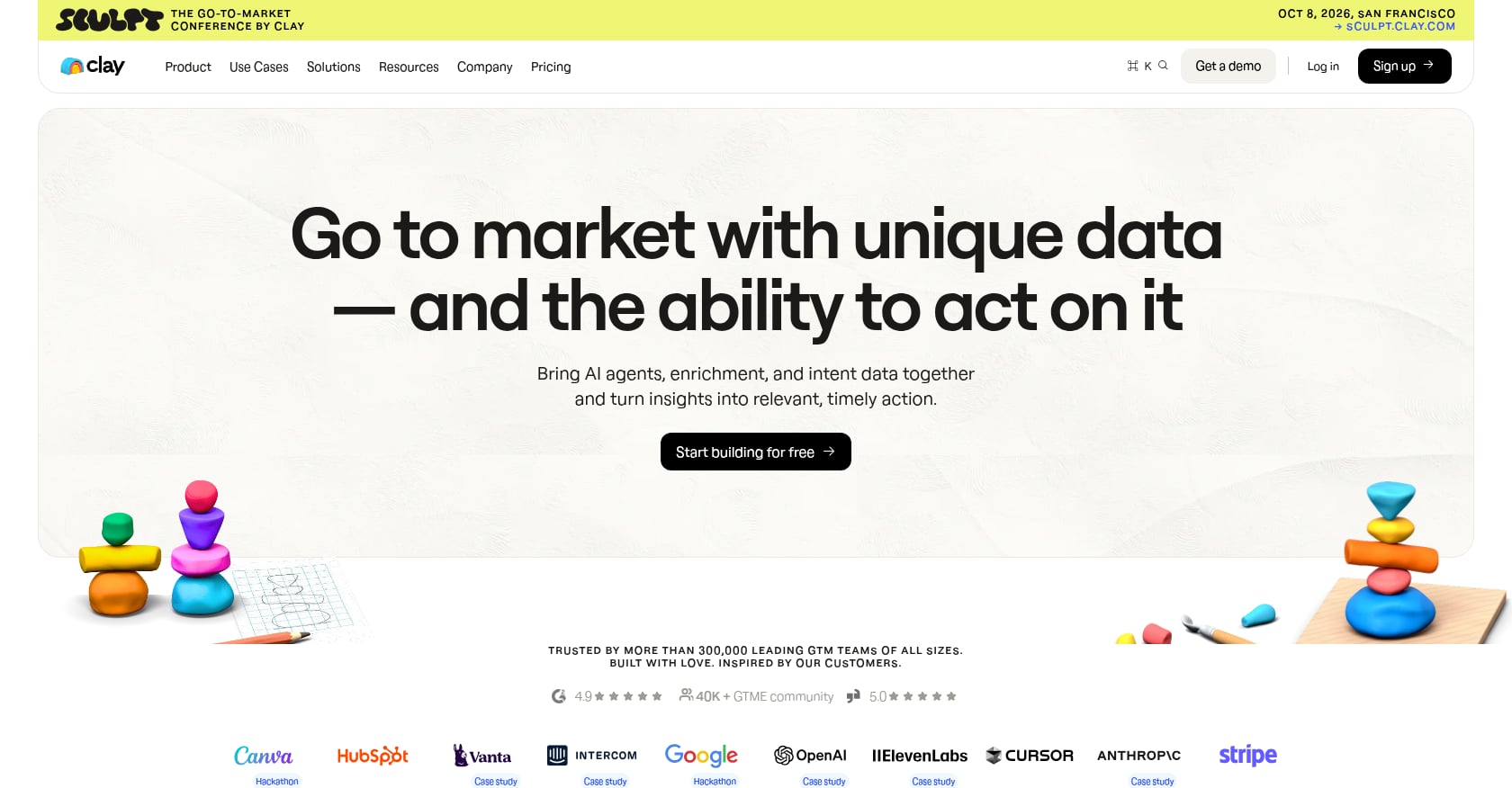
Best for: GTM engineers and RevOps teams building custom enrichment workflows.
Clay is a spreadsheet-style GTM workflow builder. You connect data providers, define enrichment sequences, and build research workflows that run automatically. It is powerful for teams that know exactly who they want to reach and need to enrich, score, and route leads at scale.
Pricing:
Free: 100 credits
Starter: $149/month (~$134/month annual)
Explorer: $349/month (~$314/month annual)
Pro: $800/month (~$720/month annual)
Enterprise: custom, estimated $30K+/year
Credit-based model; annual billing saves roughly 10% (source)
Key features:
Waterfall enrichment across multiple data providers
AI research agents (Claygent)
Lead list building and scoring
AI-assisted personalized copy
CRM and sequencer integrations
Integrations with dozens of data sources
Real user perspective:
G2 reviews rate Clay at 4.7/5 from 193 reviews. Users praise data enrichment, integrations, and time savings. Recurring complaints include learning curve, credit consumption surprises, and expense at higher volumes.
Practitioners on Reddit’s r/SaaS raise a deeper concern: when orchestration logic lives inside a vendor tool, roadmap and pricing changes become operational risk. One thread discussed Clay’s pricing overhaul forcing teams to re-evaluate their entire GTM stack.
Tradeoffs:
Requires a technical person to build and maintain workflows
Credit usage can surprise teams running complex enrichment
Does not replace strategy, messaging, or sending infrastructure
Not beginner-friendly for founders without RevOps support
Verdict: Choose Clay if you have the technical GTM talent to build and maintain enrichment workflows. Skip it if your team needs campaigns shipped for you or does not have someone who wants to live inside workflow logic.
3. Apollo
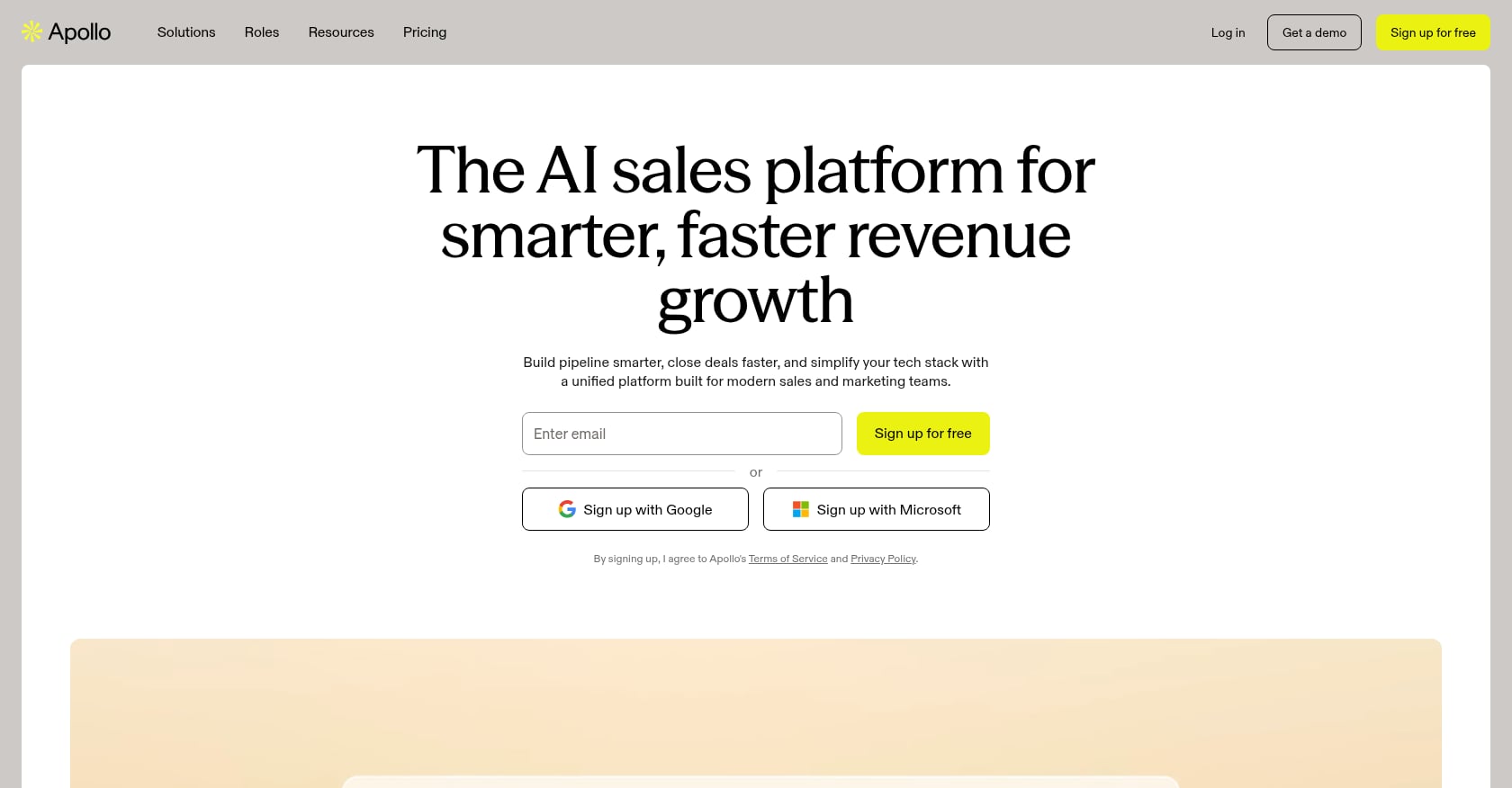
Best for: Teams that want a large contact database plus basic sequencing at a low entry price.
Apollo is one of the most widely used B2B prospecting tools. It combines a large contact database with search filters, email verification, sequences, and AI-assisted writing. For many startups, it is the first prospecting tool they buy.
Pricing:
Free plan available
Basic: ~$49/user/month (annual)
Professional: ~$79/user/month (annual)
Organization: ~$119/user/month (annual), often with minimum seat requirements
Credit systems and phone/mobile data add-ons affect real cost (source)
Key features:
Large B2B contact database
Prospecting filters and search
Email enrichment and verification
Sequences and automated follow-ups
AI-assisted email writing
Intent signals on higher tiers
CRM integrations
Calling features on some plans
Real user perspective:
G2 reviews rate Apollo at 4.7/5 from 9,549 reviews. Users praise ease of use, lead generation, and features. The most common complaints are inaccurate data, missing features, and learning curve.
Data quality is the biggest practical concern. One Reddit agency operator reported Apollo bounce rates climbing to 8%, 11%, and 13% on certain campaign batches in early 2026. Another user pushed back, saying Apollo still works if every export gets verified through a tool like ZeroBounce before sending. That verification step adds cost and workflow complexity that the sticker price does not reflect.
Tradeoffs:
Data must be verified before sending (budget for verification tools)
Per-user pricing plus credits can get expensive with multiple seats
Deliverability risk if teams send raw, unverified exports
Less flexible than Clay for custom enrichment logic
Not a complete GTM strategy or campaign execution system
Verdict: Apollo is a practical first prospecting tool for teams that want predictable lead generation without new hires. But do not treat it as a clean-data guarantee. Budget for verification and human review before launching campaigns.
4. Persana AI
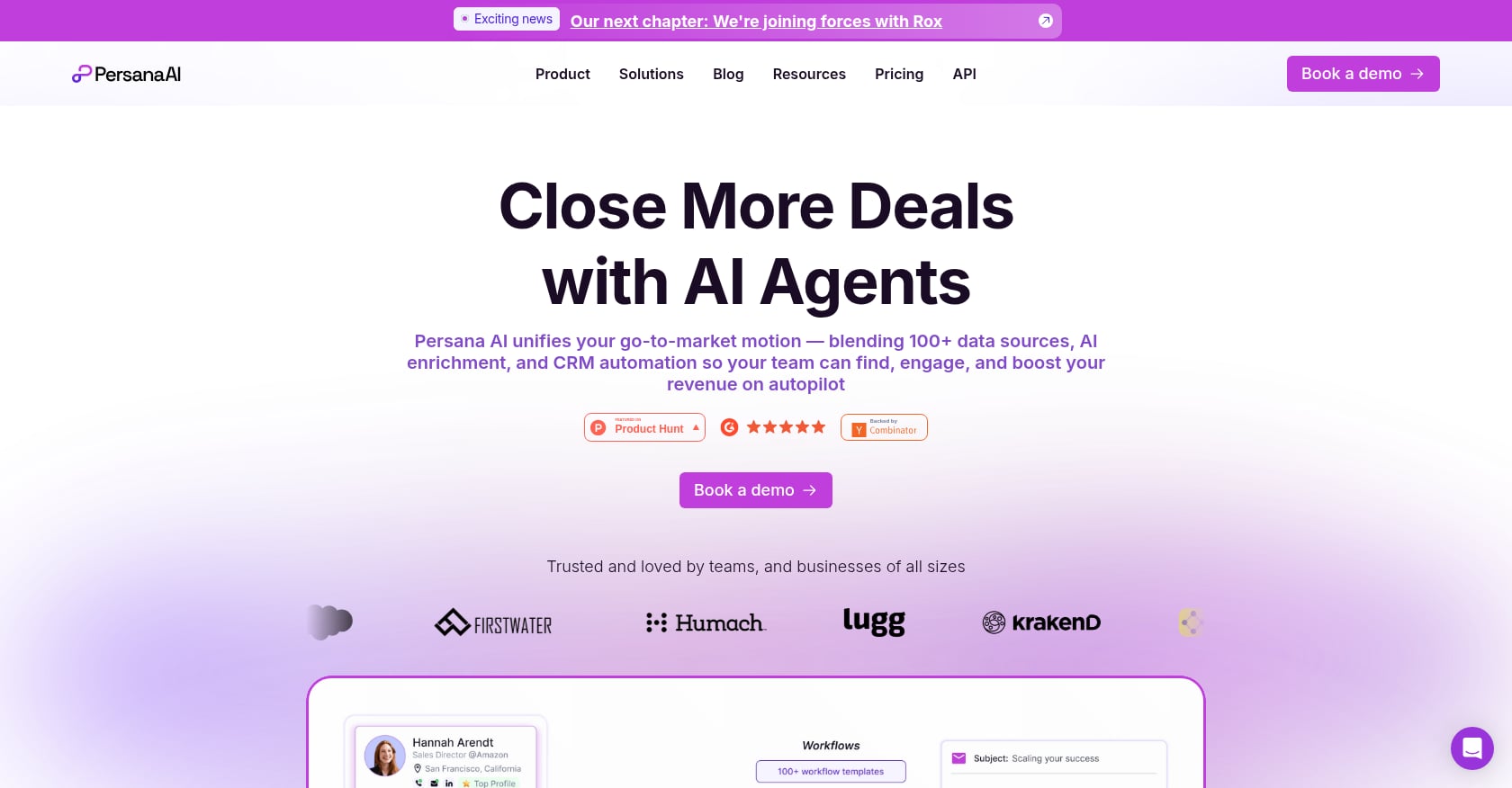
Best for: Small teams that want AI prospecting and enrichment without enterprise pricing.
Persana offers a combination of data enrichment, AI research agents, and personalized outreach at a lower price point than most AI SDR tools. It is a reasonable option for founders testing outbound who are not ready for 11x-level pricing.
Pricing:
Free: $0/month, 50 credits
Starter: $68/month (annual), 24K credits/year
Growth: $151/month (annual), 60K credits/year
Pro: $400/month (annual), 216K credits/year
Unlimited: $600/month (annual), 600K credits/year (subject to terms)
Enterprise: custom
Key features:
100+ data sources
People and company search
Email and phone waterfall enrichment
AI research agent
Web scrapers
Playbooks and templates
CSV export
CRM integrations on higher plans
Sequencer integrations on Growth and above
Autopilot AI agent / AI SDR features on higher tiers
Real user perspective:
G2 reviews rate Persana AI at 4.6/5 from 40 reviews. Users praise ease of use, customer support, and lead generation. Negatives include learning curve, missing features, slow performance, and reports that AI SDR features are not available on lower plans despite expectations.
Tradeoffs:
Credit model requires monitoring
AI SDR features concentrated in higher tiers (check your plan carefully)
Smaller review base than Apollo or Clay
May still need external sending and verification workflows
Less proven for enterprise use cases
Verdict: Persana is a good lower-cost AI prospecting option for small teams. Buyers should verify exactly which AI agent features are included at the plan they intend to purchase, not the plan shown in the demo.
5. Relevance AI
Best for: Teams that want to build their own custom AI agents without writing code.
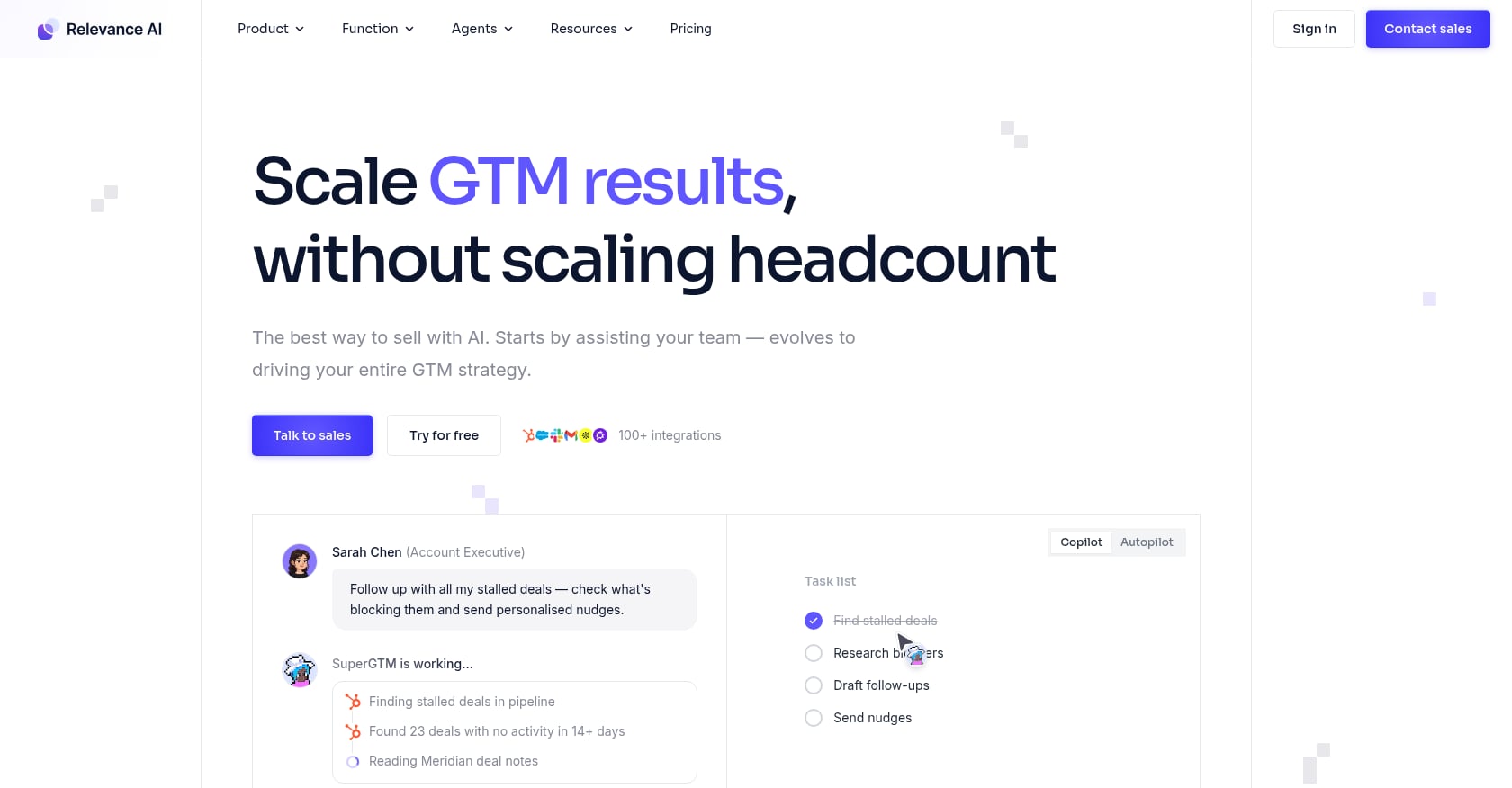
Relevance AI is a no-code AI agent builder. Instead of buying a pre-packaged AI SDR, you build agents that do what you need: research, enrichment, routing, summarization, classification, or any custom workflow. It is a builder platform, not a finished GTM product.
Pricing:
Free: $0/month
Team: $199/month
Dual-meter model: “Actions” represent work completed, “vendor credits” represent pass-through compute or model costs
A Reddit pricing teardown warned that this dual-meter structure makes cost forecasting harder than it looks. Buyers should clarify both workflow usage and model/credit consumption before committing.
Key features:
No-code AI agent builder
AI workforce / teams of agents
Workflow automation
Custom tools and integrations
Agent orchestration across teams
Useful for building internal GTM workflows rather than buying a fixed AI SDR
Real user perspective:
G2 reviews rate Relevance AI at 4.3/5 from 21 reviews. Users praise the user-friendly interface, customization, and integrations. Common negatives include expensive pricing, limited features at lower tiers, interface complexity, and learning curve.
Tradeoffs:
Requires workflow design and ongoing maintenance
Not a done-for-you GTM system
Pricing can be difficult to forecast with dual-meter billing
Needs internal ownership by someone who will iterate on agents
Best for builders, not founders who need campaigns shipped next week
Verdict: Relevance AI is a strong builder platform, but it is not a substitute for GTM strategy and operations. Choose it if you want to create agents. Skip it if you want a finished GTM motion.
6. Regie.ai
Best for: SDR teams that want AI-assisted prospecting, messaging, and dialing workflows.
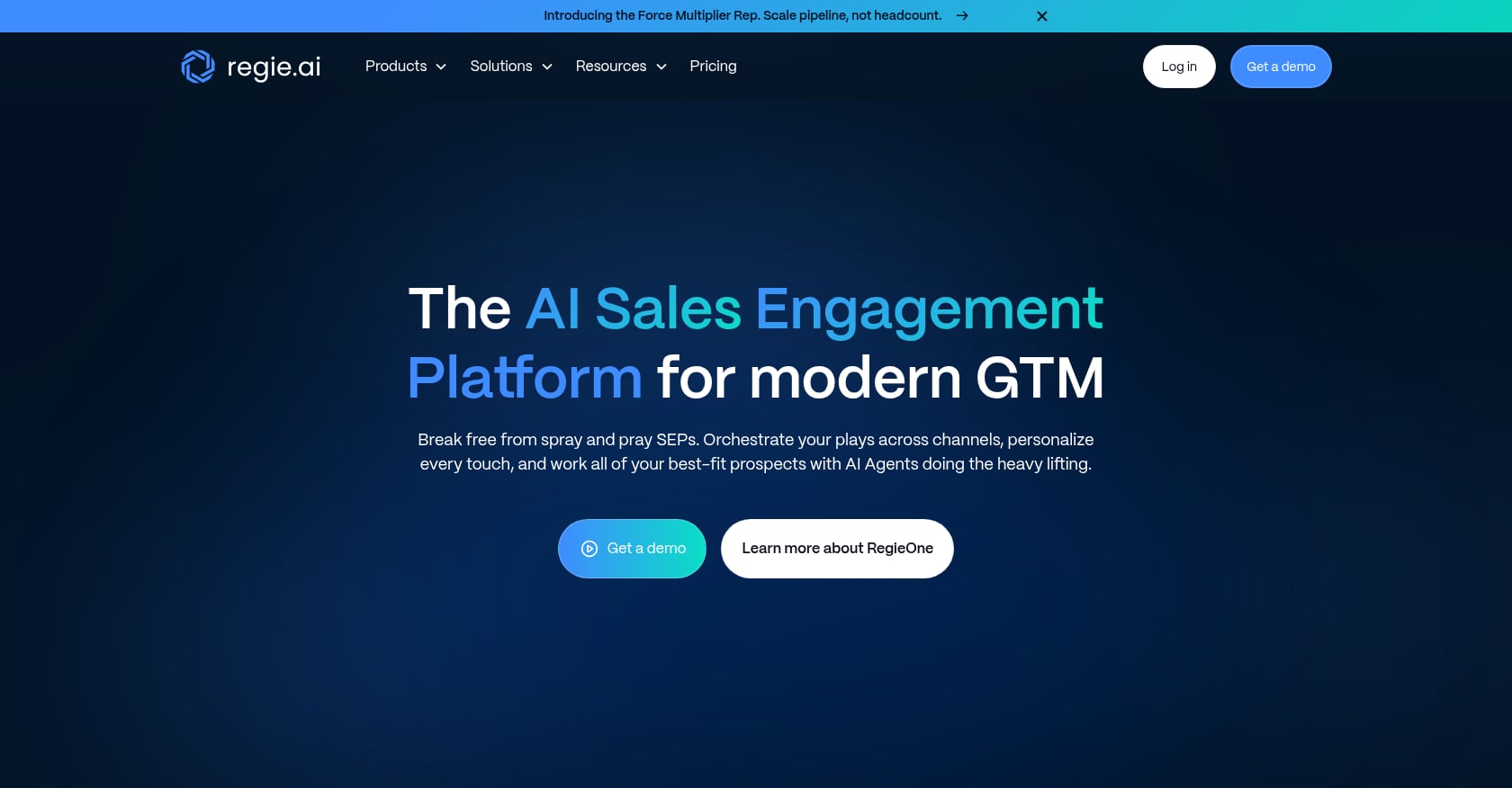
Regie.ai is an AI sales engagement platform built for reps. It helps write emails, personalize outreach at volume, manage dialing workflows, and track sales analytics. It is more sales tool than full GTM platform.
Pricing:
AI SEP: $180/user/month
Force Multiplier Rep: $499/user/month
Some packages may be quoted annually or custom depending on scope
Key features:
AI sales engagement platform
AI agents for prospecting
Email and call workflows
AI-assisted personalized messaging
Dialing workflows
Data and contact sourcing
Sales analytics and manager visibility
Integrations with major sales tools
Real user perspective:
G2 reviews rate Regie.ai at 4.4/5 from 353 reviews. Reviewers praise high-volume personalized emails, deliverability improvements, automation, and saved rep time. A common theme: AI drafts get 80-90% of the way there but still need human editing, and output quality depends heavily on setup quality.
Tradeoffs:
Better for sales teams than founder-led marketing teams
AI copy still needs quality assurance
Setup quality directly determines output quality
Per-user pricing scales quickly with larger teams
More sales engagement than full GTM execution
Verdict: Regie.ai fits when you already have reps and want to make them more productive. It is less useful if your real problem is missing GTM strategy, weak positioning, or no one to own campaign execution.
7. 11x
Best for: Mid-market and enterprise teams testing autonomous AI SDR replacement or augmentation.
11x offers Alice, an AI SDR that identifies accounts, researches prospects, crafts personalized outreach, runs multichannel engagement, and books meetings. It also offers Julian, an AI phone agent. The pitch is full autonomy. The reality is more nuanced.
Pricing:
Not publicly listed
Third-party estimates suggest Alice starts around $5,000/month with annual contracts (~$60,000/year)
Actual quotes may vary (source)
Key features:
AI SDR (Alice) for autonomous prospecting and outreach
Multichannel engagement
AI phone agent (Julian) for inbound and consented outbound
Meeting booking
Research and personalization at scale
Real user perspective:
G2 reviews rate 11x at 4.4/5 from 31 reviews. Users praise ease of use and customer support. Common negatives include missing features, inaccuracy, difficult setup, and AI limitations.
Reddit sentiment is mixed. One user said they stuck with 11x because Alice handled outbound execution rather than just generating ideas, but added it works best as support for reps rather than full replacement. Another thread said a team liked 11x internally but did not feel pricing justified the results.
Tradeoffs:
High cost with opaque pricing
Annual commitment risk
Requires strong ICP, messaging, and data hygiene to perform well
AI SDRs still struggle with nuance, unusual objections, and brand-sensitive replies
Best as rep augmentation, not blind replacement
Verdict: 11x is worth evaluating if you have budget, volume, and a mature outbound process. Early-stage teams should be careful: autonomy amplifies whatever inputs you give it, including bad ones.
8. Landbase
Best for: Revenue teams that want a consolidated AI GTM platform with agentic campaign execution.
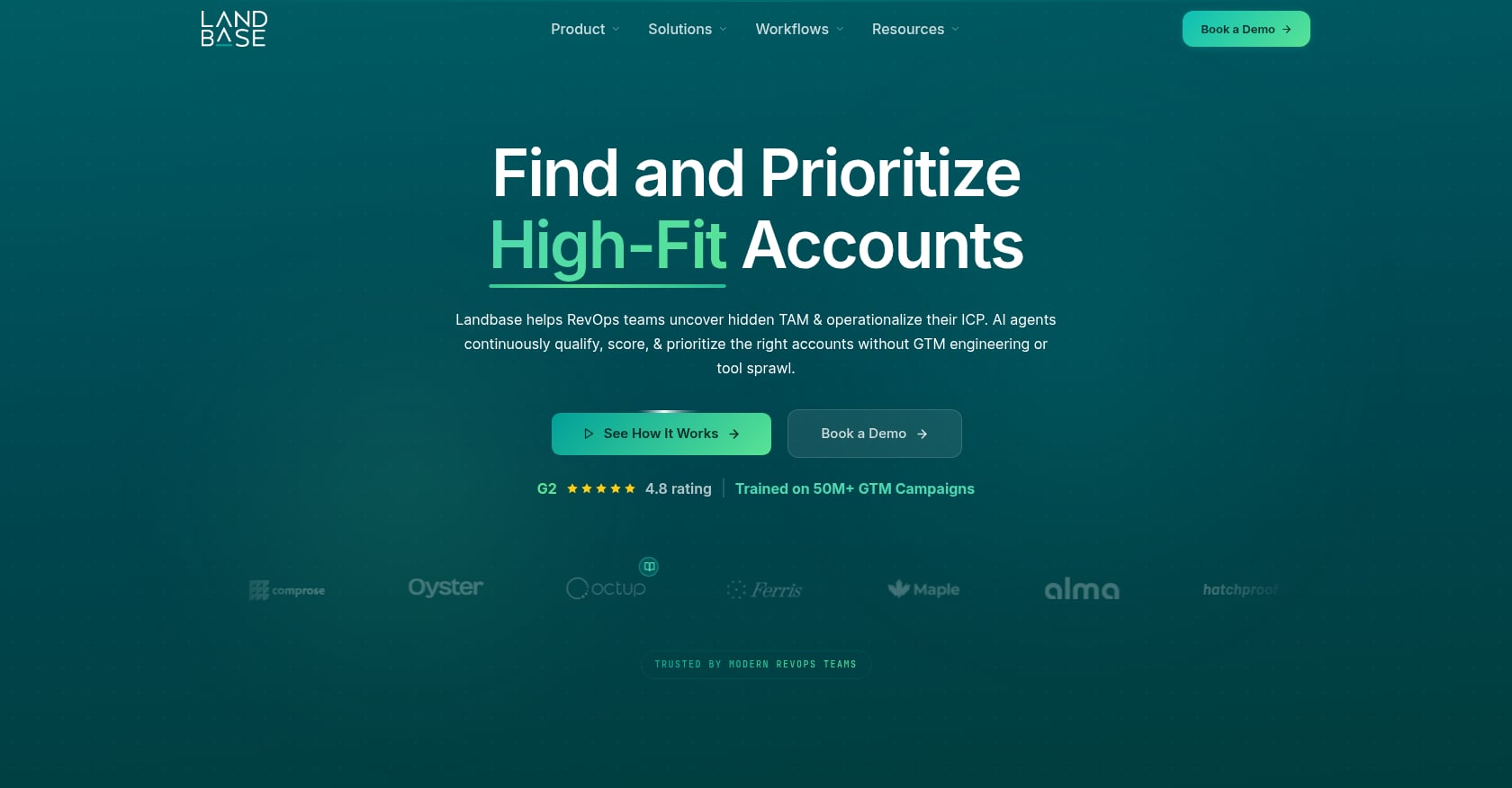
Landbase positions itself as an AI-powered GTM platform with agentic execution across lead identification, personalized outreach, and multichannel engagement. It emphasizes its GTM-1 Omni model combining machine intelligence and human performance.
Pricing:
Not publicly listed
Third-party estimates range from $2,000-$5,000+/month depending on requirements
Some sources estimate roughly $3,000/month for full autonomy, but pricing should be verified directly (source)
Key features:
AI-powered lead identification
Personalized outreach across email, LinkedIn, and phone
Agentic campaign planning and execution
Audience building and workflow automation
All-in-one GTM platform approach
Real user perspective:
G2 reviews rate Landbase at 4.8/5 from 10 reviews. Users praise time-saving automation, all-in-one functionality, and ease of use. The main limitation noted is that the platform evolves quickly, requiring users to stay current with new features.
Tradeoffs:
Very low public review volume (10 reviews), so the rating should be treated as early-adopter signal
Pricing opacity
Early-adopter risk
May be overkill for startups still working on positioning and channel validation
Requires careful demo validation before committing
Verdict: Landbase is promising for teams that want an agentic GTM platform, but the public proof base is thin. Pressure-test live workflows, pricing, and implementation requirements before signing.
9. HockeyStack
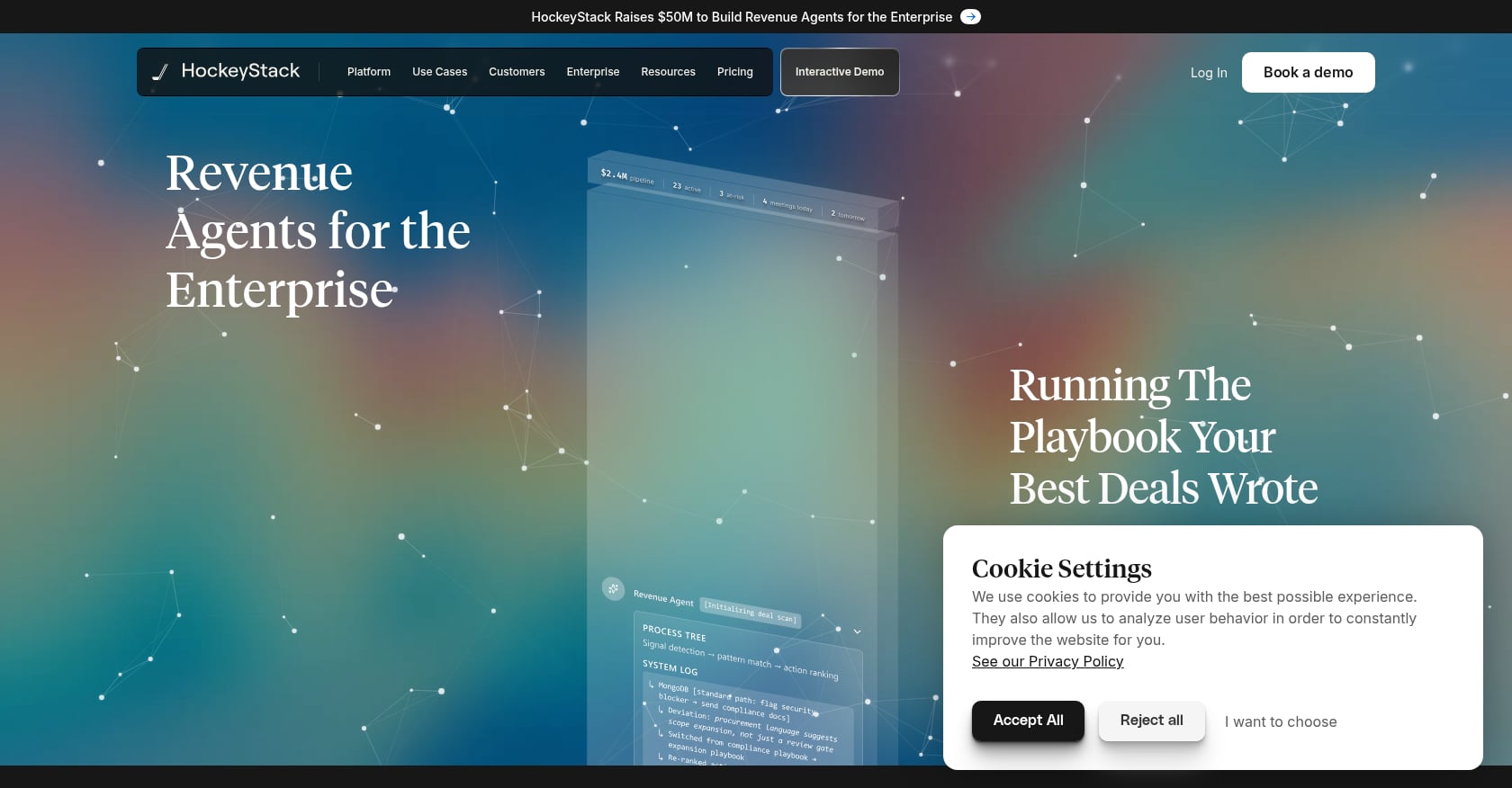
Best for: B2B marketing teams that need AI-assisted attribution, account intelligence, and pipeline visibility.
HockeyStack is not a prospecting agent. It is a revenue analytics platform. It connects campaigns to pipeline, tracks buyer journeys, and helps teams understand what is actually driving revenue. If you already generate demand but cannot attribute it, HockeyStack fills that gap.
Pricing:
Platform: starting at $2,200/month
ABM add-on: custom
Sales Intelligence add-on: custom
Key features:
Marketing attribution
Funnel analytics
Account intelligence
Buyer journey tracking
AI agents for analytics and reporting
Pipeline and campaign performance dashboards
CRM, ad platform, and marketing automation integrations
Real user perspective:
G2 reviews rate HockeyStack at 4.6/5 from 78 reviews. Users praise insights, attribution accuracy, and consolidated reporting. Common negatives include steep learning curve, time-consuming setup, and complexity. One 2026 reviewer noted the AI agents are promising, but the data model and documentation can be hard to audit.
Tradeoffs:
Not an outbound prospecting agent
Requires sufficient data volume to be useful
More valuable after GTM activity already exists
Setup and attribution modeling can be complex
Higher starting price than many startup tools
Verdict: HockeyStack is not the agent you buy to launch outbound from zero. It is the agent you buy when you need to understand what is driving pipeline and where to invest next, which is essential for go-to-market optimization.
10. Demandbase

Best for: Enterprise B2B teams running account-based GTM across sales, marketing, advertising, and account intelligence.
Demandbase is the category heavyweight for account-based marketing. It combines intent data, predictive account scoring, B2B advertising, website personalization, sales intelligence, and ABM orchestration. It is built for large revenue teams, not lean startups.
Pricing:
Custom-quoted based on platform fees, user seats, modules, add-ons, onboarding, and services
Third-party estimates range from tens of thousands to hundreds of thousands annually
G2 data: time to implement approximately 2 months, ROI timeline approximately 13 months, perceived cost rating of $$$$$ (source)
Key features:
Account intelligence and intent data
Predictive account scoring
B2B advertising
Website personalization
Sales intelligence
ABM orchestration
AI-enhanced account prioritization
Integrations with CRM and marketing automation platforms
Real user perspective:
G2 reviews rate Demandbase One at 4.4/5 from 1,930 reviews. Users praise account insights, intent data, and ABM alignment. Common negatives include steep learning curve, complexity, non-intuitive UX, and reporting challenges.
Tradeoffs:
Enterprise cost and complexity
Overkill for most early-stage startups
Requires ABM maturity and organizational buy-in
Implementation and adoption can take months
13-month ROI timeline is a long wait for cash-strapped teams
Verdict: Demandbase is a serious enterprise ABM platform, not a startup GTM agent. It belongs on the shortlist for large revenue teams with named-account motions, but most founders should validate ICP, messaging, and channels before buying this level of infrastructure.
What AI GTM Agents Do Well
When deployed correctly, AI GTM agents create real value in specific areas. Here is where they perform:
Account research. Summarizing company websites, news, job posts, and competitive signals in minutes instead of hours.
Signal monitoring. Tracking funding events, hiring changes, competitor activity, and buying triggers. One Reddit operator running GTM agent automation for eight months with a four-person B2B SaaS team said the biggest value came from the monitoring layer, not automated copy. Human-written outreach to 10 signal-qualified prospects consistently outperformed automated sequences to hundreds.
Enrichment. Filling in missing contact data, firmographics, and technographics from multiple sources.
Segment classification. Practitioners on r/gtmengineering argue that asking AI to classify accounts into segments based on website content, job posts, and news creates more ROI than AI-generated email first lines. Classification before outreach improves every downstream step.
Follow-up consistency. One Reddit user described switching to an AI SDR not because AI was “better” than human reps, but because follow-ups stopped slipping through cracks. Messages stayed structured and work did not disappear.
CRM hygiene. Updating records, deduplicating contacts, and flagging stale data.
Performance reporting. Aggregating campaign results and surfacing patterns.
Campaign ideation. Suggesting angles, sequences, and content based on what has worked before.
Salesforce research shows sales reps spend only about 30% of their time actually selling, with administrative work consuming the rest. AI GTM agents are strongest when they reclaim that lost time for research, prep, and repeatable execution.
Where AI GTM Agents Still Break
The marketing around AI GTM agents oversells what they can reliably do. Here are the failure modes that vendor pages rarely mention:
1. Bad data creates bad outcomes faster.
ZoomInfo’s research argues that AI without clean data accelerates the wrong things. A GTM engineering practitioner on Reddit described an outbound agent connected to Salesforce, Apollo, Clay, Slack, and an email platform. The agent made confident wrong decisions because each tool had different contact data. Lead routing accuracy sat around 60% until the team cut the stack down and consolidated enrichment through one data layer, pushing accuracy above 95%.
2. Over-automation damages your brand.
The formula is simple: bad ICP multiplied by bad data multiplied by high autonomy equals brand damage at scale. Weak human review lets the damage compound. This is why early-stage teams should prefer human-in-the-loop GTM systems until the ICP, offer, and channel are proven.
3. Generic outreach gets ignored.
Much of what is marketed as AI-native orchestration is just waterfall enrichment plus an LLM-generated first line, as one r/gtmengineering practitioner pointed out. That approach stopped impressing recipients sometime in 2024.
4. CRM sync failures happen silently.
When an agent updates the wrong record, duplicates a contact, or overwrites a field, nobody gets an alert. The damage compounds quietly until pipeline reports stop making sense.
5. Pricing surprises.
Credit-based models, annual lock-ins, add-on modules, verification costs, and sending infrastructure all inflate the real price beyond the starting tier. A Reddit agency operator reported Apollo bounce rates of 8-13% on certain batches and had to add ZeroBounce to every workflow, an extra cost the Apollo pricing page does not mention.
6. Attribution without enough data is noise.
Analytics agents like HockeyStack need sufficient traffic and pipeline volume. For early-stage teams with 50 website visitors a month, attribution modeling is premature.
Gartner predicts that by 2028, AI agents will outnumber human sellers by 10x, yet fewer than 40% of sellers will report that agents improved their productivity. Adoption is rising. Outcomes depend entirely on implementation quality.
Questions to Ask Before Buying an AI GTM Agent
Practitioners on Reddit’s r/SalesOperations shared a vendor evaluation framework that is more useful than any feature comparison. Before committing to an AI GTM platform, ask these questions during the demo:
Can you open a random live account and show its full signal history? Not a curated example. A random one.
What happens when my CRM schema changes? Field renames, new objects, deleted properties. Does the agent break silently?
What does the AI actually learn from? Conversions, replies, bounces, manual overrides? Or nothing?
Can I change scoring weights myself? Or do I need to file a support ticket?
How are conflicts between data sources handled? When two enrichment providers disagree, what wins?
What actions require human approval before executing? Can I configure approval gates?
What are the actual monthly costs at my volume? Model it with credits, seats, sends, and add-ons.
What happens if bounce rates rise above 5%? Does the system pause, alert, or keep sending?
How long until first live campaign? Not “onboarded.” Actually live.
Can I export my workflows and data if I leave? Or am I locked in?
These questions separate real AI GTM agents from marketing demos. If the vendor cannot answer them live, that tells you something.
The AI GTM Agent Maturity Ladder
Not all tools sit at the same level of capability. This framework helps you map where each option falls:
Level 1: AI assistant. Helps draft emails, summarize accounts, or generate ideas. Think generic ChatGPT workflows or basic AI features bolted onto existing CRMs.
Level 2: AI workflow tool. Runs repeatable workflows with human setup and maintenance. Clay and Relevance AI sit here.
Level 3: AI SDR / campaign agent. Finds accounts, enriches leads, drafts outreach, and executes sequences with varying degrees of autonomy. 11x, Persana, and Regie.ai operate at this level.
Level 4: AI GTM operating system. Connects signals, data, campaigns, scoring, routing, and reporting into a unified platform. Landbase and Demandbase aim for this.
Level 5: AI + human growth department. Combines AI speed with human operators who own strategy, creative quality, execution, and iteration. AgentWeb lives here.
For startups, Level 5 is often the right starting point. Early GTM is ambiguous. The agent can accelerate work, but humans still need to interpret market feedback, protect brand voice, and make judgment calls about positioning. You can hire less and still ship more marketing if the system is designed for it.
Which AI GTM Agent Should You Choose?
Your best option depends on your team, stage, and biggest constraint:
Founder with no marketing team: AgentWeb (done-for-you Growth Ops or custom workflows)
Founder who wants DIY templates and workflows: AgentWeb self-serve
Team with a RevOps or GTM engineer: Clay or Relevance AI
Team testing outbound lists on a budget: Apollo or Persana
Mature SDR team that needs productivity gains: Regie.ai or 11x
Enterprise ABM team: Demandbase or Landbase
Team with pipeline but unclear attribution: HockeyStack
McKinsey’s 2025 State of AI survey found that 23% of organizations were scaling agentic AI somewhere in the enterprise, with another 39% experimenting. Marketing and sales reported the greatest revenue benefits. The adoption wave is real. The question is not whether to use AI in GTM, but which system matches your actual situation.
Final Verdict
If you are an early-stage startup, do not start by buying the most autonomous agent. Start by buying the GTM operating model you can actually run. For most lean teams, that means AI-supported execution, human review, weekly campaign shipping, and performance feedback loops.
The best AI GTM agent is not the one that promises the most autonomy. It is the one that helps your team choose the right accounts, ship the right campaigns, learn from the market, and keep improving without adding unnecessary headcount.
For startups that need that kind of shipped output, AgentWeb combines the AI workflows with the human judgment that early-stage GTM demands.
FAQ
What is an AI GTM agent?
An AI GTM agent is a system that uses artificial intelligence to execute go-to-market work. Depending on the product, that can include account research, lead enrichment, outreach generation, signal monitoring, campaign creation, CRM updates, and pipeline reporting. The term is broad and covers everything from AI email writers to enterprise ABM platforms.
What is the difference between an AI GTM agent and an AI SDR?
An AI SDR is one type of AI GTM agent focused specifically on sales development: finding prospects, writing outreach, and booking meetings. An AI GTM agent is a broader category that can also include enrichment tools, workflow builders, ABM platforms, content agents, and analytics systems. Not every AI GTM agent does outbound, and not every AI SDR covers the full go-to-market workflow.
Can an AI GTM agent replace a marketing or sales team?
Not entirely. AI GTM agents handle research, enrichment, drafting, follow-up consistency, and reporting well. They struggle with positioning, creative judgment, relationship building, and interpreting ambiguous market signals. Gartner predicts that by 2028, AI agents will outnumber human sellers by 10x, but fewer than 40% of sellers will report productivity improvements. Human oversight still matters, especially for early-stage teams where the ICP and messaging are not yet validated.
How much do AI GTM agents cost?
Prices range from free tiers (Apollo, Persana, Relevance AI) to enterprise custom pricing (Demandbase). Self-serve tools start around $49-$199/month. AI SDRs like 11x can cost $5,000+/month. Enterprise platforms can reach six figures annually. Always model the total cost including credits, verification, sending tools, add-ons, and implementation time, not just the sticker price.
What is the best AI GTM agent for startups?
For pre-seed to Series A startups that need campaigns shipped without a full marketing team, AgentWeb offers the best fit because it combines AI-powered workflows with human-led strategy and execution. For startups with a technical team that wants to build their own workflows, Clay or Relevance AI are strong options. For startups that just need a cheap prospecting database to start, Apollo is a reasonable entry point.
What should I ask before buying an AI GTM platform?
Ask the vendor to open a random live account and show signal history, explain what happens when CRM fields change, demonstrate what the AI learns from, let you adjust scoring weights live, and explain how data conflicts between sources are resolved. Also ask for a full cost model at your expected volume and clarify what actions require human approval.
Do AI GTM agents work for early-stage startups?
They can, but the right type matters. Early-stage teams should avoid high-autonomy tools before their ICP and messaging are validated. A 90-day go-to-market plan with human oversight and AI-assisted execution is usually more effective than handing an unproven ICP to a fully autonomous agent.
What are the biggest risks of AI GTM agents?
Bad data quality leading to wrong targeting and bounced emails. Over-automation that damages brand reputation. Pricing surprises from credit-based billing and hidden add-ons. CRM sync failures that corrupt pipeline data silently. And the risk of scaling outreach before you understand what message actually resonates with your market.
Get a free Stack Review.
30 min with Harsha and Matt.
We audit your last 30 days, pinpoint the highest-impact fixes, and hand you the exact playbook we'd run. No deck. No pitch unless there's a fit.