10 Best AI Powered Content Creation Platforms in 2026


TL;DR
The best AI powered content creation platforms in 2026 go far beyond text generation. They handle planning, approval, distribution, and measurement. AgentWeb (Emma) leads for startups needing full GTM execution with human oversight. Jasper dominates branded long-form content. Writesonic wins on SEO value per dollar. Your best pick depends on whether you need a writing tool or a content operations system, and this guide breaks down exactly which is which.
The Real Problem Isn’t Creating Content. It’s Shipping It.
Here’s a number that should reframe how you think about content tools: the real bottleneck for most content teams is the six to eight hours of non-writing work surrounding each piece. Research, outlining, approvals, formatting, distribution, performance tracking. Tools that solve only the writing step leave roughly 80% of the workflow untouched.
The generative AI content creation market grew from $21.53 billion in 2025 to $28.75 billion in 2026, a 33.5% jump. Marketers using generative AI for content tasks save 6.1 hours per week on average. The opportunity is real. But most teams are still using AI as a glorified autocomplete instead of building a content operation around it.
This guide splits AI powered content creation platforms into three categories that actually matter for buying decisions: full-execution platforms (they plan, create, approve, distribute, and measure), creation-first platforms (they produce drafts efficiently), and format-specific platforms (they handle visual or video content). Every ranking article lumps these together. That’s a mistake, because comparing a $7.50/month writing assistant to a full AI-powered content marketing system is like comparing a bicycle to a delivery truck.
Let’s get into specifics.
At-a-Glance Comparison Table
| Platform | Best For | Starting Price | Free Tier? | Key Differentiator | Key Limitation |
|---|---|---|---|---|---|
| AgentWeb (Emma) | Full GTM execution for startups | $199/mo (DIY) | 7-day trial | AI agent + human operators; ships campaigns weekly | Newer brand; best with Slack/Teams |
| Jasper | Branded long-form at scale | $49/mo | No (7-day trial) | Best-in-class brand voice training | Expensive for solos; factual accuracy issues |
| Copy.ai | GTM workflow automation | $49/mo (Pro) | Yes (2,000 words) | Workflow Builder for repeatable pipelines | Power features locked at $1,000/mo |
| Writesonic | SEO content on a budget | $20/mo | Yes (limited) | Built-in GEO + AI visibility tracking | Brand voice consistency weak |
| Canva AI | Visual content for non-designers | $13-15/mo | Yes (limited) | 25+ AI design tools in one subscription | No SEO, scheduling, or campaign management |
| HubSpot Content Hub | CRM-connected content ops | $9/seat/mo (Starter) | Yes | Breeze AI + CRM data integration | Real AI features need $450+/mo plan |
| ChatGPT | General-purpose content drafting | $20/mo (Plus) | Yes | Most flexible, multimodal | No platform features; raw tool |
| Descript | Video and podcast content | $12/user/mo | Yes (limited) | Edit video by editing text | Only for audio/video |
| Rytr | Budget short-form writing | $7.50/mo | Yes | Cheapest unlimited AI writer | No workflows, SEO, or collaboration |
| Frase | SEO content briefs + writing | $15/mo | No | SERP analysis + content brief automation | Writing quality secondary to research |
How We Evaluated These Platforms
Six criteria drove every assessment:
- Pricing transparency. Not just the listed price, but credit limits, upsells, and what “unlimited” actually means.
- Execution scope. Does it handle just writing, or also planning, approval, distribution, and measurement?
- Brand voice fidelity. Can the tool maintain your tone at volume, or does it drift after 50 outputs?
- Workflow automation. Does it reduce coordination overhead or just the typing?
- Startup fit. Is pricing and feature design appropriate for teams of 1 to 10, not just enterprise?
- Real user feedback. G2 ratings, Reddit threads, practitioner reports, not just marketing claims.
A note on tool longevity: Narrato, which appeared in many 2025 listicles, shut down on June 15, 2026. New subscribers can no longer access the platform. This is a reminder that feature lists mean nothing if the company behind them doesn’t survive. We factored platform viability into every recommendation.
Full-Execution Platforms
These AI powered content creation platforms handle the entire content lifecycle. They don’t just generate text; they plan campaigns, route approvals, distribute across channels, and measure results.
1. AgentWeb (Emma)
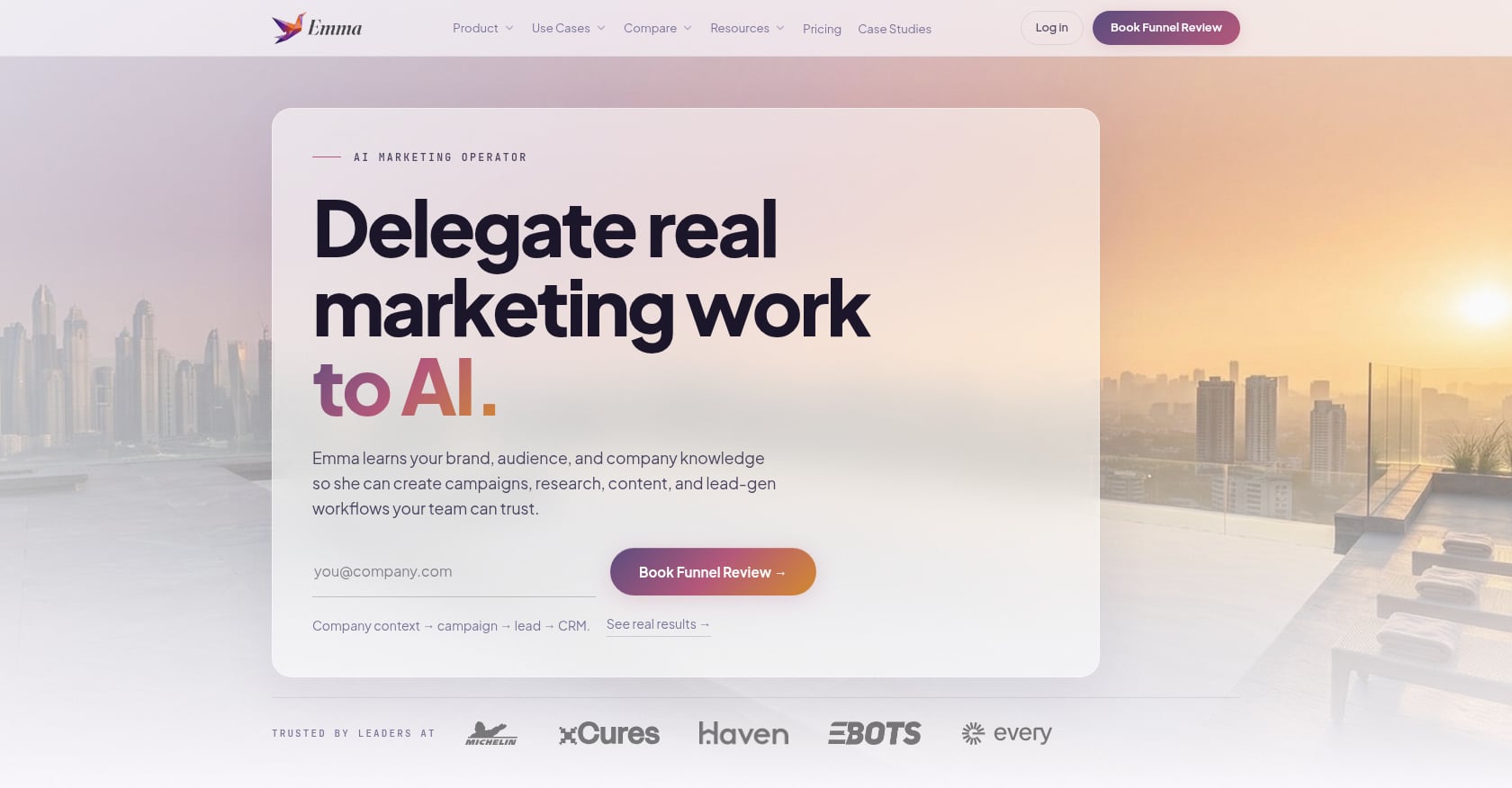
Best for: Early-stage startups (pre-seed to Series A) that need a full marketing department, not just a content tool.
AgentWeb is not a writing tool. It’s an agentic AI marketer called “Emma” paired with a senior operator team that ships actual campaigns every week. While most platforms on this list stop at content generation, AgentWeb handles the full go-to-market workflow: strategy, creation, approval, distribution, and iteration.
Pricing:
- DIY (Self-Serve): $199/month after a 7-day free trial
- Custom Workflows (AI-Led Co-Pilot): Contact sales
- Done-For-You (Human-Led Growth Ops): Seasonal pricing, contact sales
Key features:
- Week-0 GTM diagnostic that produces a concrete 90-day growth plan
- Multi-channel execution across Meta, Google, LinkedIn/X, email, and outbound
- Slack/Teams approval workflows for one-click creative sign-off
- AgentWeb Portal with calendar, dashboards, and optimization loops
- Founder-brand support including LinkedIn ghostwriting and executive comms
- Up to ~20 content assets per month
- Self-serve AI campaign templates for market research, competitive analysis, and audience insights
Tradeoffs:
- Newer brand with fewer public case studies than established tools
- Best experience requires Slack or Teams integration and weekly engagement
- The full-service tier requires sales conversation for pricing
Real results: In a head-to-head test against a competing agency, AgentWeb drove 4,000+ leads and 328 Add-to-Carts for Nailed It in 3 months, achieving a 2.91% CTR at roughly $0.24 CPC. For Cora, they hit a 13.19% CTR peak on just a $300/month ad budget. You can review published case studies for the full breakdown.
The founding team brings experience from Microsoft, Google, Meta, and LinkedIn, with YC experience and backing from Amino Capital and Subodha Capital.
Who should skip it: Teams that just need a blog post draft and nothing else. AgentWeb is built for founders who want content that ships and compounds into pipeline, not another writing interface.
→ Explore AgentWeb’s pricing and tiers
2. Copy.ai
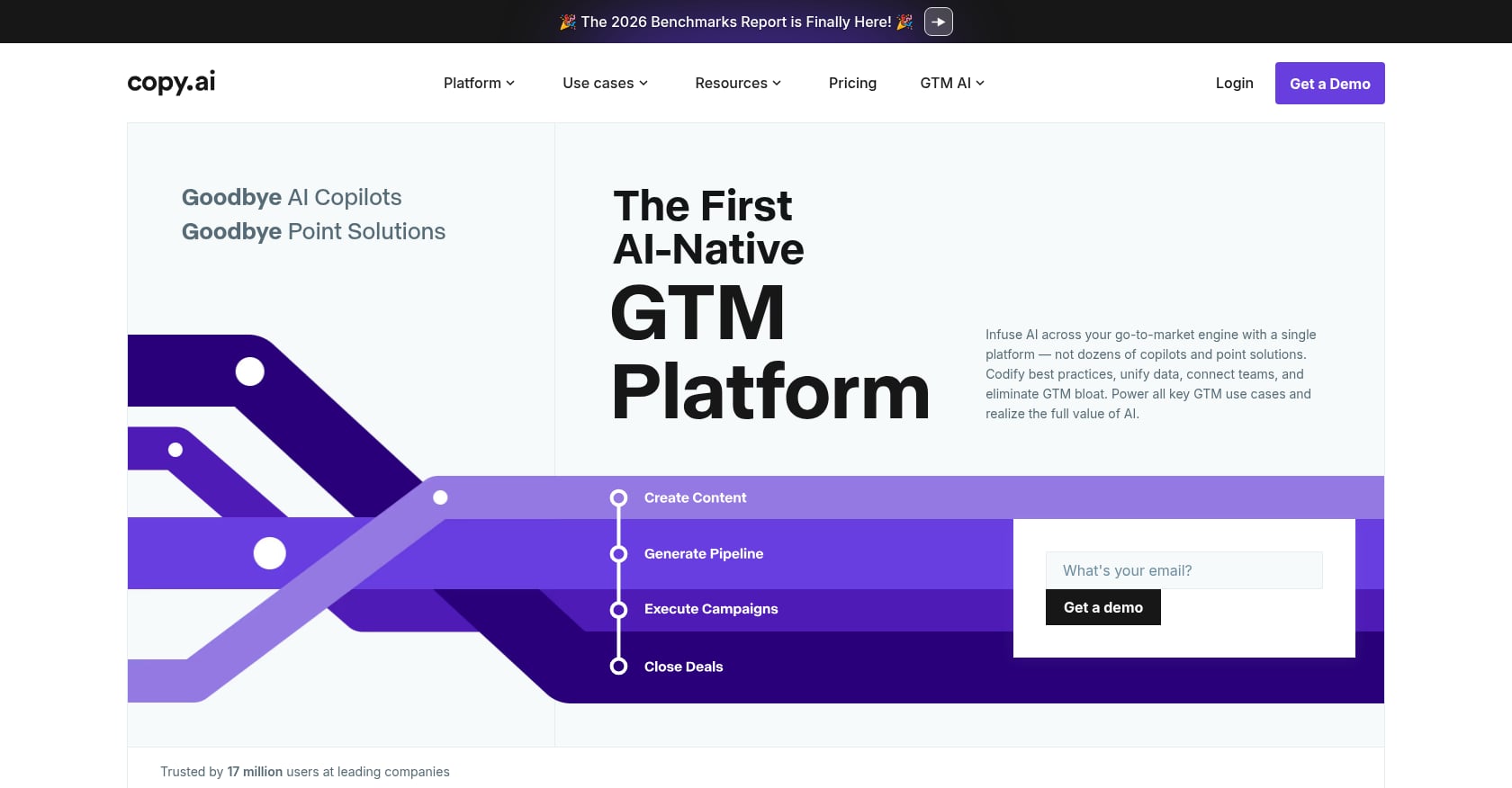
Best for: GTM teams automating repeatable sales and marketing workflows.
Copy.ai has evolved significantly from its early days as a headline generator. In 2026, it positions itself as a full GTM AI platform with reusable workflow automation for sales outbound, marketing content, and pipeline enrichment.
Pricing:
- Free: 2,000 words/month
- Pro: $49/month with unlimited words and workflow access
- Growth: Starting at $1,000/month for advanced GTM workflow automation
Key features:
- Workflow Builder for creating repeatable content and sales pipelines
- 90+ templates for short-form copy, emails, and social posts
- Data enrichment and prospecting integrations
- Team collaboration and brand voice settings
Tradeoffs:
- The free tier (2,000 words) covers roughly one blog post. Useful for testing, nothing more.
- The Workflow Builder that makes Copy.ai genuinely different is locked behind the $1,000/month Growth tier.
- Long-form content quality requires more editing than Jasper. Best thought of as a copy accelerator, not a finished-draft machine.
- Practitioners report the platform has significant depth, which means new users often feel overwhelmed during onboarding.
User rating: 4.8/5 on G2, 4.3/5 on Trustpilot.
Practitioner perspective: Users on Reddit note that Copy.ai excels at short, punchy copy (headlines, CTAs, cold email subject lines, social hooks) but falls short for long-form pieces without substantial editing.
3. HubSpot Content Hub
Best for: B2B teams already on HubSpot CRM who want content tied directly to pipeline data.
HubSpot Content Hub bundles CMS, blog, landing pages, personalization, and an AI layer called Breeze into one system. If your CRM data already lives in HubSpot, the integration advantage is real.
Pricing:
- Starter: $9/seat/month (billed annually)
- Professional: $450/month (3 seats included)
- Enterprise: $1,500/month (5 seats included)
Key features:
- Breeze Content Agent: autonomously researches and drafts blog posts, case studies, landing pages, and emails
- Native CRM integration means content recommendations can be informed by deal stage and contact behavior
- Governance controls and multi-language support
Tradeoffs:
- The Starter tier is cheap but nearly useless for AI-powered content work. Most meaningful AI features require the $450+/month Professional plan.
- AI output quality generally trails purpose-built tools like Jasper or ChatGPT for specialized tasks.
- AI features run on usage-based HubSpot Credits at $9.00 per 1,000, which is where surprise bills come from.
- Overkill if you’re not already invested in the HubSpot ecosystem.
This is a strong option if you’re already paying for HubSpot’s CRM and want to consolidate. It’s a poor choice if you’re shopping for a standalone content platform, because you’ll end up paying for an entire marketing suite to access the AI features.
Creation-First Platforms
These AI content creation platforms focus on producing drafts efficiently. They won’t distribute your content or manage approvals, but they’ll help you write faster.
1. Jasper
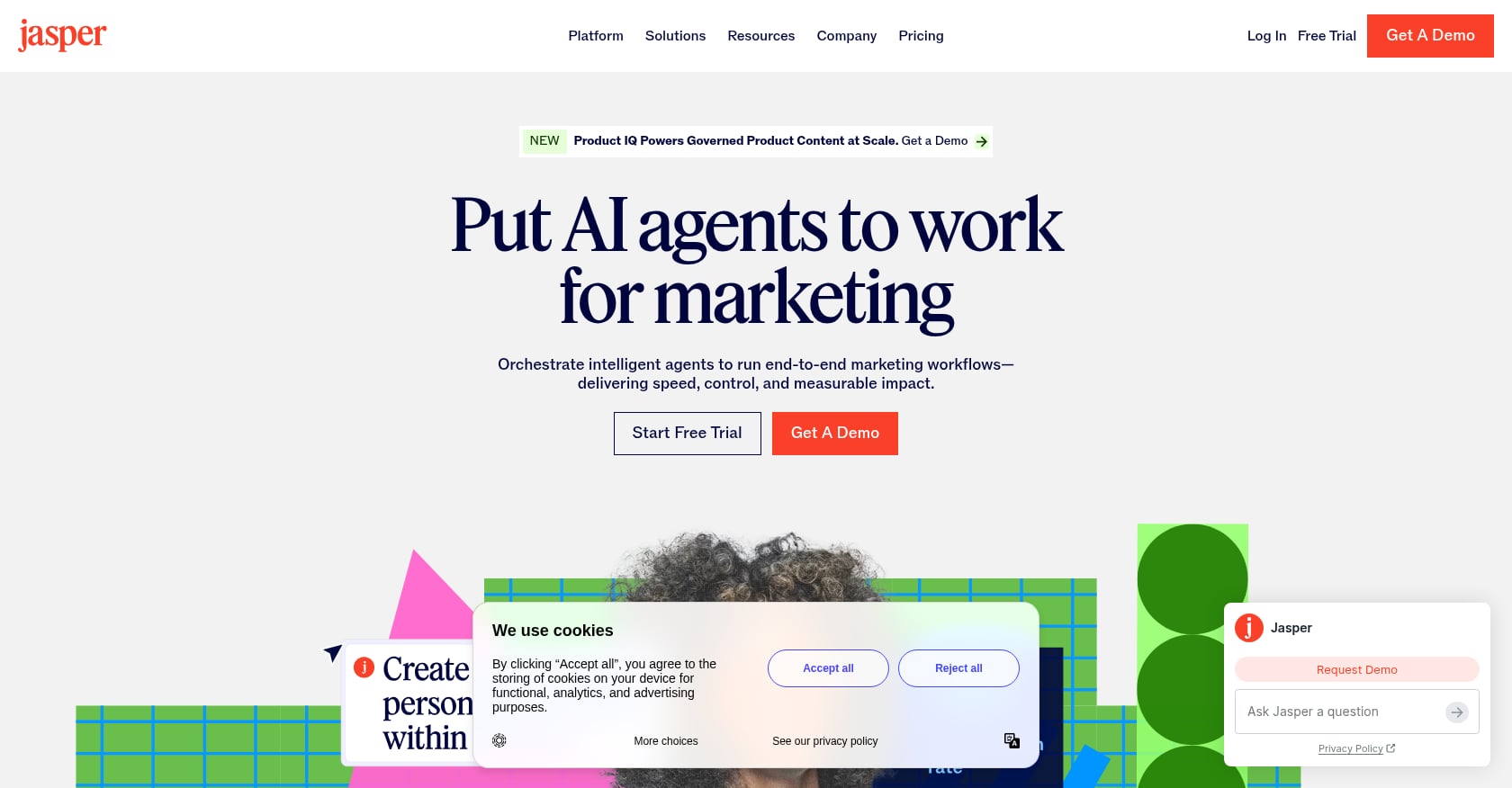
Best for: Marketing teams of 5+ producing branded long-form content at volume.
Jasper’s core advantage is Brand Voice Training. You feed it your existing content, and it learns your company’s tone, terminology, and style. For teams producing dozens of pieces monthly across multiple writers, this consistency matters.
Pricing:
- Creator: $49/month (1 user, 50,000 words)
- Teams: $125/month (3 users, unlimited words)
- Enterprise: Custom quotes, typically starting at $500/month
Key features:
- Brand Voice Training trained on your actual content library
- 50+ marketing-specific templates
- Surfer SEO integration for optimization scoring
- AI Agents and Jasper Studio for custom workflows
- Team collaboration with shared assets
Tradeoffs:
- No free tier. The 7-day trial requires a credit card.
- At $49-125/month, it’s 2.5 to 3x the cost of Writesonic and Copy.ai’s entry tiers.
- Does not retrieve or verify information. It generates text based on patterns, which means it can produce confident-sounding claims that are factually wrong or outdated.
- Content quality is inconsistent, and most reviews cite the need for substantial human editing.
Practitioner take: At $49-69/month, Jasper is expensive for solo copywriters when ChatGPT or Claude at $20/month produces equal or better raw output. Jasper’s real value is governance and consistency across teams. If you’re one person writing blog posts, you’re overpaying.
User rating: ~4.7/5 on G2.
For teams already thinking about brand voice at scale, this pairs well with a content audit strategy that identifies your strongest voice assets to train the AI on.
2. Writesonic
Best for: Budget-conscious teams focused on SEO content and emerging AI search visibility.
Writesonic is the strongest value play for SEO content creation in 2026. Its native SEO AI Agent and AI Visibility Tracking help content appear in AI Overviews, addressing the growing need for generative engine optimization (GEO).
Pricing:
- Free: Limited words and features
- Individual: $20/month (unlimited words in 25+ languages)
- Standard: $79/month (GEO features unlocked)
Key features:
- SEO AI Agent for end-to-end content optimization
- AI Visibility Tracking for monitoring presence in AI search results
- Native-quality content in 25+ languages
- Article Rewriter and paraphrasing tools
Tradeoffs:
- Brand voice consistency is weak. Users report that even after uploading examples, content doesn’t feel personalized.
- GEO features (the main differentiator) are locked behind the $79/month Standard plan. The lower tiers don’t differentiate much from cheaper alternatives.
- Credit-based limits on lower tiers mean heavy users burn through allowances fast.
User rating: 4.7/5 on G2.
A growing number of practitioners on Reddit are asking about tools that optimize for AI search engines like ChatGPT and Perplexity, not just Google. Writesonic is one of the few platforms building for this shift.
3. ChatGPT (OpenAI)
Best for: Solo operators who need a versatile, general-purpose content assistant without platform overhead.
ChatGPT remains the Swiss Army knife of AI content tools. For raw writing quality per dollar, ChatGPT Plus and Claude Pro at $20/month beat any other paid AI tool.
Pricing:
- Free tier available (GPT-4o with usage limits)
- Plus: $20/month
- Team: $25/user/month
Key features:
- Custom GPTs for building specialized content workflows
- Multimodal: text, image generation, voice, code
- Web browsing and file analysis
- The most flexible interface for any content task
Tradeoffs:
- No built-in publishing, scheduling, collaboration, or brand governance. It’s a blank canvas, not a platform.
- No approval workflows, editorial calendars, or performance tracking.
- Managing prompt consistency across a team requires manual coordination, and that coordination is the problem.
Practitioners on Reddit frequently note that GTM teams can get most of the same writing output with ChatGPT and a shared prompt library. The catch is that “a little coordination” quickly becomes 10+ hours per week of project management. If you’re exploring AI prompts for content marketing, ChatGPT is a great place to test them, but plan for the workflow gap.
4. Frase
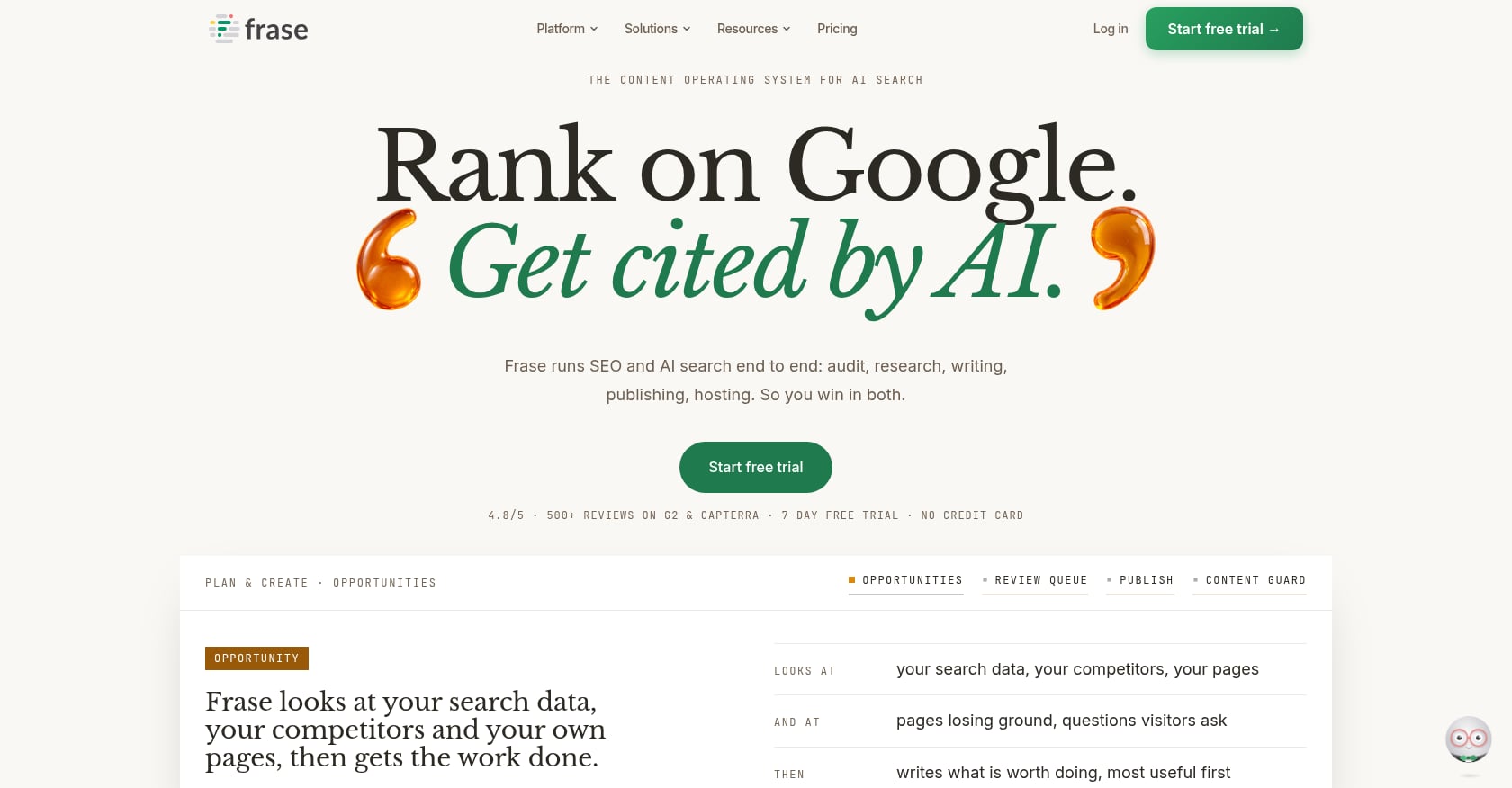
Best for: SEO content strategists who want SERP research and content briefs in one place.
Frase sits at the intersection of SEO research and content writing. Its strength is automating the research phase: analyzing top-ranking pages, generating content briefs, and identifying topic gaps.
Pricing:
- Solo: $15/month
- Basic: $45/month
- Team: $115/month
Key features:
- Automated SERP analysis and competitor content mapping
- AI-generated content briefs with topic clusters
- Content optimization scoring
- Question research from People Also Ask data
Tradeoffs:
- Writing quality is secondary to the research capabilities. Most users treat Frase as a brief generator and write (or rewrite) the content elsewhere.
- No distribution, scheduling, or campaign management.
- Significantly more affordable than Surfer SEO, but the trade-off is less polish on the writing side.
User consensus: Practitioners consistently rate Frase’s research and brief capabilities highly while noting the writing output needs heavy editing. It’s a planning tool that happens to write, not the other way around.
5. Rytr
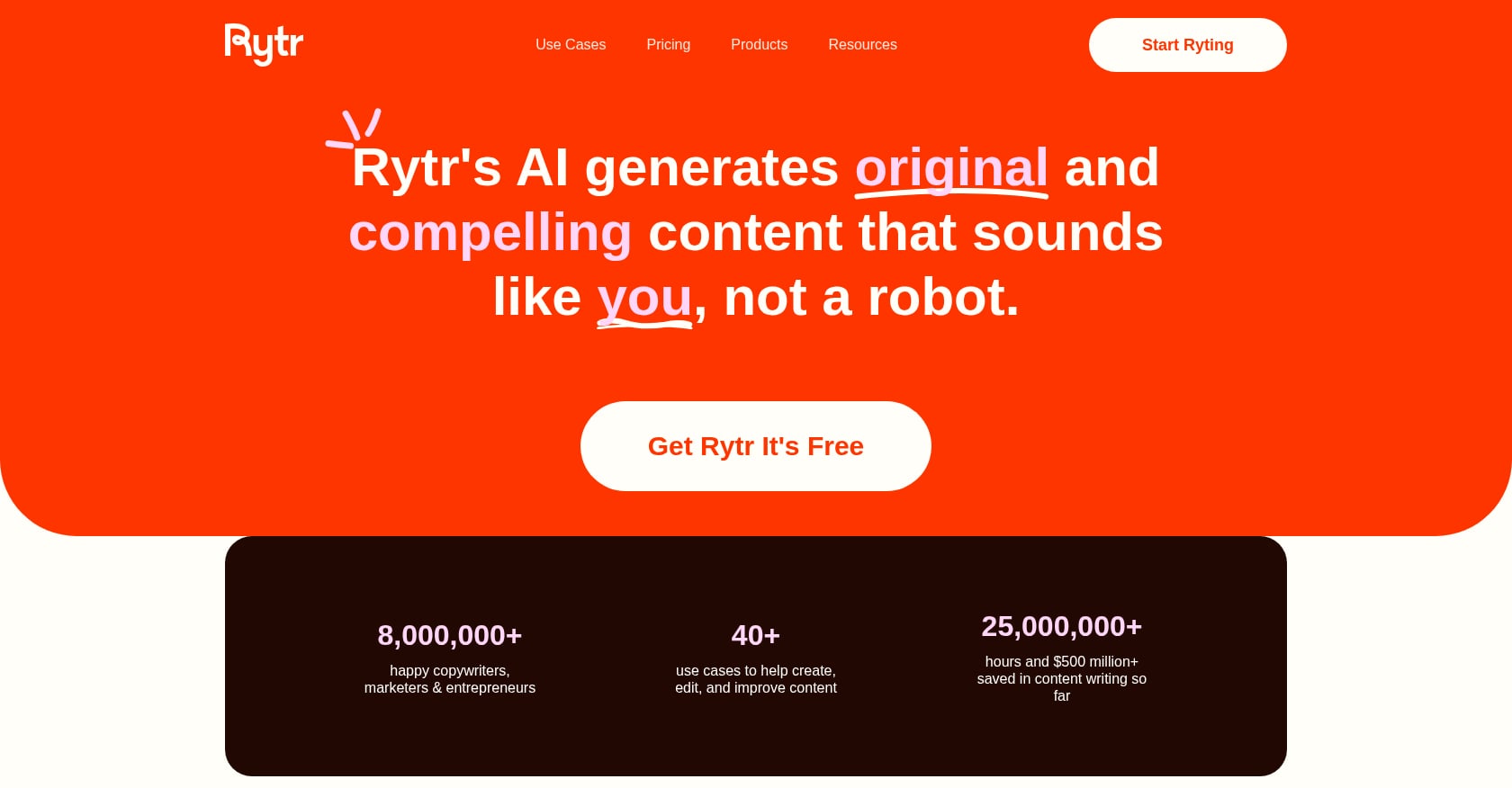
Best for: Budget-conscious solopreneurs who need unlimited short-form writing at the lowest possible price.
Rytr delivers surprisingly capable AI writing at a price point that’s hard to argue with. At $7.50/month for unlimited generation, it’s the cheapest option on this list by a wide margin.
Pricing:
- Free: 10,000 characters/month
- Unlimited: $7.50/month
- Premium: $24.16/month
Key features:
- 40+ use cases and templates
- Tone and style selection
- Built-in plagiarism checker (Premium)
- Browser extension
Tradeoffs:
- No workflow features, team collaboration, or SEO-grade optimization.
- Output quality ceiling is noticeably lower than Jasper or ChatGPT for nuanced, long-form work.
- No distribution or scheduling, just pure text generation.
- Limited integration options compared to any other tool on this list.
If your content needs are simple (social captions, product descriptions, short emails) and your budget is razor thin, Rytr does the job. For anything involving strategy or multi-channel execution, you’ll hit its limits fast.
Format-Specific Platforms
These platforms focus on visual or video content rather than text generation.
1. Canva AI (Magic Studio)
Best for: Non-designers who need branded visual content fast, without learning Photoshop.
Canva’s Magic Studio suite is the most comprehensive visual AI toolkit available at consumer pricing. In 2026, it bundles AI image generation, AI design generation, AI video, data visualization, and the Affinity desktop suite into a single subscription.
Pricing:
- Free: Basic templates, limited AI features
- Pro: $12.99/month (full Magic Studio, brand kit, premium templates)
- Teams: $14.99/month per person
Key features:
- Magic Design: generates polished layouts from text or image prompts
- Magic Write: text generator for captions, summaries, and brand copy
- Magic Media: AI-generated images, graphics, and short videos
- Brand Kit: centralized colors, fonts, logos for consistency
- Affinity integration for professional desktop editing
Tradeoffs:
- Not for content marketers who need SEO writing, keyword research, or campaign management.
- AI credits deplete quickly for high-volume users.
- Magic Write is functional but shallow compared to dedicated writing tools.
- No content calendar, approval workflow, or performance analytics.
For teams that need to repurpose blog content into social posts and visual assets, Canva is the fastest path from text to shareable graphics. Just don’t expect it to replace your content strategy stack.
2. Descript
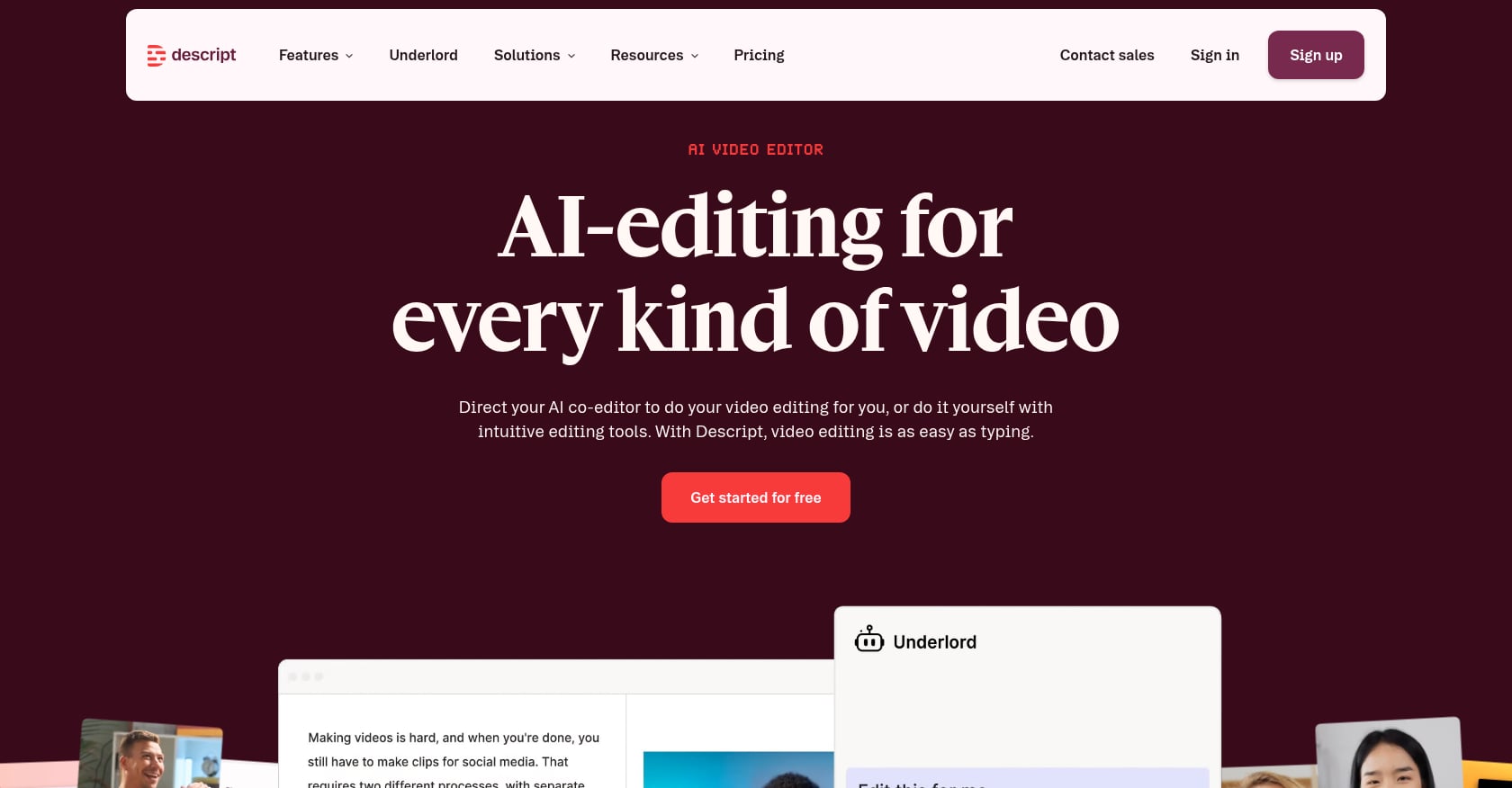
Best for: Video-first content teams who want to edit video as easily as editing a document.
Descript’s core innovation is text-based video editing. You get a transcript, edit the text, and the video edits itself. For teams producing podcasts, YouTube content, or social video clips, this workflow change is dramatic.
Pricing:
- Free: Limited features and exports
- Creator: $12/user/month
- Pro: $24/user/month
Key features:
- Text-based video and podcast editing
- AI filler-word removal (automatic “um” and “uh” cleanup)
- Screen recording with built-in editing
- AI-powered clip generation for social media
- Overdub: AI voice cloning for corrections
Tradeoffs:
- Only useful for audio and video content. Zero text-based content capabilities.
- Free tier is too limited for real production work.
- Advanced features (higher export quality, longer projects) require the Pro tier.
Practitioner take: Users on Reddit consistently call Descript a “game-changer for video content,” specifically praising the filler-word removal and how text-based editing cuts production time by 50% or more.
What No Platform Tells You: The Brand Voice Problem
This is the section most listicles skip, and it matters more than any feature comparison.
AI tools struggle to capture the exact voice and personality of a brand. They tend to sound formal or neutral, missing the specific tone that makes a company recognizable. Copy.ai and Writesonic offer brand voice settings, but users report noticeable drift after roughly 50 outputs without recalibration. No tool maintains perfect voice consistency at high volume without periodic human review.
For founders, this problem is even more acute. The pressure to be “always on” across LinkedIn, newsletters, and social can push even authentic leaders toward generic, AI-generated posts that damage credibility over time. This is why platforms with human-in-the-loop models (like AgentWeb’s founder-brand support with LinkedIn ghostwriting) exist. AI alone can’t hold your voice. It needs a human checking the wheel.
If you’re a founder navigating this tension, a founder-led LinkedIn strategy that combines AI efficiency with human authenticity is the way forward.
How to Choose the Right Platform
Forget feature matrices. Answer these three questions:
Question 1: Do you need content, or do you need campaigns?
If you just need blog drafts and social captions, a creation-first tool (Jasper, Writesonic, ChatGPT, Rytr, Frase) will work. If you need content planned, approved, distributed, measured, and iterated on, you need a full-execution platform. A $20/month tool that requires 10 hours/week of editing and manual distribution is more expensive than a $199/month platform that ships finished campaigns.
Question 2: What’s your team size?
- Solo founder: ChatGPT ($20/month) or Rytr ($7.50/month) for drafting, Canva for visuals. Supplement with a content marketing for demand generation framework so your output actually drives leads.
- Team of 2-5: Jasper or Writesonic for writing, plus a project management layer.
- Startup wanting full GTM without hiring: AgentWeb. The Week-0 diagnostic and ongoing execution replace the need for a marketing hire.
Question 3: What’s your actual budget?
Watch for hidden costs. HubSpot’s Starter looks like $9/month until you realize AI features need $450+. Copy.ai’s Pro is $49, but the workflow tools that matter cost $1,000. Writesonic’s GEO capabilities require $79, not $20. Always calculate the real cost of the tier that includes the features you actually need.
→ Compare AgentWeb to DIY AI tools
The Bigger Picture: Content Generation vs. Content Execution
The distinction between “content creation” and “content operations” is the most important filter when shopping for AI powered content creation platforms in 2026. Practitioners on Reddit consistently report higher satisfaction with full-pipeline tools (platforms handling keyword research, writing, optimization, and publishing in one place) compared to standalone writers.
The marketing and advertising segment is estimated to capture 29.0% of the AI content generation market share in 2026. That’s billions of dollars flowing into tools. The question isn’t whether to use AI for content. It’s whether you pick a tool that solves 20% of the problem or one that solves 80%.
For startups specifically, the highest-leverage move is building a repeatable go-to-market execution system, not just a writing shortcut. The platforms that ship campaigns weekly, iterate based on data, and build systems that compound over time will outperform any AI writing tool, no matter how good its prose.
→ Start with a free GTM audit from AgentWeb
FAQ
What is an AI powered content creation platform?
An AI powered content creation platform uses generative AI (large language models, image generators, or video AI) to help teams produce marketing content. In 2026, the best platforms go beyond writing to include workflow automation, approval routing, distribution, and performance tracking.
How much do AI content creation platforms cost?
Prices range from free (ChatGPT, Rytr, Copy.ai’s limited tier) to $1,500+/month (HubSpot Enterprise). Most useful tiers for small teams fall between $20 and $200/month. Watch for credit-based billing, per-seat charges, and features locked behind premium tiers.
Can AI content tools maintain my brand voice?
Partially. Jasper’s Brand Voice Training is the strongest standalone option, but practitioners report voice drift after about 50 outputs without recalibration. No current tool maintains perfect brand voice at high volume without human review. Platforms with human-in-the-loop models (like AgentWeb) handle this better than pure AI tools.
What’s the difference between a content creation tool and a content operations platform?
A creation tool generates drafts. A content operations platform handles the full lifecycle: planning, drafting, editing, approving, publishing, distributing, and measuring performance. Most teams waste more time on the non-writing tasks than the writing itself.
Are AI content creation platforms safe for SEO?
Yes, when used properly. Google’s guidelines focus on content quality and helpfulness, not whether AI was involved. However, practitioners on Reddit report that unedited AI content (without human refinement and expertise layered in) fails helpful content standards at a much higher rate. Always review and enhance AI output.
What is GEO, and why does it matter for content platforms?
GEO stands for generative engine optimization. It’s the practice of optimizing content to appear in AI-powered search results (like ChatGPT responses, Perplexity answers, and Google AI Overviews), not just traditional search rankings. Writesonic is currently the leader in building GEO features into its platform.
Which AI content platform is best for startups?
It depends on what “best” means. For full campaign execution without hiring, AgentWeb. For branded blog content at scale, Jasper. For SEO content on a tight budget, Writesonic. For maximum flexibility with minimal cost, ChatGPT. The best choice maps to your team size, budget, and whether you need a writing tool or a marketing system.
Should I worry about AI content platform shutdowns?
Yes. Narrato shut down in June 2026 despite appearing in many recommendation lists. Before committing to any platform, evaluate the company’s funding, revenue model, and market position. Prioritize platforms with durable business models over those offering unsustainably cheap pricing.
Or get a free AI Readiness Roadmap to see where your GTM has gaps.
Ex-Meta, Google, LinkedIn. 10+ years in ML & data science for GTM. Expert in customer acquisition and growth activation.
Get a free Stack Review.
30 min with Harsha and Matt.
We audit your last 30 days, pinpoint the highest-impact fixes, and hand you the exact playbook we'd run. No deck. No pitch unless there's a fit.