Best AI for Sales Emails 2026: 10 Tools Ranked by Use Case


TL;DR
The best AI for sales emails depends on the job you need done. For email coaching, Lavender scores and rewrites your drafts in real time. For high-volume cold outreach, Instantly and Smartlead offer unlimited mailboxes at low cost. For all-in-one prospecting plus sequencing, Apollo.io packs the most into a single tool. And if your real problem is building an entire go-to-market system (not just picking an email tool), AgentWeb pairs AI execution with senior human operators to run the whole engine.
Quick Comparison Table
| Tool | Best For | Starting Price | Free Tier | Sends Emails? | AI Capability |
|---|---|---|---|---|---|
| AgentWeb (Emma) | Full GTM execution | $199/mo (DIY) | 7-day trial | Yes | AI + human email execution |
| Lavender | Email coaching | $29/mo | Yes (5/mo) | No | Scoring + rewriting |
| Apollo.io | All-in-one outbound | $49/user/mo | Yes | Yes | AI writing + sequencing |
| Instantly | Volume cold email | $37/mo | Trial | Yes | Campaign assistant |
| Reply.io (Jason AI) | Multichannel sequences | $49/user/mo | Trial | Yes | AI SDR agent |
| HubSpot (Breeze AI) | CRM-first teams | Free (basic) | Yes | Yes | CRM-native AI writer |
| Autobound | Signal personalization | $39/user/mo | Yes (150 credits) | No | 400+ signal personalization |
| Smartlead | Agency deliverability | $39/mo | Trial | Yes | AI icebreakers |
| Saleshandy | Budget cold email | $34/mo | Trial | Yes | AI sequence writer |
| Copy.ai | Email copywriting | $36/mo | Yes | No | Template-based drafting |
Before picking a tool, it helps to understand the numbers. The average AI cold email gets a 3.43% reply rate, with only about 0.64% of contacts turning into genuinely interested replies. Top 10% campaigns hit 10% or higher. The gap between average and excellent comes down to targeting, personalization, and deliverability, not which button you click to generate copy.
That context matters because “best AI for sales emails” actually covers three distinct categories: tools that write your emails, tools that coach and improve your emails, and tools that automate the entire sequence from prospecting to send. The list below is organized so you can find the right category fast.
Want to skip the tool comparison and start with your email content strategy first? That’s often the smarter move.
How We Evaluated These Tools
Every tool was assessed across five dimensions: AI email quality (how good the output actually is), pricing transparency (sticker price versus real cost), integration depth (what it plugs into), user feedback (G2 reviews, Reddit threads, practitioner reports), and deliverability features (warmup, inbox rotation, sender reputation). Where possible, real benchmarks and community sentiment replaced vendor marketing claims.
The 10 Best AI Tools for Sales Emails
1. AgentWeb (Emma)
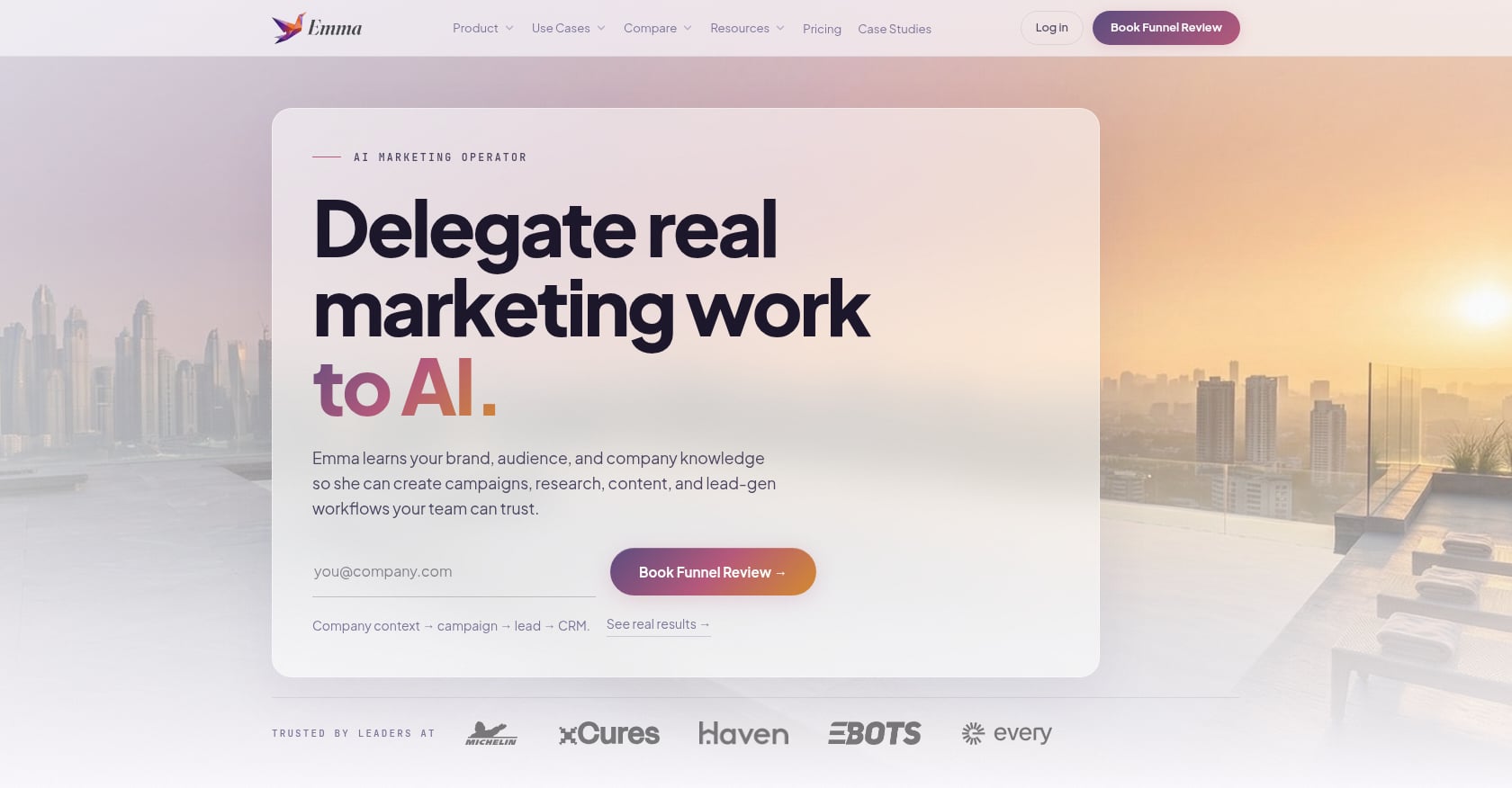
Best for: Early-stage startups that need their entire GTM system built, not just an email tool
Most tools on this list solve one piece of the sales email puzzle. AgentWeb takes a different approach: it combines AI-powered execution with senior human operators (ex-Microsoft, Google, Meta, LinkedIn) who build the strategy and optimize campaigns weekly. Emma, the AI agent, handles research, creative production, and multi-channel execution, including email outbound, while the founding team leads the go-to-market plan.
Key features:
- 90-day GTM diagnostic and plan mapped to ICP, channels, and bottlenecks
- Agentic execution across Meta, Google, LinkedIn/X, email, and outbound
- Slack/Teams approval workflows and AgentWeb Portal for calendar and dashboards
- Self-serve AI campaign templates starting at $199/month with a 7-day free trial
- Done-for-you option where AgentWeb functions as the creative and growth department
Pricing:
- Self-serve (DIY): $199/month after 7-day free trial
- Custom workflows and done-for-you tiers: contact sales for current pricing
Proof points: In a head-to-head test against a competing agency, AgentWeb delivered 4,000+ leads and 328 Add-to-Carts in 3 months for one client, with a 2.91% CTR at roughly $0.24 CPC. Another client hit a 13.19% peak CTR on just a $300/month ad budget. You can see real client results for the full breakdown.
Tradeoffs:
- Not a pure email tool. If you only need a cold email sender, Instantly or Smartlead is cheaper.
- Fewer public third-party reviews compared to established platforms.
- Best fit requires weekly engagement and Slack/Teams workflow participation.
Best for: Startups (pre-seed to Series A) that keep buying point tools but still can’t get outbound working because the real gap is strategy, not software.
Explore the self-serve platform to see if the DIY tier fits your team.
2. Lavender
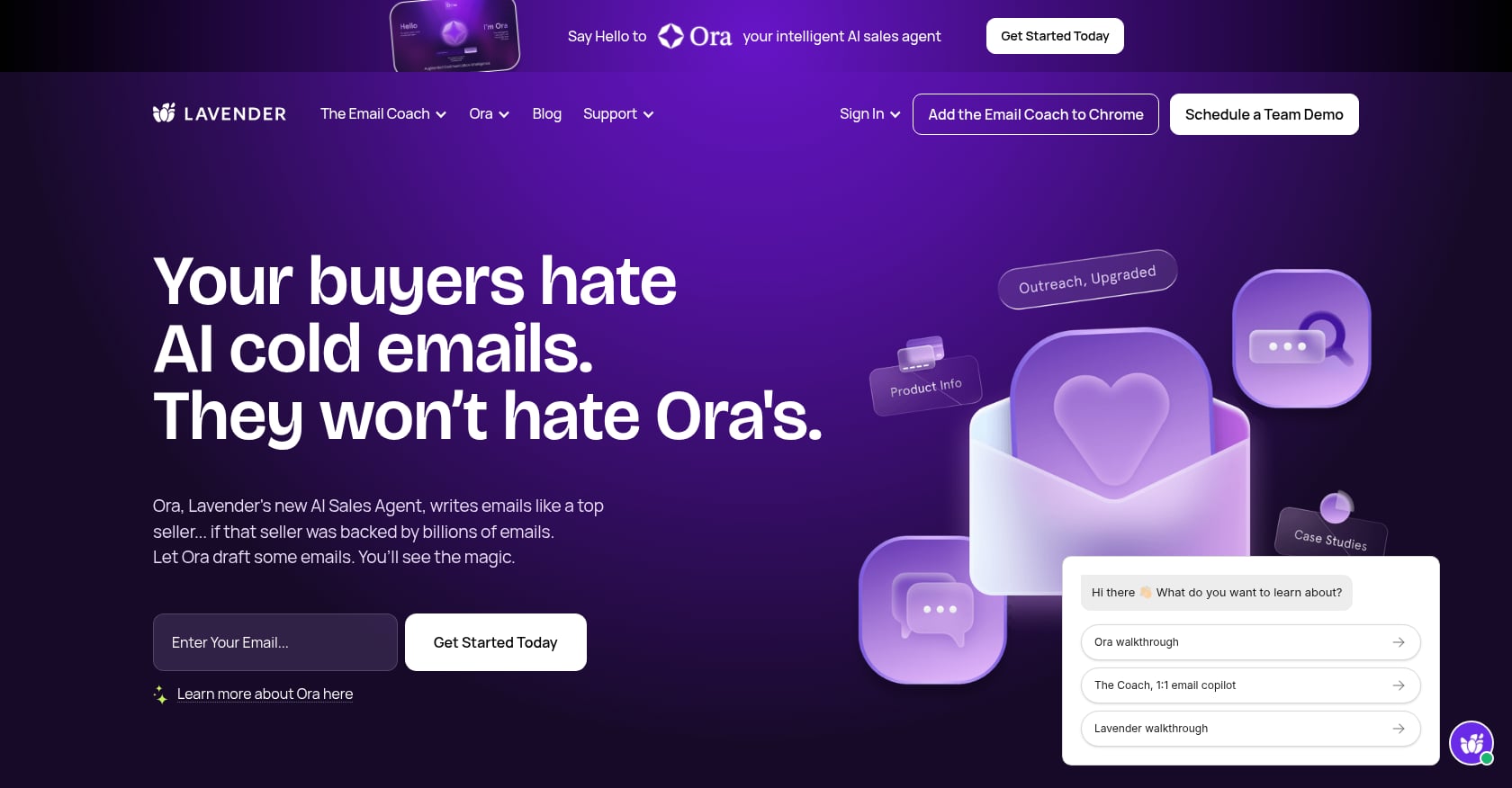
Best for: Individual SDRs and AEs who want to improve reply quality on existing outbound
Lavender is an AI email coach that sits inside Gmail or Outlook and scores your drafts in real time. It highlights what to fix before you hit send, suggests personalization based on prospect data, and rewrites weak sections. Think of it as Grammarly built specifically for sales.
Key features:
- Real-time email scoring with specific, actionable improvement suggestions
- AI-powered rewriting that shortens, sharpens, and personalizes drafts
- Prospect research surfaced directly in the compose window
- Ora, a new AI sales agent priced at $500/agent/month, which sends up to 1,000 emails monthly
Pricing:
- Free: 5 emails/month
- Starter: $29/month (unlimited coaching + AI writer)
- Individual Pro: $49/month (advanced personalization)
- Teams: $69/user/month
- Annual billing saves roughly 20%
What users say: Teams using Lavender report 580% increases in reply rates and 136% more meetings set. That said, at $29 to $89 per seat per month, multiple practitioners note it’s a single-purpose tool in a world where sales teams already pay for five to eight other subscriptions.
Tradeoffs:
- It’s a coaching layer, not a sending platform. You still need a separate tool like Instantly or Smartlead to run campaigns.
- Only works with Gmail and Outlook 365.
- Adds cost on top of your existing sequencer.
3. Apollo.io
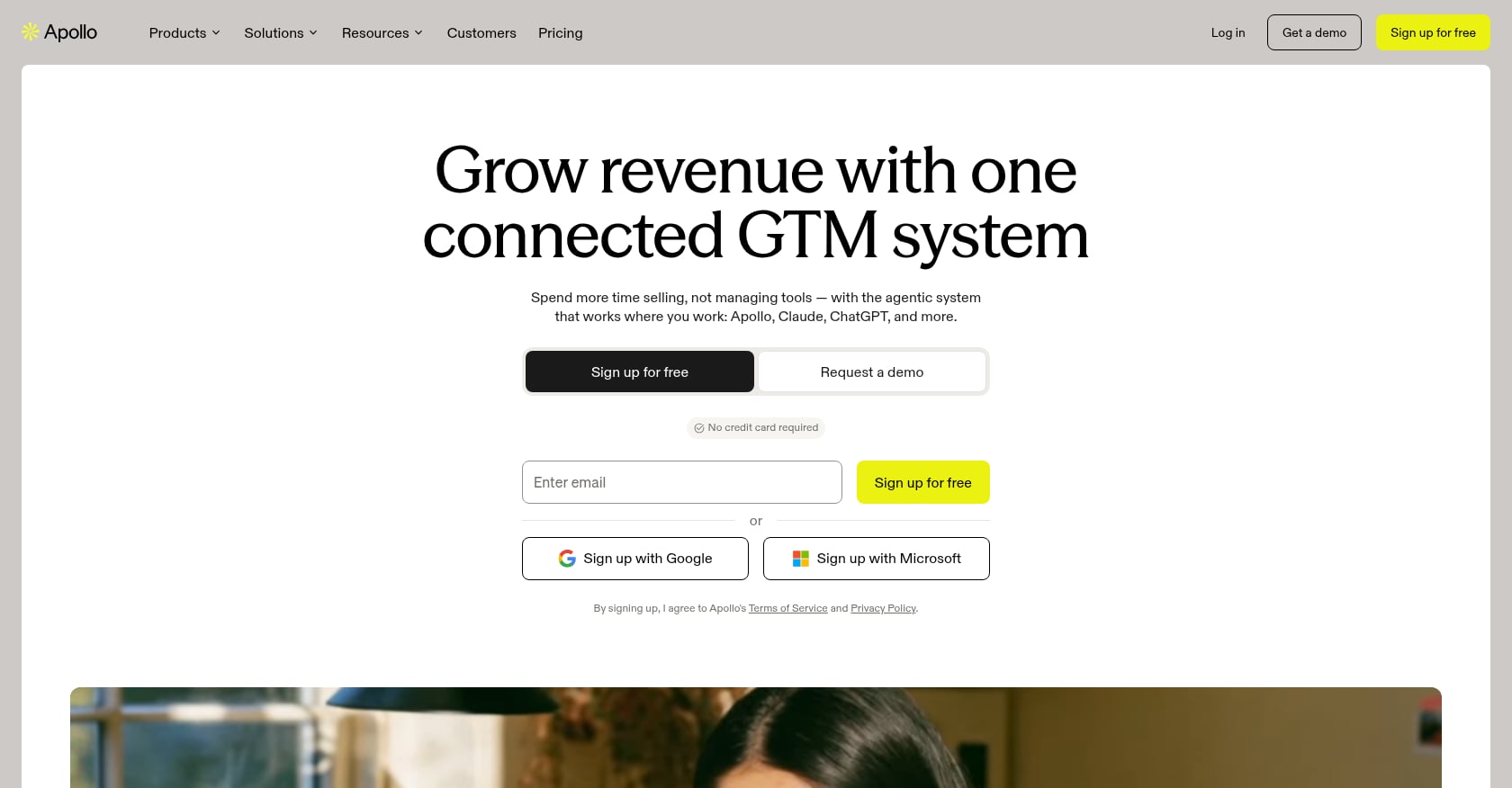
Best for: Solo founders and small B2B teams who want prospecting data plus email sequencing under one roof
Apollo combines a 265M+ contact database with email sequences, a dialer, intent data, and an AI assistant. For teams tired of stitching together three or four point solutions, it’s the closest thing to a single platform for outbound. If you need a reliable starting point for finding contacts, check out this guide to best B2B email database providers.
Key features:
- AI assistant (launched March 2026) that executes outbound workflows via natural language
- AI-assisted email writing, research, and lead scoring
- Built-in sequences with A/B testing
- Intent data to prioritize high-signal accounts
Pricing:
- Free: $0 with 900 credits/year
- Basic: $49/user/month
- Professional: $79/user/month
- Organization: $119/user/month (billed annually)
- Real spend often hits $150 to $400/user once credit overages kick in
What users say: G2 and Trustpilot reviews consistently flag data accuracy at around 65 to 70%, with email bounce rates of 15 to 25%. It’s worth it for email-first SDR teams and founders doing low-volume outreach, but international contacts are a weak spot.
Tradeoffs:
- Credit-based pricing with no rollover means costs creep up fast at scale.
- Data quality is inconsistent outside the US.
- The free tier is useful for testing but runs out quickly.
4. Instantly.ai
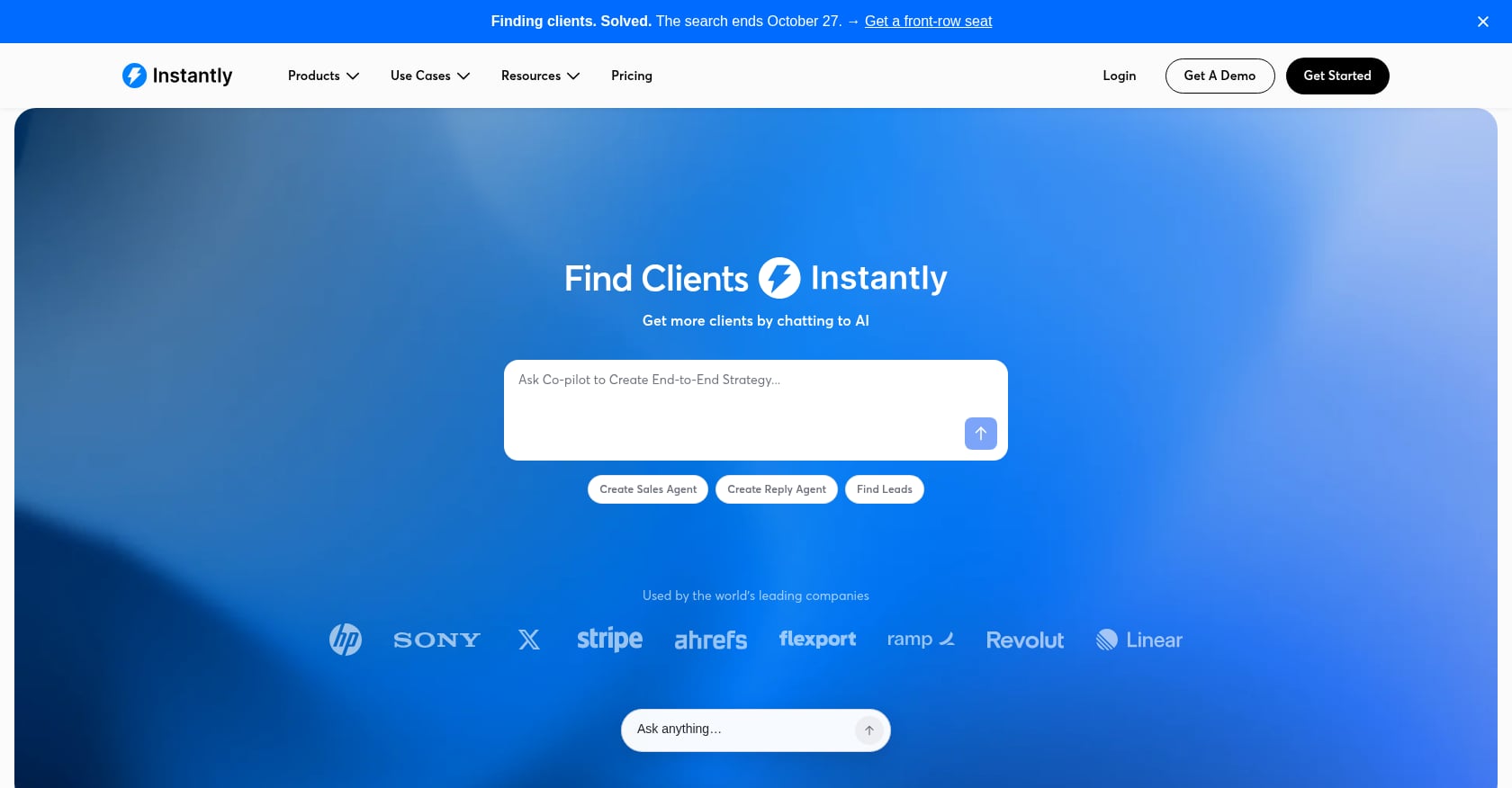
Best for: Agencies and solo operators who need maximum sending volume at the lowest cost per email
Instantly has become the default cold email platform for high-volume senders. Every paid plan includes unlimited email accounts, built-in warmup, and inbox rotation. If your strategy is volume (and you have a separate data source), this is the tool most practitioners on Reddit recommend starting with.
Key features:
- Unlimited email account connections on all paid plans
- Built-in warmup and sender rotation
- AI campaign assistant for sequence generation
- Hypergrowth plan: 25,000 contacts and 100,000 emails/month for $97
Pricing:
- Growth: $37/month (5,000 monthly emails, unlimited mailboxes)
- Hypergrowth: $97/month (25,000 contacts)
- Light Speed: $358/month (100,000 contacts)
- Realistic full setup with SuperSearch credits and CRM runs meaningfully higher
What users say: Practitioners on Reddit’s r/coldemail consistently point out that “deliverability and inbox rotation are the two things that decide whether your sends land.” Instantly’s shared warmup pool is a recurring concern, with multiple threads warning about open rates dropping 30 to 40 percent within two weeks if you rely on default settings.
Tradeoffs:
- No built-in contact database on core plans. You need a separate data source.
- Email-only. No LinkedIn, phone, or SMS steps without paying extra.
- The shared warmup pool requires careful management to avoid deliverability hits.
5. Reply.io (Jason AI)
Best for: Mid-market sales teams running multichannel outbound who want one platform
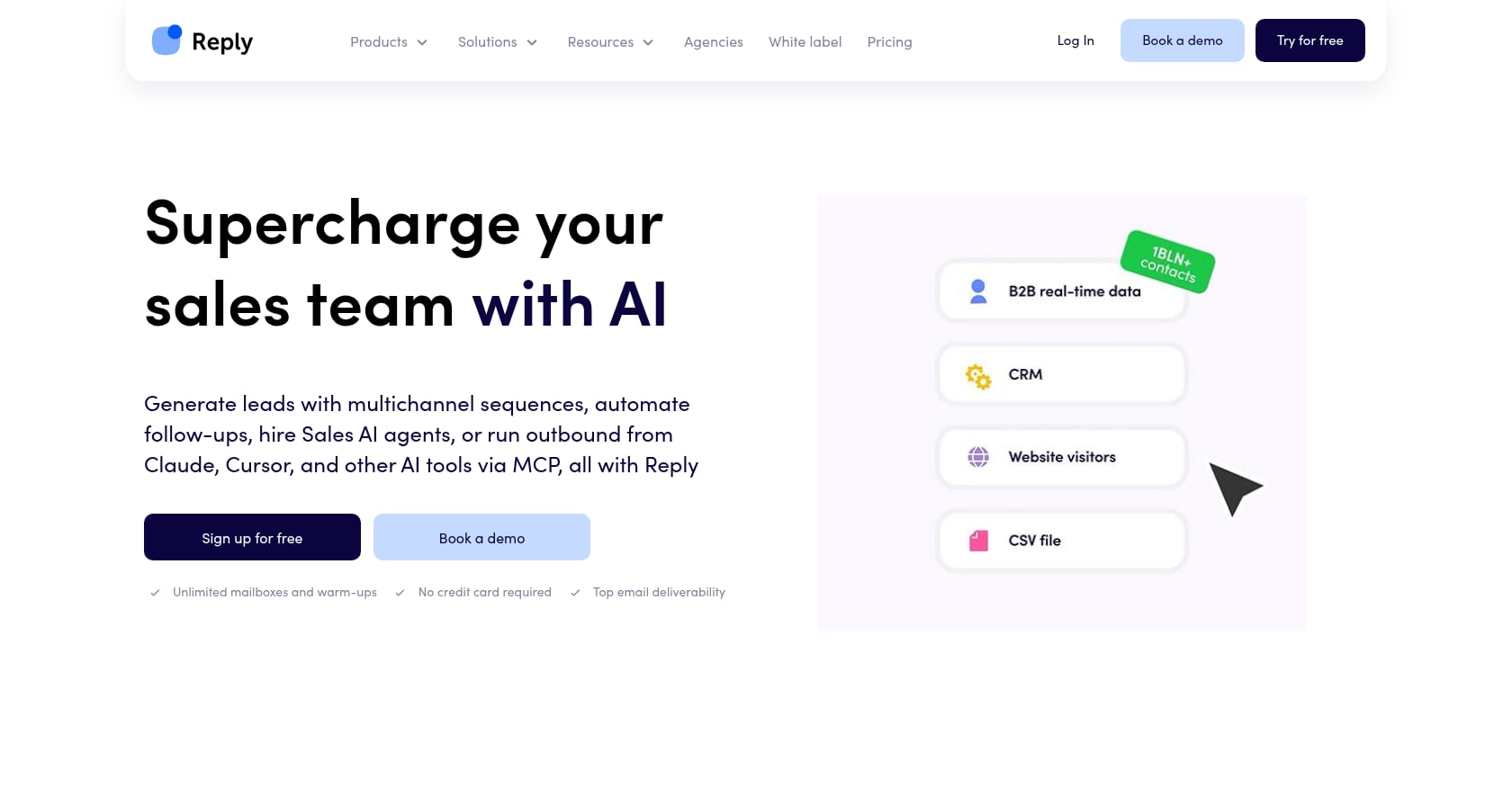
Reply.io’s Jason AI is positioned as an autonomous AI SDR. It finds prospects from a 1B+ database, builds personalized multichannel sequences (email, LinkedIn, calls, SMS), handles replies including objections, and books meetings. It works in 50+ languages across Autopilot and Copilot modes.
For a deeper look at how multichannel outbound plays and benchmarks stack up, that resource covers the strategic layer.
Key features:
- True multichannel: email, LinkedIn, call, and SMS in a single sequence
- Jason AI handles reply classification and objection responses
- 1B+ prospect database built in
- Autopilot mode for fully autonomous outreach
Pricing:
- Email-only: $49/user/month
- Multichannel: $89/user/month
- Jason AI SDR Starter: $500/month (annual) or $800/month (monthly)
- Growth tier: $1,500 to $3,000/month
What users say: During testing, the generated copy often needed additional manual editing to sound natural. Multiple Trustpilot threads describe a promo price of roughly $499/month that ballooned to $1,200+ in-product. Below 3,000 contacts/month, the per-contact cost makes Apollo plus a dedicated sending tool a better value.
Tradeoffs:
- Steep pricing jump from basic email plans to the AI SDR tier.
- Price transparency issues reported by users.
- AI copy quality still requires human polish.
6. HubSpot Sales Hub (Breeze AI)
Best for: Teams already on HubSpot CRM who want AI email help without adding another tool
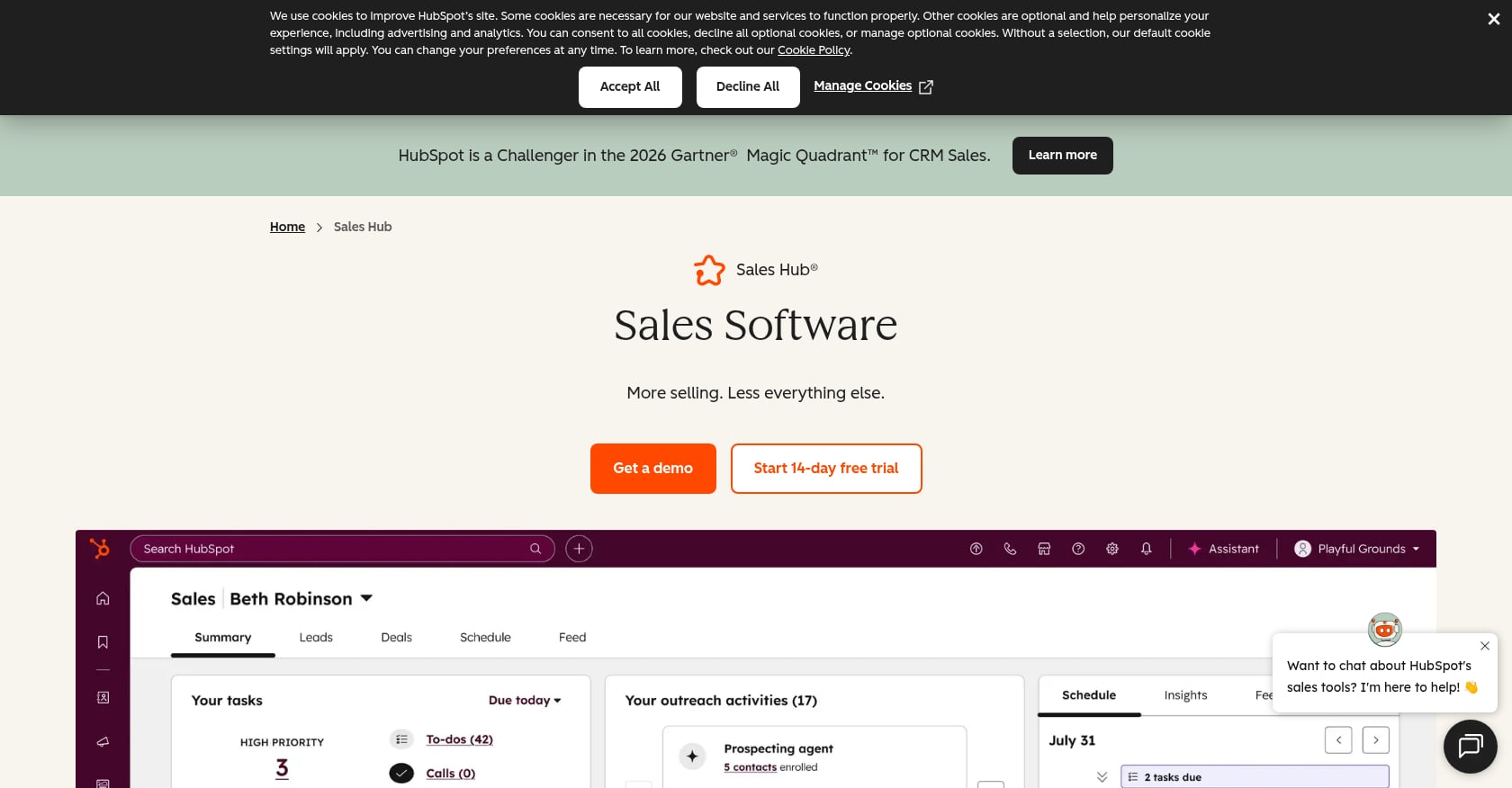
HubSpot’s Breeze AI lives inside the CRM you already use. It generates subject lines, email bodies, and follow-ups based on your contact and deal data. The send-time optimization feature analyzes individual contact behavior and consistently improves open rates by 8 to 15%.
Key features:
- AI content writer generates personalized emails from CRM data
- Send-time optimization based on contact behavior
- Sequence automation built into Sales Hub
- Works across marketing, sales, and service hubs
Pricing:
- Free CRM tier includes basic AI email features
- Paid Sales Hub tiers scale up
- Enterprise: $150/seat/month plus a mandatory $3,500 onboarding fee
What users say: One practitioner’s blunt assessment: the AI email generator “significantly underperforms Claude with a marketing skill file on anything requiring persuasion, brand voice fidelity, or strategic structure.” The verdict was “convenience feature, not quality tool.”
Tradeoffs:
- AI email generation is basic compared to dedicated tools like Lavender or Autobound.
- Only makes sense if you’re already invested in the HubSpot ecosystem.
- Enterprise tiers get expensive fast, especially with mandatory onboarding.
If you want to standardize messaging across ads and email, HubSpot’s unified platform does make that easier, even if the AI writing itself isn’t best-in-class.
7. Autobound
Best for: SDR teams using Salesforce, Outreach, or Salesloft who want deep, signal-driven personalization
Autobound pulls from 400+ real-time buyer signals (SEC filings, funding rounds, hiring surges, technographic data) to generate emails that reference specific events at a prospect’s company. It’s rated 4.9/5 on G2 across 240+ reviews, and teams report 60 to 120x faster email generation compared to manual research.
Key features:
- 400+ signal sources for hyper-personalized email generation
- Integrates with Salesforce, Outreach, Salesloft, and LinkedIn
- Generates multiple email variants per prospect
- Chrome extension for in-workflow use
Pricing:
- Free Basic: 150 shared credits/month
- Pro: $39/user/month
- Team: $89/user/month
- Enterprise: $12K to $99K/year
What users say: The G2 rating is high, but user reports of 50%+ invalid emails and buggy software tell a different story. Despite being called an “AI Outbound Sales Platform,” Autobound is functionally an email writing tool. It doesn’t send anything.
Tradeoffs:
- Write-only. No sending or sequence management.
- Depends entirely on your existing sequencer.
- Data quality issues reported by some users contradict the polished G2 score.
8. Smartlead
Best for: Cold email agencies managing multiple client workspaces who prioritize deliverability
Smartlead is built for volume senders, specifically agencies. Every plan from $39/month includes unlimited mailboxes and unlimited warmup. Reddit threads consistently recommend Smartlead for agencies because of its account-level inbox rotation and warmup infrastructure.
Key features:
- Unlimited mailbox connections and warmup on all plans
- Unified master inbox across all connected accounts
- Auto-icebreaker generation from the Basic tier
- Client workspace management for agencies
Pricing:
- Basic: $39/month
- Pro: $94/month
- Unlimited Smart: $174/month
- Unlimited Prime: $379/month
- Premium warmup pool adds $59/month below the $174 tier
- Real spend for working teams runs 3 to 5x the base price
What users say: The AI writing feature requires your own OpenAI API key, which means output quality depends on your prompting. Practitioners note that the add-on pricing, email-only ceiling, and support quality are the main reasons teams eventually leave.
Tradeoffs:
- Email-only. No LinkedIn or calling capabilities.
- Add-on pricing makes the real cost opaque.
- Support quality is a recurring complaint.
9. Saleshandy
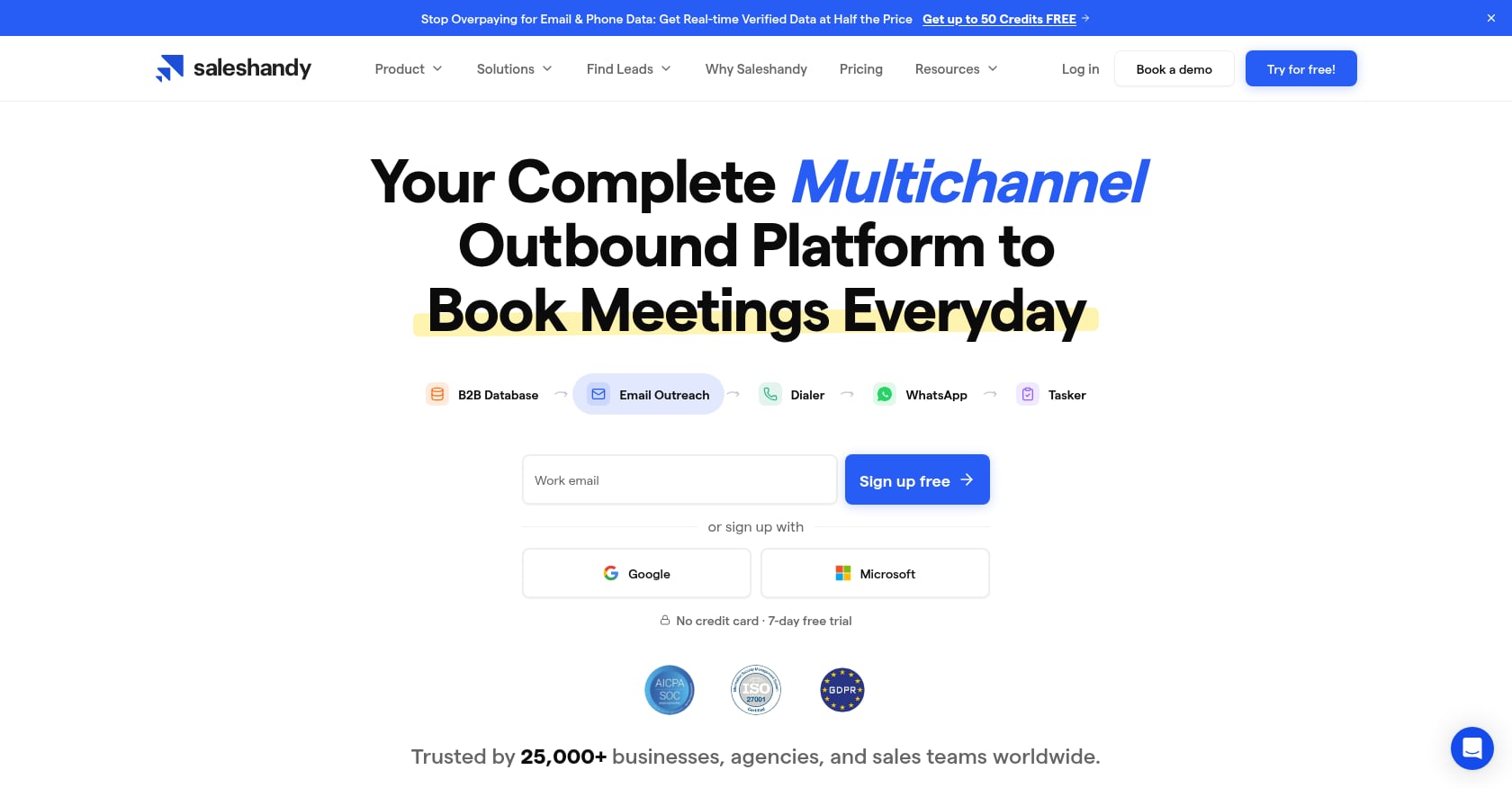
Best for: Budget-conscious SMB teams that want cold email plus prospecting data in one affordable tool
Saleshandy offers sequences, a unified inbox, sender rotation, warmup, and a credit-based Lead Finder with 800M+ contacts. It’s the cheapest entry point for teams that want both sending and data under one roof.
Key features:
- AI email writer generates sequences from campaign briefs
- Unlimited email account connections on every plan
- Built-in Lead Finder with 800M+ contact database
- Sender rotation and warmup included
Pricing:
- Starter: $34/month (annual)
- Pro: $76/month
- Scale: $149/month
- The advertised $25/month Starter price climbs to $83+/month once you add Lead Finder and Inbox Placement Testing
Tradeoffs:
- Lead data quality varies, especially for niche industries.
- Deliverability features are less mature than Instantly or Smartlead.
- AI features are less sophisticated than dedicated writing tools.
- Interface can feel cluttered.
10. Copy.ai
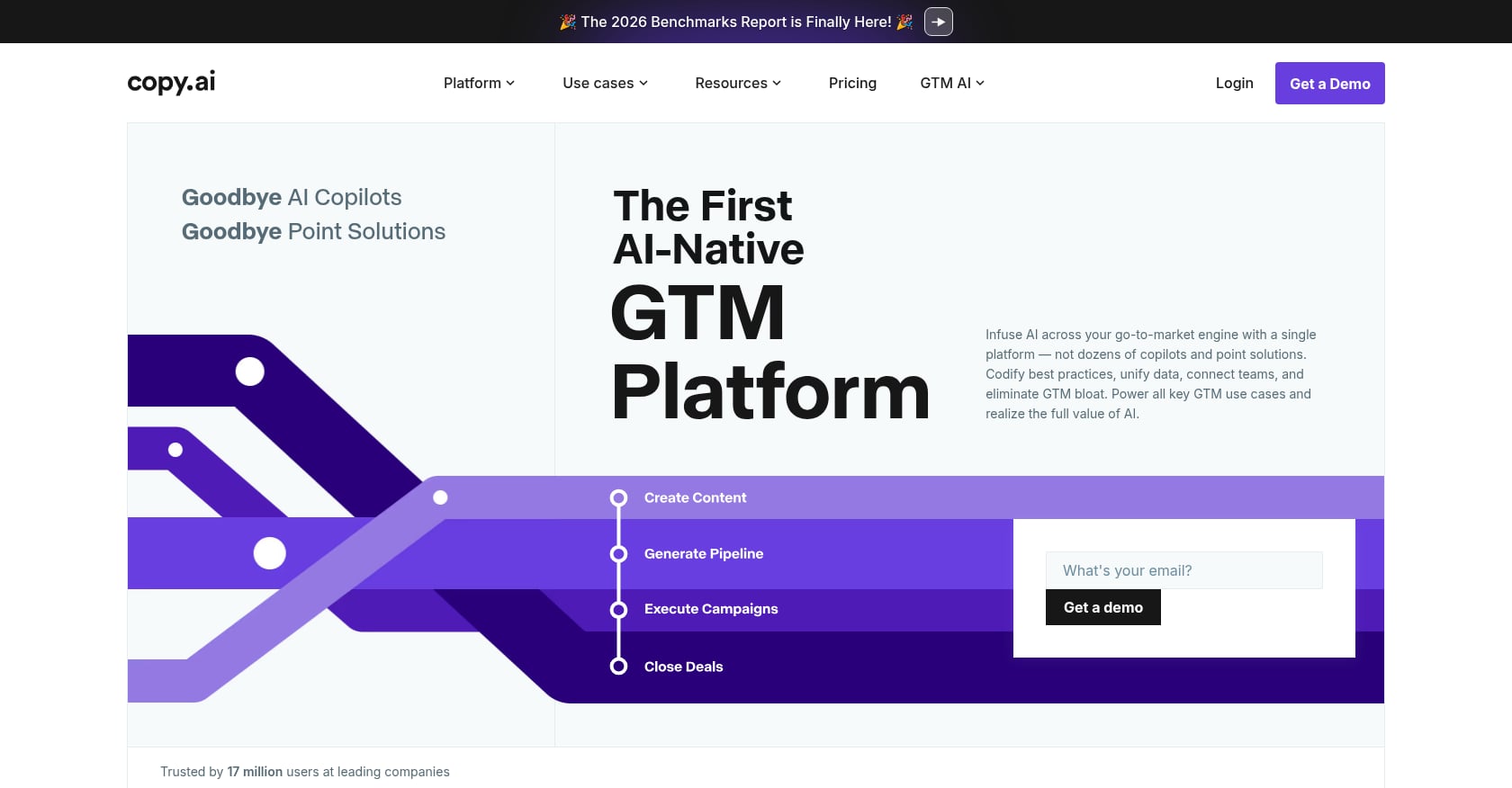
Best for: Solo founders or marketers who need quick email drafts without a full sales stack
Copy.ai is a general-purpose AI writing tool with strong sales email templates built on frameworks like AIDA, PAS, and Before-After-Bridge. In cold outreach testing, Copy.ai emails achieved a 12% higher open rate and 8% higher reply rate compared to ChatGPT-generated emails using the same prospect information.
Key features:
- Sales-specific email templates and frameworks
- Tone and length controls
- Multiple output variations per prompt
- Workflow automations for content pipelines
Pricing:
- Free tier available
- Paid plans from $36 to $49/month
Tradeoffs:
- No sending, sequencing, or campaign management. Purely a writing tool.
- No prospect data integration or CRM connection.
- Generic compared to sales-specific tools like Lavender or Autobound.
- You’re copying and pasting output into another tool.
For teams using Copy.ai or any writing tool, having cold email templates that get replies as a starting framework makes the AI output significantly better.
How to Choose the Right AI for Your Sales Emails
Picking the best AI for sales emails comes down to three questions: What job needs doing? How big is the team? What’s the budget?
If your real problem is the whole GTM system, not just email: AgentWeb’s pricing tiers start at $199/month for self-serve and scale to done-for-you engagements where a team of operators builds and runs your entire outbound engine.
If you just need better email copy: Lavender (coaching) or Autobound (signal-based personalization) layer on top of your existing tools. Neither sends emails, so pair them with a sequencer.
If you need to send cold emails at scale: Instantly or Smartlead. Both offer unlimited mailboxes, but Instantly is simpler for solo operators while Smartlead suits agencies with multiple client accounts.
If you want prospecting data plus sequencing in one place: Apollo.io gives you the most functionality per dollar, as long as you budget for credit overages.
If your team already lives in HubSpot: Use Breeze AI for convenience, but don’t expect it to match dedicated writing tools on quality.
If you need multichannel, not just email: Reply.io’s Jason AI handles email, LinkedIn, calls, and SMS in one sequence. Just know the AI SDR tier is priced for mid-market budgets.
Before committing to any tool, read up on proven playbooks for using AI in sales. Strategy should come before software selection.
What the Data Says About AI Sales Emails in 2026
The numbers paint a clear picture: AI helps, but it’s not magic.
AI-personalized emails lift reply rates by 20 to 50% when the underlying data is accurate. But 71% of decision-makers say cold email isn’t relevant to them, which means targeting matters more than copy. Campaigns with 50 or fewer recipients get triple the reply rates of mass blasts, and hyper-targeted outreach produces 2.76x higher reply rates than broad sends.
Here’s the uncomfortable truth: 58 to 79% of replies come from the first touch. If your first email doesn’t land (literally and figuratively), the rest of the sequence barely matters. That’s why deliverability, list quality, and personalization beat raw volume every time.
Email alone isn’t enough in 2026. The best-performing teams combine email with LinkedIn, phone, and content. But email remains the highest-volume channel, and getting it right with AI is table stakes.
The Hidden Costs Nobody Talks About
Every tool in this category has pricing gotchas. Here’s what to watch for:
- Apollo.io: Credit overages with no rollover policy. A $49/month plan can become $200+/month fast.
- Instantly: The $37/month Growth plan doesn’t include lead data or CRM features. A realistic working setup costs considerably more.
- Smartlead: Premium warmup pool adds $59/month on lower tiers. Real agency spend runs 3 to 5x the base price.
- Saleshandy: The Starter plan jumps from $25 to $83+/month when you add Lead Finder and inbox testing.
- Reply.io: Jason AI promo pricing has reportedly jumped from $499 to $1,200+ in-product for some users.
Always calculate your total cost of ownership, not just the sticker price on the landing page.
FAQ
Which AI is best for cold sales emails?
It depends on your volume and budget. For high-volume sending at low cost, Instantly ($37/month) is the most popular choice among practitioners. For quality-focused outbound with personalization, Lavender ($29/month) plus a separate sending tool gives you the best email copy. For teams that need a full go-to-market system including email, AgentWeb combines AI execution with human strategy.
Can AI write sales emails that don’t sound like AI?
Yes, but it requires effort. Tools like Lavender and Autobound produce more natural output because they pull in prospect-specific signals rather than generating generic templates. Copy.ai’s sales frameworks (AIDA, PAS) also help structure emails that feel intentional. The key is editing. AI-generated first drafts almost always need a human pass to match your voice and remove the telltale “AI feel.”
Do I need a separate tool for email deliverability?
Most dedicated cold email platforms (Instantly, Smartlead, Saleshandy) include basic warmup and inbox rotation. However, practitioners on Reddit consistently warn that shared warmup pools can hurt your sender reputation. If you’re sending more than a few thousand emails per month, you may need premium warmup services or a dedicated deliverability tool on top of your sending platform.
How much should I spend on AI sales email tools?
For a solo founder, you can get started for $35 to $50/month with Instantly or Saleshandy. A small SDR team (3 to 5 reps) should budget $150 to $400/month total across writing, sending, and data tools. Mid-market teams running multichannel sequences can expect $500 to $3,000/month depending on volume and whether they use an AI SDR agent like Jason AI.
Is it worth paying for AI email coaching vs. just using ChatGPT?
ChatGPT can draft emails, but it lacks real-time scoring, prospect-specific personalization, and CRM context. In testing, dedicated sales email AI tools like Copy.ai outperformed ChatGPT by 12% on open rates and 8% on reply rates using identical prospect information. Lavender’s coaching model adds another layer by telling you exactly what to fix and why.
Should I use one tool or build a stack?
There’s no single tool that does everything well. The most common combination among practitioners is a data source (Apollo or a dedicated lead research tool), a sending platform (Instantly or Smartlead), and optionally a coaching or personalization layer (Lavender or Autobound). If managing multiple tools sounds like overhead you can’t afford, an all-in-one approach like Apollo or a full-service option like AgentWeb reduces the integration burden.
Are AI SDR agents replacing human salespeople?
Not yet. AI SDR agents like Jason AI and Lavender’s Ora automate prospecting and initial outreach, but they still need human oversight for reply handling, complex objections, and relationship building. The current sweet spot is using AI to handle the first 80% of the workflow (research, drafting, scheduling) while humans handle the conversations that actually close deals.
Or get a free AI Readiness Roadmap to see where your GTM has gaps.
Ex-Meta, Google, LinkedIn. 10+ years in ML & data science for GTM. Expert in customer acquisition and growth activation.
Get a free Stack Review.
30 min with Harsha and Matt.
We audit your last 30 days, pinpoint the highest-impact fixes, and hand you the exact playbook we'd run. No deck. No pitch unless there's a fit.