9 Best B2B Email Database Providers for 2026 (Ranked)


TL;DR
B2B email databases decay at 22.5–30% per year, so choosing the right provider matters more than most guides admit. Apollo.io offers the best free tier for bootstrapped startups. ZoomInfo dominates US enterprise data but costs $15K+ annually. UpLead provides a 95% email accuracy guarantee without long-term contracts. No matter which provider you pick, you need a verification workflow before sending, and an execution system to turn raw contacts into actual pipeline.
Why Your B2B Email Database Choice Can Make or Break Outbound
Here’s a number that should change how you think about buying contact data: B2B email lists decay at roughly 2.1% per month. That compounds to 22.5–30% annual degradation. If you bought a 10,000-contact list in January, somewhere between 2,250 and 3,000 of those addresses are already dead by December.
For SaaS and startup audiences, it’s worse. Those segments see 40–50% annual data decay because people in fast-growing companies change roles constantly.
Every hard bounce above a 2% rate damages your sender reputation. Cross the 5% threshold and you risk getting blacklisted entirely. One poster on r/b2bmarketing described the experience perfectly: they’d “paid to damage my own domain.” Another spent $15K on lead databases and got 2–3% response rates.
This guide exists because most B2B email database comparisons are written by vendors who rank their own product first. We evaluated nine providers based on real-world accuracy (not marketing claims), pricing transparency, free tier quality, and honest tradeoffs. The goal is to help startup founders and lean sales teams pick a provider that fits their budget, then actually do something useful with the data.
If you’re building outbound from scratch, a solid email content strategy matters just as much as the database you choose.
See how Emma automates lead research after you have your data →
At-a-Glance Comparison Table
| Provider | Starting Price | Database Size | Email Accuracy | Free Tier | Best For |
|---|---|---|---|---|---|
| Apollo.io | Free / $49/user/mo | 210M+ contacts | 65–80% (real-world) | Yes (generous) | Bootstrapped startups |
| ZoomInfo | ~$15K/yr floor | 500M+ contacts | ~89% (US) | No | US enterprise sales |
| Cognism | ~$15K–22K/yr | 440M+ contacts | 93% (EU), 88% (US) | No | EMEA/GDPR compliance |
| UpLead | $99/mo ($74 annual) | 160M+ contacts | 95% (guaranteed) | 7-day trial | SMB teams, email-first |
| Hunter.io | Free / $34/mo (annual) | Email patterns | High (email-only) | Yes (50 credits) | Domain-level lookups |
| Lusha | Free / ~$37/user/mo | 45M+ profiles | Good (email), strong (phone) | Yes (40 credits) | LinkedIn prospecting |
| Clay | $185/mo | 100+ provider waterfall | 85–92% (waterfall) | Yes (100 credits) | RevOps enrichment |
| Lead411 | $49/mo | 450M+ contacts | 96% (claimed) | 7-day trial | US SMB with intent data |
| BookYourData | $99/250 credits | 250M+ contacts | 97% (guaranteed) | 10 free leads | One-off campaigns |
How We Evaluated These B2B Email Databases
Most comparison articles evaluate providers using vendor-supplied stats. We took a different approach:
- Real-world accuracy over marketing claims. When a provider says “95% accuracy,” we checked that against independent testing, G2 reviews, and practitioner reports from Reddit and forums.
- Pricing transparency. Can you see the price before talking to sales? We penalized providers that hide pricing behind demo requests.
- Free tier quality. Not just “does it exist” but “can you actually run a small campaign with it.”
- Integration depth. A B2B email database is only useful if it connects to your outbound workflow.
- Compliance posture. GDPR, CAN-SPAM, and CCPA compliance aren’t optional features.
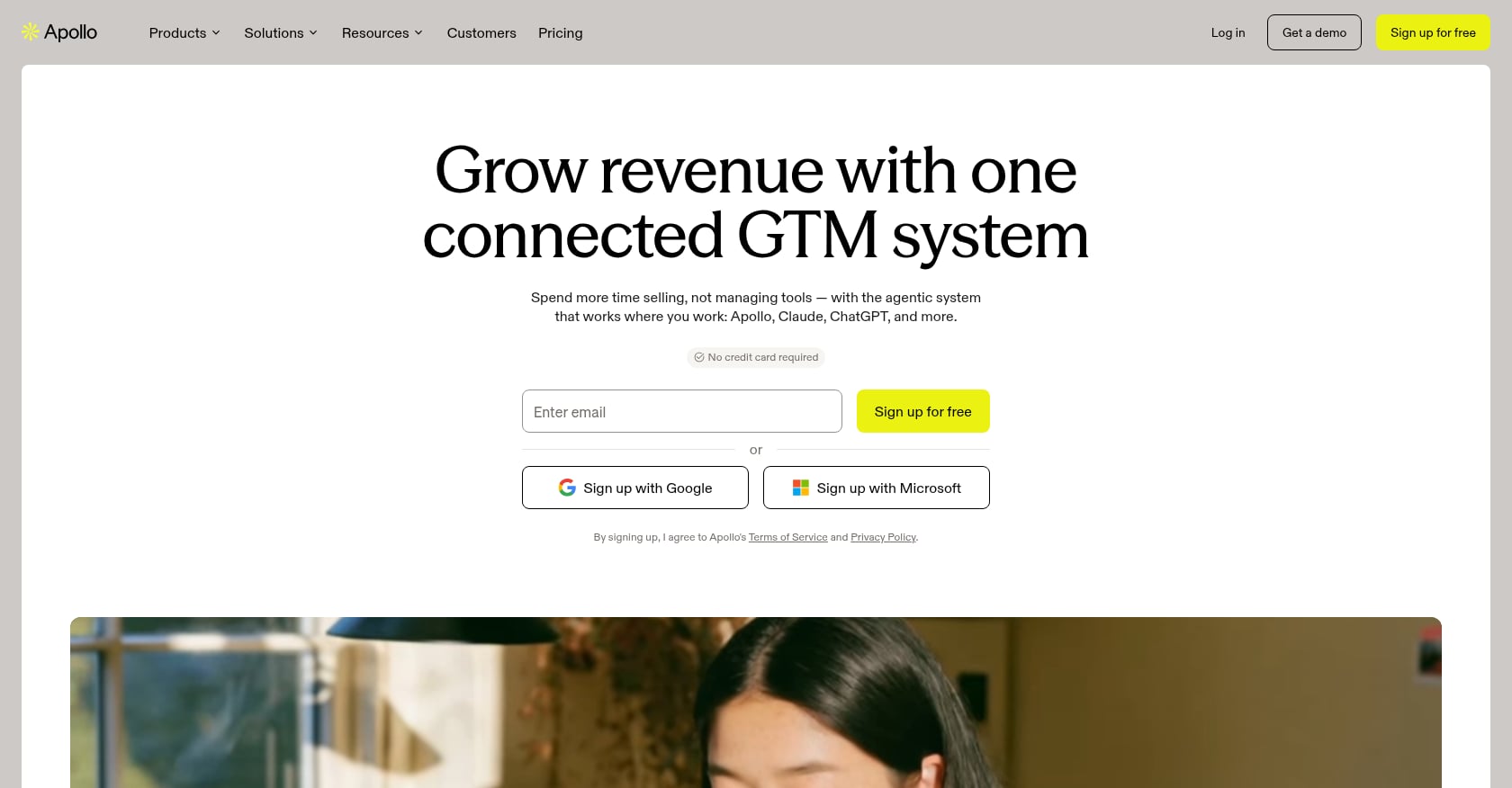
1. Apollo.io
Best for: Bootstrapped startups that need a free B2B email database to start outbound immediately
Pricing
Apollo offers transparent pricing with a genuinely useful free tier. Paid plans start at $49/user/month (Basic), step up to $79/user/month (Professional), and top out at $119/user/month (Organization, minimum three seats). All prices reflect annual billing.
The free tier gives you enough credits to test data quality before committing money, which is rare among B2B email database providers.
Key Features
- 210 million+ contacts across 35 million companies
- Built-in email sequencing and dialer
- Chrome extension for LinkedIn prospecting
- Intent data on higher-tier plans
- CRM integrations with Salesforce and HubSpot
Tradeoffs
- Real-world accuracy lands in the 65–80% range, despite the massive database size. On G2, “Inaccurate Data” is the number one complaint category with 538 mentions across 9,408 reviews.
- Phone numbers are particularly weak.
- Credits expire monthly with no rollover.
What Practitioners Say
Users on r/sales consistently describe Apollo as a “jack of all trades, master of none.” The recurring recommendation is to run Apollo exports through an external email verification step before sending. This keeps bounce rates low regardless of the data source. That’s a theme you’ll see repeated across every provider in this list: accuracy is a workflow habit, not a brand you can buy your way into.
Verdict
Apollo is the best starting point for founders who want to build lead lists without spending money upfront. Just don’t trust the data blindly. Verify before you send.
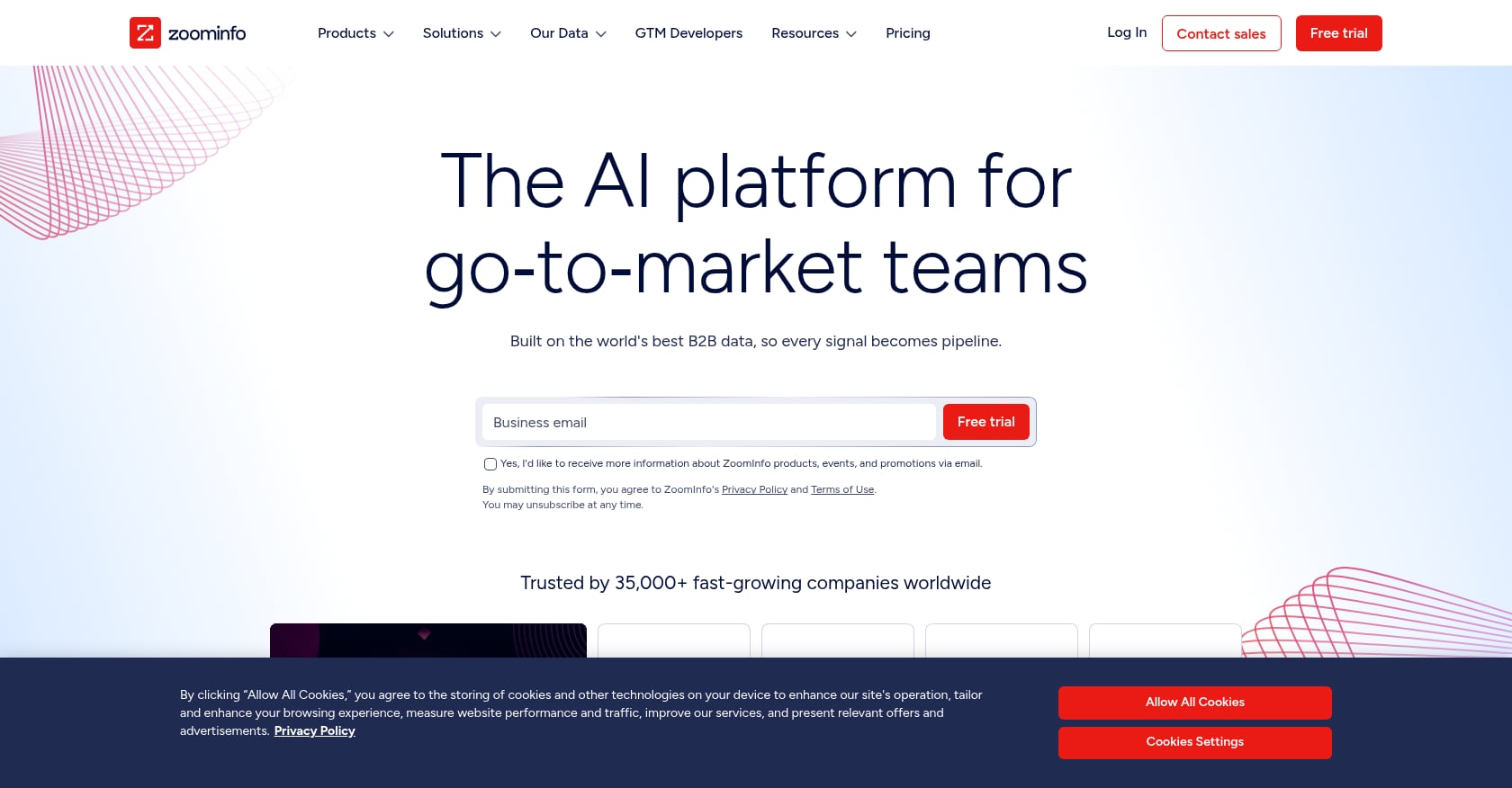
2. ZoomInfo
Best for: Enterprise sales teams prospecting into large US companies who need intent data and org-chart depth
Pricing
ZoomInfo’s price floor sits around $15,000/year. Most teams land between $25K and $50K+ once you add seats, intent data, and platform add-ons. SpendHound’s data from 441 ZoomInfo customers puts the average annual contract at $48,524 for companies with 50 to 1,000 employees.
There is no monthly option. No self-serve pricing page. You’re talking to a sales rep.
Key Features
- 500M+ contacts, 150M+ verified email addresses, 65M+ direct dials
- Intent data, org charts, and technographic filters
- Advanced search and territory planning
- Native integrations with major CRMs and sales engagement platforms
Tradeoffs
- Cost is prohibitive for startups. The average contract exceeds what most pre-seed companies spend on all marketing in a year.
- Annual contracts only, with an aggressive renewal process.
- Accuracy drops sharply outside the US: tested at 89% domestically, but 78% in UK/EU, 71% in India, and 73% in APAC.
What Practitioners Say
One Trustpilot reviewer described the experience as “Outdated and inaccurate!” after looking themselves up and finding information from several jobs ago, with the wrong email and phone number. Another reported “aggressive post-trial outreach” despite explicit requests to have their data deleted.
Verdict
ZoomInfo is the benchmark for US enterprise B2B email database quality and depth. If your average contract value justifies $25K+ in data spend, it’s likely worth the investment. For everyone else, keep reading.
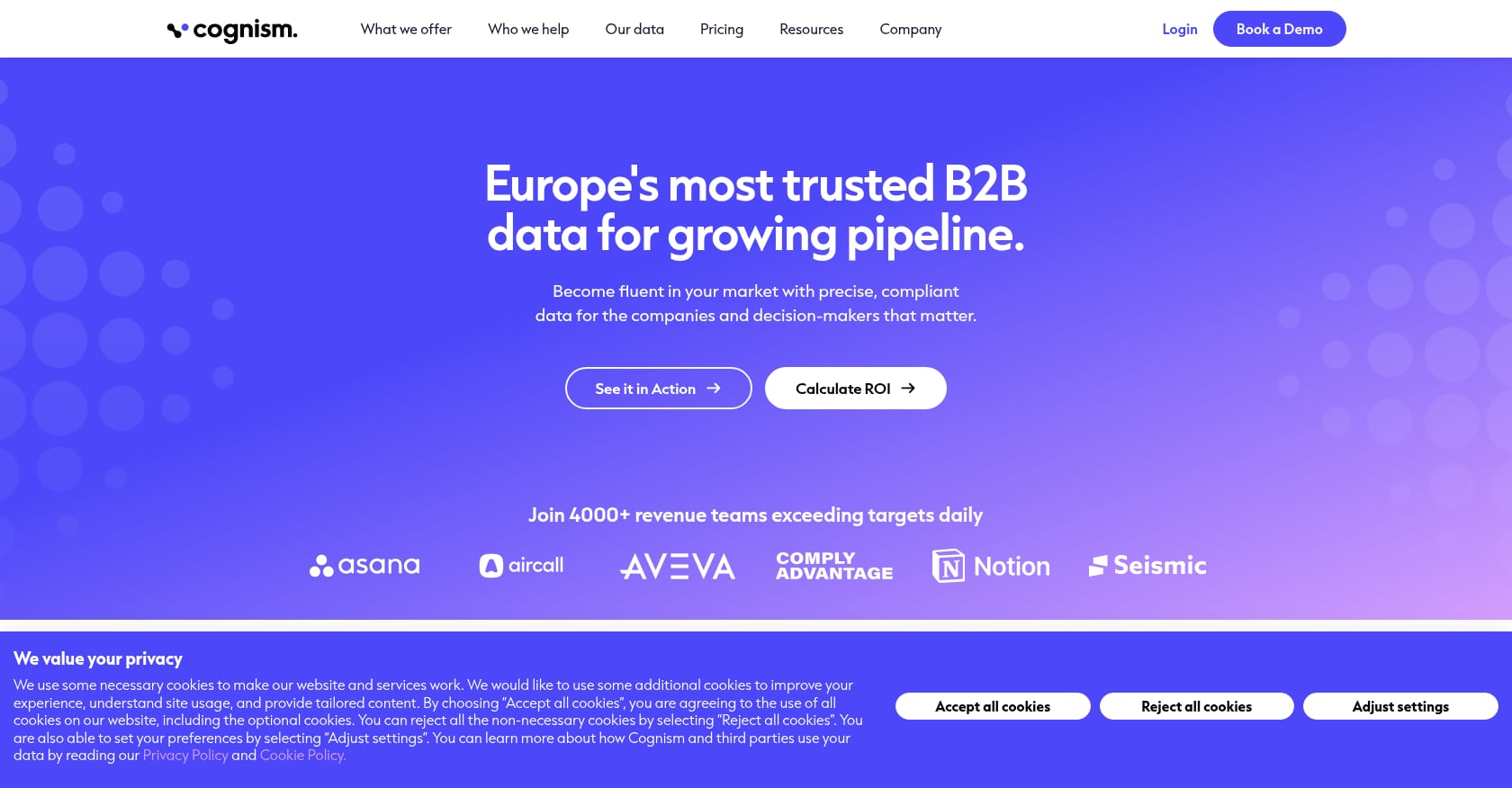
3. Cognism
Best for: Teams with EMEA outbound motions where GDPR compliance is mandatory
Pricing
Real 2025 contracts start around $15,000–$20,000/year for the base platform, plus $1,500–$2,500 per user. A five-seat deployment runs roughly $22,500–$37,500 annually.
Key Features
- 440M+ contacts with strong European coverage
- Diamond-verified contacts with 98% claimed accuracy and 87% connection rate
- Tested accuracy of 93% in UK/EU, the highest regional number we found
- GDPR-compliant data processing and Do Not Call list checking
- Bombora intent data integration
Tradeoffs
- No free plan and no self-serve evaluation. You must go through a sales conversation for all pricing.
- US accuracy drops to 88%, and APAC to 75%.
- Overkill and overpriced for US-only startups.
Verdict
If you’re running outbound into European markets, Cognism is the strongest B2B email database for accuracy and compliance. US-only teams should look elsewhere.
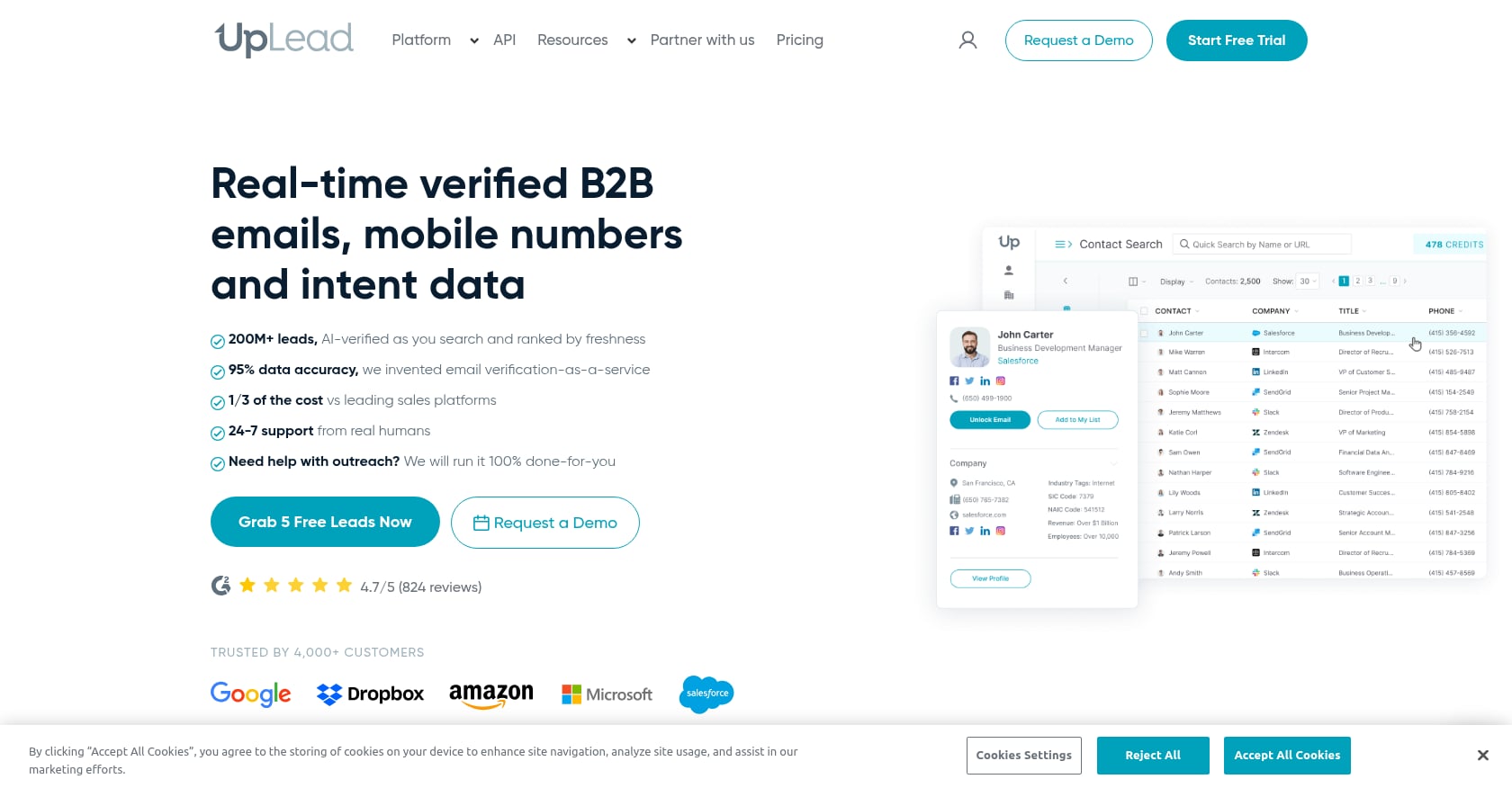
4. UpLead
Best for: Small and mid-size teams that want verified email data on a predictable budget
Pricing
The Essentials plan costs $99/month (or $74/month with annual billing) and includes 170 credits. The Plus plan bumps credits to 400 and costs $199/month ($149 annually), adding data enrichment and technographic filtering.
Unlike ZoomInfo, UpLead offers month-to-month pricing with clear credit costs. No annual lock-in required except for the Professional tier.
Key Features
- 160M+ contacts
- 95% data accuracy guarantee with real-time email verification at the point of export
- Technographic and firmographic filters
- CRM integrations (Salesforce, HubSpot, Pipedrive, and others)
Tradeoffs
- The 95% guarantee applies to emails specifically, not phone numbers or title accuracy.
- Smaller database than ZoomInfo or Apollo, with weaker coverage of Fortune 500 and enterprise-tier accounts.
- Limited phone data coverage.
Verdict
UpLead is the sweet spot for teams that want a reliable B2B email database without negotiating enterprise contracts. The real-time verification at export is a genuine differentiator. You’ll get fewer contacts than Apollo’s free tier, but the contacts you get are more likely to be valid.
5. Hunter.io
Best for: Domain-level email lookups on a budget, especially for teams that already know their target companies
Pricing
Five plans: Free (50 credits/month), Starter ($34/month), Growth ($104/month), and Scale ($209/month) on annual billing, plus custom Enterprise. Critically, Hunter has no per-user pricing. A five-person team on the Growth plan pays $149/month total, compared to $245–$395/month for the same team on Apollo.
Key Features
- Maps company domains to email addresses, returning the organization’s address pattern plus named contacts with confidence scores
- Email verification built into every plan
- API access for CRM and product integrations
- Works well for companies with 50+ employees and public email footprints
Tradeoffs
- Email-only. No phone numbers on any plan.
- No built-in sequencing for outbound campaigns. You’ll need a separate tool for that.
- Pattern-matching accuracy drops for startups and SMBs with fewer indexed records.
Verdict
Hunter is the right B2B email database choice for teams that have a target account list and just need clean, verified email addresses. The per-team (not per-user) pricing model makes it genuinely affordable.
For teams that want to learn how to turn those verified addresses into booked meetings, this guide on generating demo bookings without cold calling is worth reading next.
6. Lusha
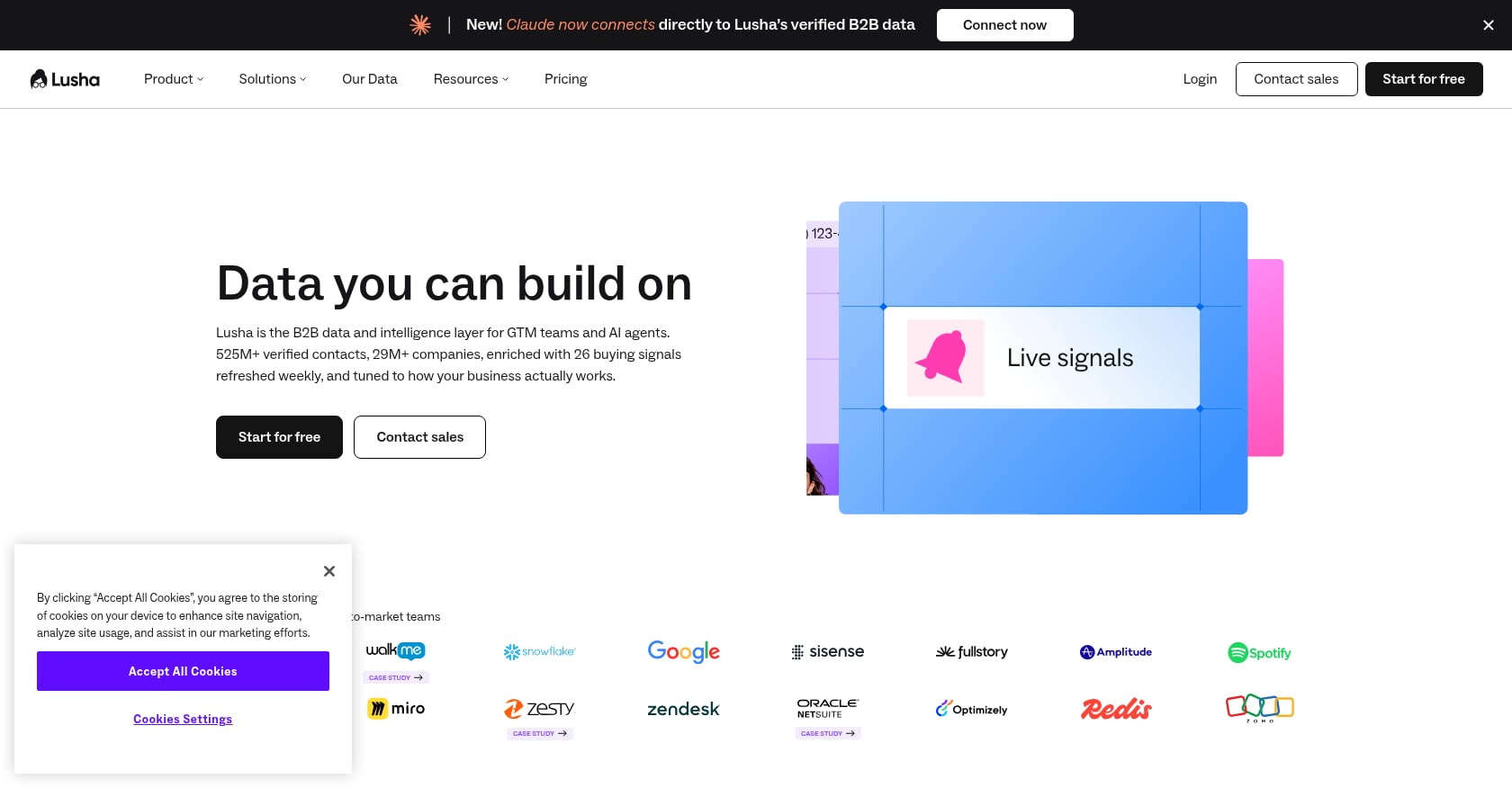
Best for: Individual SDRs who need fast phone and email reveals while browsing LinkedIn
Pricing
Plans range from Free ($0, 40 credits/month) to Pro ($29.90/user/month) to Premium ($69.90/user/month) to custom Scale. The credit system charges 1 credit per email and 5 credits per phone number, so phone-heavy teams burn through credits five times faster than email-only users.
Key Features
- One-click Chrome extension reveals phone numbers and emails directly from LinkedIn profiles
- 45M+ business profiles
- Salesforce and HubSpot integrations
- Prospecting lists and bulk enrichment on paid plans
Tradeoffs
- Lusha doesn’t generate new leads. You bring the company or LinkedIn profile, it gives you the contact. If you don’t know who to prospect, Lusha won’t help.
- Significantly smaller database than Apollo, ZoomInfo, or UpLead.
- Credits expire monthly with no rollover.
- The 5:1 credit ratio for phone numbers makes costs unpredictable for outbound-heavy teams.
Verdict
Lusha is a point solution, not a comprehensive B2B email database. It excels at one thing: fast contact reveals on LinkedIn. Pair it with a broader prospecting strategy and a separate sequencing tool.
7. Clay
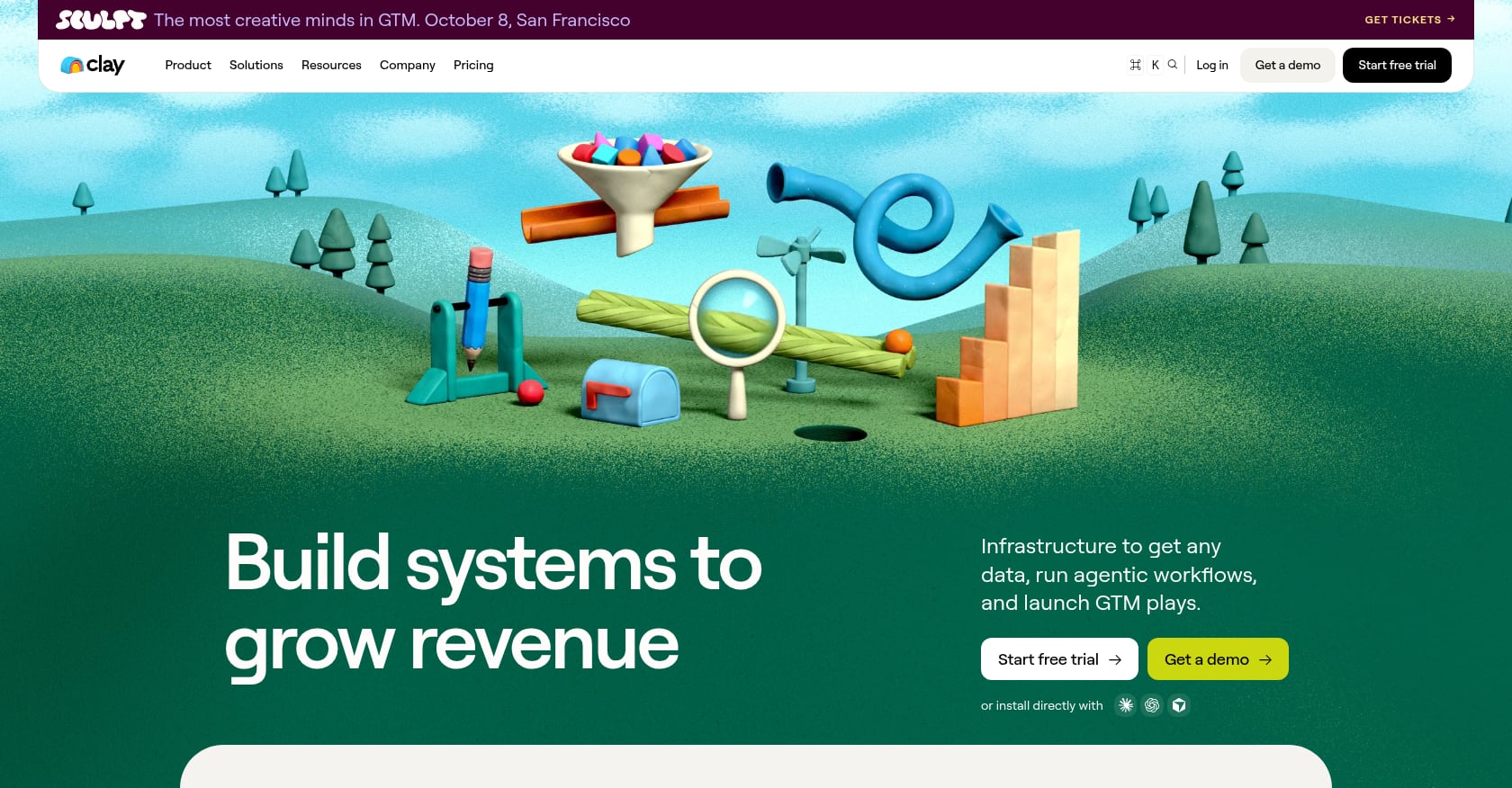
Best for: RevOps operators who want maximum email coverage through multi-source enrichment
Pricing
The Launch plan costs $185/month (15,000 Actions, 2,500 Data Credits, no native CRM syncing). Growth is $495/month. Practitioners report that a Series A or B program enriching 3,000–5,000 contacts monthly should plan for $800–$1,800/month all-in, covering the subscription plus provider credits and verification costs.
Key Features
- Waterfall enrichment pulls from 100+ data providers in sequence, dramatically increasing match rates beyond any single provider
- A four-provider waterfall reaches 85–92% email coverage on US B2B contacts at roughly $14–$18 per thousand
- Spreadsheet-like interface for building enrichment and outreach workflows
- AI-generated personalization fields
Tradeoffs
- The credit system is opaque. Failed lookups still cost credits on some configurations, and top-ups carry a 30% markup.
- CRM sync requires the $446/month Growth plan.
- Learning curve takes 4–6 weeks. This is built for operators, not casual users.
- Clay is a tool, not a database. You’re still paying the underlying data providers.
Verdict
Clay represents a fundamentally different approach to the B2B email database problem: instead of picking one provider and living with its gaps, you cascade across many. The results (85–92% coverage) speak for themselves, but the cost and complexity are real.
8. Lead411
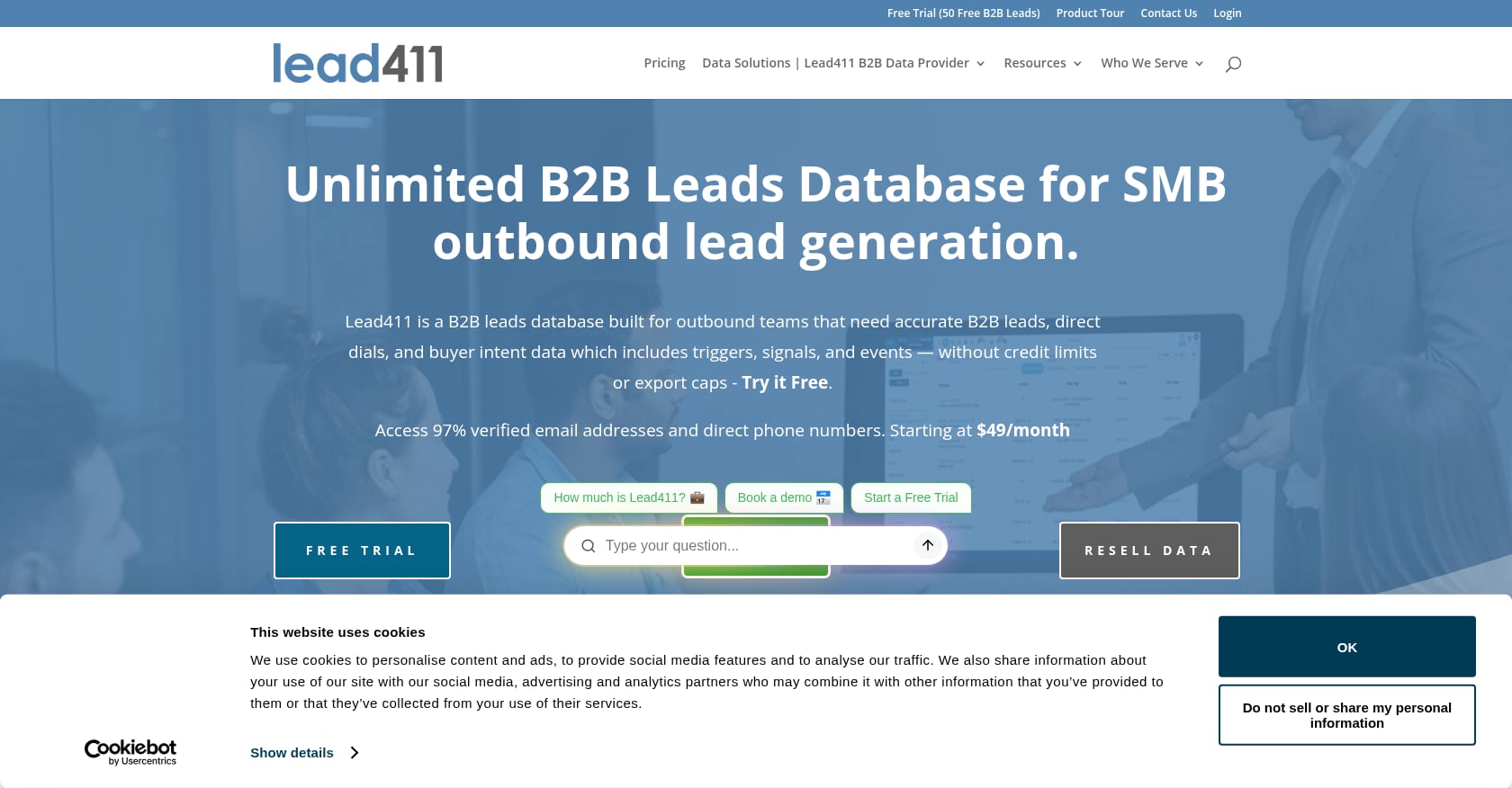
Best for: US-focused sales teams that want Bombora intent data bundled at a fraction of ZoomInfo’s price
Pricing
Starts at $49/month for the Spark plan with 1,000 monthly exports. The annual Spark plan at $490/year is the most affordable intent data bundle on the market, dramatically undercutting ZoomInfo.
Key Features
- 450M+ contacts with verified emails and direct dials
- Bombora intent data included (not a premium add-on)
- 96%+ claimed email accuracy using human and AI verification
- Growth intent signals (funding events, hiring trends, technology installs)
Tradeoffs
- Intent data requires an annual commitment.
- International coverage is thin. This is primarily a US-focused B2B email database.
- No waterfall fallback when the database misses a contact.
Verdict
Lead411 is the best value play for US teams that want intent signals alongside their contact data. At $490/year for the annual plan, it’s roughly 1% of ZoomInfo’s average contract value.
9. BookYourData
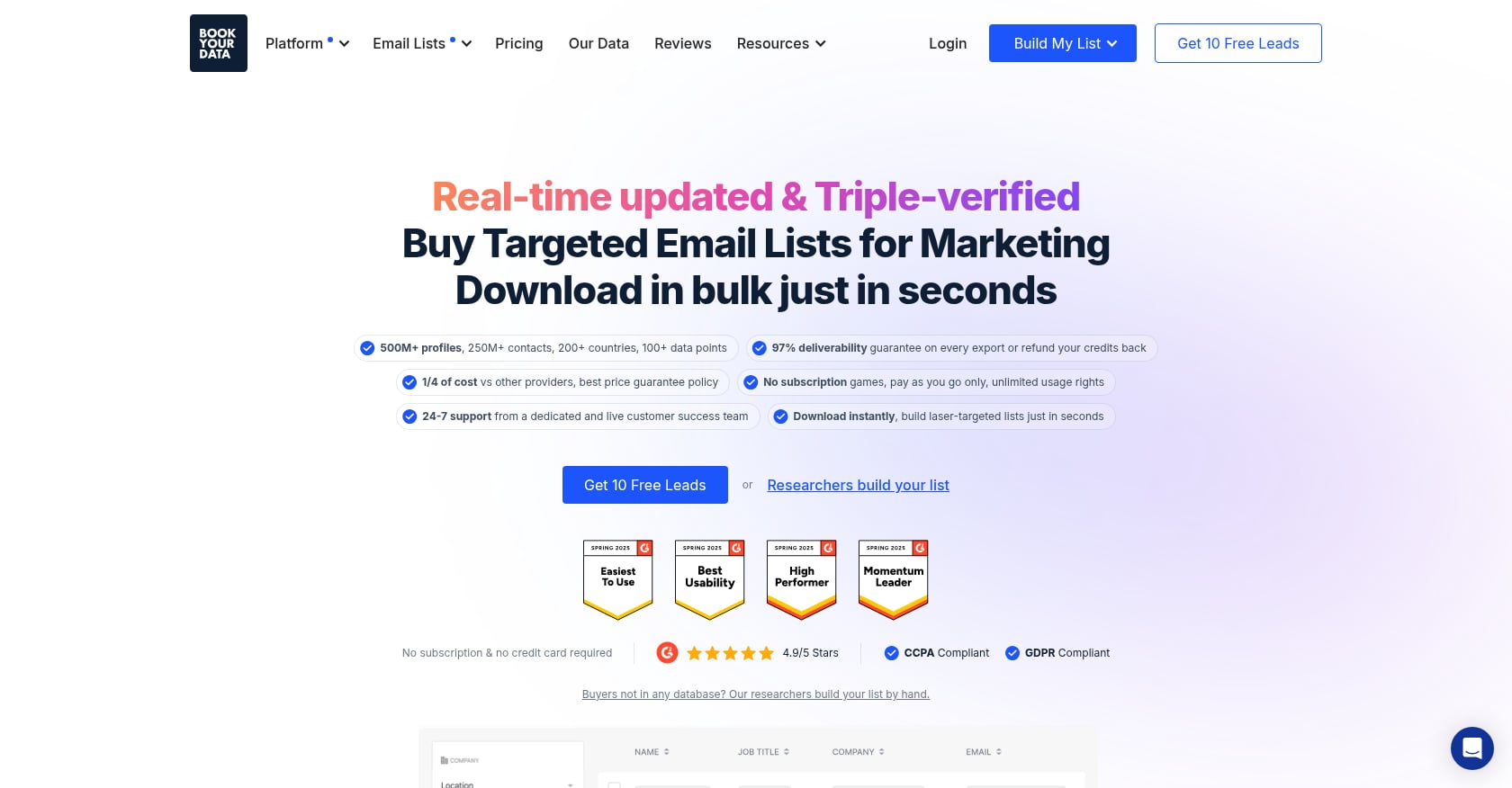
Best for: Teams running one-off campaigns or seasonal outbound who don’t want subscriptions
Pricing
Free pack gives you 10 credits. Pay-as-you-go packs start at $99 for 250 credits ($0.40/contact), scaling down to $0.03/contact at 250,000 credits. Credits never expire.
Key Features
- 250M+ verified contacts across 200+ countries
- 97% accuracy guarantee
- No subscription commitment
- Industry, job title, and geographic filters
Tradeoffs
- No engagement tooling. No sequencing. No CRM integration beyond CSV export.
- You’re buying raw data only, with no workflow attached.
- Limited enrichment options compared to platforms like Clay or Apollo.
Verdict
BookYourData is the right B2B email database for specific, bounded use cases: a conference follow-up campaign, a seasonal push, or a one-time market test. The no-expiration credit model is genuinely unique and useful for teams with irregular outbound needs.
What to Do After You Pick a B2B Email Database
This is the section most comparison guides skip entirely, and it’s where most outbound efforts actually fail.
Having 10,000 verified emails in a CSV means nothing without the systems to use them. Here’s the workflow that separates teams that generate pipeline from teams that just spend money on data:
Step 1: Verify Before You Send
No matter which provider you choose, run your export through a dedicated email verification service before sending a single message. Practitioners on Reddit repeat this advice constantly, and it’s the most important habit in outbound. Even a provider claiming 95% accuracy will have enough bad addresses to hurt your sender reputation if you skip this step.
For a deep dive on protecting your sending infrastructure, read this guide on improving email deliverability.
Step 2: Build Sequences, Not Blasts
Single emails don’t generate meetings. Multi-step sequences with varied messaging, follow-up timing, and personalization do. You need a system for this, whether it’s built into your database provider (Apollo, for instance) or handled by a separate outbound tool.
Step 3: Personalize at Scale
Generic “Hi {first_name}” templates get ignored. The teams seeing real results are using signals from their B2B email database (job changes, funding events, technology installs) to write messages that reference something specific to the prospect.
Step 4: Connect Data to Execution
This is where most teams stall. They have the data. They have the sequences sketched out. But they don’t have the people or systems to actually run campaigns week after week.
If you’re a startup founder or lean team without dedicated SDRs, this is exactly the gap that AgentWeb’s AI-powered execution fills. Emma takes database output and runs multi-channel outbound, from research to personalized sequencing, without requiring you to hire a full sales team.
For broader context on building a repeatable system, this piece on scaling B2B prospecting without increasing headcount walks through the full framework.
How to Choose the Right B2B Email Database for Your Team
Forget feature matrices for a moment. The real selection criteria come down to three things: budget, team size, and where your prospects are located.
If you’re pre-seed or bootstrapped (under $500/month for data):
Start with Apollo’s free tier. Run exports through verification. Use every credit carefully. If you need email-only lookups for specific companies, add Hunter.io. Total cost: $0–$34/month.
If you’re seed to Series A with a small sales team (under $2K/month):
UpLead or Lead411 gives you verified data with intent signals. If you want maximum coverage, consider Clay’s waterfall approach, but budget for the learning curve. Total cost: $99–$500/month.
If you’re Series B+ with a dedicated RevOps function:
Clay’s waterfall enrichment or ZoomInfo’s depth become justifiable. The question shifts from “can we afford it” to “which gives us the best coverage for our ICP.”
If you’re targeting European prospects:
Cognism is the clear choice for GDPR compliance and EU data accuracy.
If you need data for a one-time campaign:
BookYourData’s pay-as-you-go model with non-expiring credits makes the most sense.
One thing holds true across all these scenarios: the database is step one. The execution system, whether that’s an in-house SDR team or an AI-powered go-to-market engine, is what turns contacts into conversations.
The Uncomfortable Truth About B2B Email Database Accuracy
A 200-million-record database with 65% real-world accuracy delivers fewer usable contacts than a 160-million-record database with 95% verified emails. The math is simple:
- 200M × 65% = 130M usable
- 160M × 95% = 152M usable
The bigger number on the marketing page doesn’t mean more pipeline. It often means more bounces, more domain damage, and more wasted time chasing dead addresses.
And even the best providers degrade over time. SaaS audiences see 40–50% annual data decay. That database you’re proud of from six months ago? It’s already significantly degraded.
The practical takeaway: treat your B2B email database as a perishable asset. Re-verify quarterly at minimum. Remove bounces immediately. Supplement with fresh data regularly.
Explore AgentWeb’s pricing to see how execution compares to the cost of hiring →
FAQ
What is a B2B email database?
A B2B email database is a collection of business contact information (email addresses, names, job titles, company data) used for sales prospecting and outbound marketing. These databases range from free tools with limited credits to enterprise platforms costing $50K+ annually. The key differentiator between providers is accuracy, not size.
How much does a B2B email database cost?
Costs span a wide range. Apollo offers a free tier. UpLead starts at $74/month (annual). Lead411 begins at $49/month. ZoomInfo’s floor is around $15,000/year, with average contracts near $48,500. Pay-as-you-go options like BookYourData start at $0.03–$0.40 per contact depending on volume.
Are purchased B2B email lists legal?
Purchasing B2B contact data is legal in the US under CAN-SPAM, provided you include an unsubscribe mechanism and honor opt-out requests. In the EU, GDPR imposes stricter rules, generally requiring legitimate interest or consent as a legal basis. Providers like Cognism specialize in GDPR-compliant data. Always verify your provider’s compliance posture and consult legal counsel for your specific use case.
How often should you verify your B2B email database?
At minimum, verify quarterly. With 2.1% monthly decay, a list that was 95% accurate in January is roughly 88% accurate by July. SaaS-focused lists decay faster. Best practice: verify every export immediately before sending, then re-verify any list older than 90 days.
What’s the difference between a database provider and an enrichment tool?
A database provider (Apollo, ZoomInfo, UpLead) gives you access to a proprietary contact database you can search and export from. An enrichment tool (Clay, Clearbit) takes contacts you already have and fills in missing data points by pulling from multiple sources. Some tools, like Apollo, do both. Clay’s waterfall approach cascades across 100+ providers to maximize coverage.
Can I use a B2B email database for cold email outreach?
Yes, but raw data alone won’t produce results. You need verified addresses, well-crafted sequences, personalization, and proper deliverability setup (SPF, DKIM, DMARC, domain warmup). Teams that skip these steps report 2–3% response rates and damaged sender reputations. For a complete framework on cold outreach strategy, start there before launching campaigns.
Which B2B email database has the best free tier?
Apollo.io offers the most generous free tier by a wide margin, with enough credits and features to run small-scale outbound campaigns. Hunter.io provides 50 free monthly credits for email lookups. Lusha gives 40 free credits. BookYourData offers 10 free leads to test data quality. For most startups, Apollo’s free plan is the best place to start.
Or get a free AI Readiness Roadmap to see where your GTM has gaps.
Ex-Meta, Google, LinkedIn. 10+ years in ML & data science for GTM. Expert in customer acquisition and growth activation.
Get a free Stack Review.
30 min with Harsha and Matt.
We audit your last 30 days, pinpoint the highest-impact fixes, and hand you the exact playbook we'd run. No deck. No pitch unless there's a fit.