10 Best Growth Marketing Agency Picks in 2026: Pricing


TL;DR
The right growth marketing agency depends on your current bottleneck, not brand recognition. This guide compares 10 agencies by pricing, reviews, services, and stage fit, from AI-native execution teams to full outsourced marketing departments. Most small and mid-market retainers fall between $2,500 and $25,000 per month before ad spend. If you are a lean startup that needs weekly campaign output without hiring a full team, AgentWeb’s AI + human model is the strongest fit. If you already have validated channels and budget, use the comparison table below to pick a specialist or full-service partner.
Why Picking the Wrong Growth Marketing Agency Costs You a Quarter
“Growth marketing agency” means five different things depending on who you ask. Some firms are paid ads shops with better branding. Others are content/SEO teams. A few are full outsourced marketing departments charging $50,000 or more per month.
Pick the wrong model and you burn 90 days, tens of thousands of dollars, and the momentum window that early-stage companies cannot afford to waste.
Marketing budgets are tight. Gartner’s 2026 CMO Spend report puts average marketing budgets at 7.8% of company revenue, a number that has plateaued since 2022 source. Hiring in-house is expensive too: the U.S. Bureau of Labor Statistics reports a median marketing manager wage of $166,790 as of May 2025 source, and that is before benefits, equity, tools, and ramp time. So founders compare agencies, fractional leaders, AI tooling, and hybrid models.
This guide compares 10 growth marketing agencies by pricing, services, user sentiment, best fit, and honest tradeoffs, so you can shortlist faster and avoid the wrong commitment.
If you want an AI-native GTM execution partner that ships campaigns weekly, explore AgentWeb’s pricing tiers to see how self-serve, co-pilot, and done-for-you options compare.
What Is a Growth Marketing Agency?
A growth marketing agency helps companies find, test, and scale acquisition and retention systems across the funnel: ICP definition, messaging, content, paid media, outbound, lifecycle, CRO, analytics, and experimentation.
This is broader than a paid media agency, broader than an SEO shop, and broader than a content team. Full-funnel growth covers activation, conversion, retention, and revenue, not just leads or clicks.
Practitioners on Reddit make this distinction clearly. In one r/growthmarketing thread, multiple commenters stressed that a real growth agency should diagnose the business model, examine funnel leaks, and evaluate unit economics before recommending any channel. If the conversation starts and ends with increasing ad spend, the firm is probably a performance agency using a growth label source.
If you are still shaping your growth marketing strategy, clarify your bottleneck before signing any retainer.
At-a-Glance Comparison Table
| Agency | Best for | Pricing signal | Core strength | Review signal | Main tradeoff |
|---|---|---|---|---|---|
| AgentWeb | Lean US startups needing AI + human GTM execution | Self-serve: $199/mo after trial; services: contact sales | AI agent + senior operators + weekly execution | Client case studies; limited independent reviews | Requires active weekly approvals |
| NoGood | Funded startups wanting embedded multi-channel squads | Reported above $20K/mo average | Paid, SEO, AEO, content, CRO, analytics | Clutch: 5.0 (3 reviews) | Pricing not transparent; small review count |
| Growth Division | Startups validating scalable channels | £4K–£9K/mo typical retainer | Fractional channel experts + experimentation | Clutch: 4.7 (31 reviews) | UK-based; many parallel experiments can get complex |
| Ladder | Post-PMF teams wanting test velocity | $3.5K–$11K/mo reported | High-velocity experimentation | Clutch: 4.4 (14 reviews) | Mixed project management feedback |
| GrowthRocks | PLG-focused startups and scaleups | From ~$3K/mo | Growth hacking, PLG sprints, experimentation | ProvenExpert: 5.0 (4 reviews) | Low review volume |
| Tuff | Startup performance marketing with embedded feel | $5K+ min project | Paid media, SEO, CRO, tracking | Clutch: 3.5 (3 reviews); Trustpilot: 4.1 (9 reviews) | Mixed delivery consistency |
| Directive | B2B tech tying SEO/paid to pipeline | $5K–$25K+/mo + ad spend | B2B paid media, SEO, CRO, RevOps | Clutch: 4.8 (56 reviews) | Better for mature B2B budgets |
| Omniscient Digital | B2B SaaS organic and AI-search growth | From $10K/mo | Content/SEO tied to pipeline | Clutch: 4.8 (56 reviews) | Not a paid media or full-service GTM team |
| Kalungi | B2B SaaS needing full outsourced marketing dept | $20K–$50K+/mo | Fractional CMO + full execution team | Public case studies; limited review-site coverage | Too expensive for most seed-stage startups |
| Refine Labs | Series B+ B2B demand generation | $14K–$26K/mo; 6-month minimum | Demand creation and paid media strategy | G2: 4.8 (4 reviews) | High commitment; attribution can be challenging |
How to Choose the Right Growth Marketing Agency Model
Most listicles ask “which agency is best?” The better question: what is the current constraint in your growth system?
If you do not know your ICP or channel yet, start with a diagnostic. You need direction before execution. An AI-powered GTM agent or fractional CMO can map your first 90-day plan.
If one channel is already working, hire a specialist agency. Narrow expertise beats generalist breadth when you know what to scale.
If paid spend is high but CAC is worsening, look for a performance + analytics + CRO agency. You need unit economics and funnel math, not more ads. Practitioners on Reddit advise pressure-testing payback period by channel, optimizing toward pipeline rather than MQLs, and asking agencies to walk through a unit economics model source.
If organic traffic exists but pipeline is weak, you need conversion and intent alignment from a content/SEO agency with pipeline reporting. Consider reviewing your conversion funnel before adding traffic.
If you need a whole marketing department, look at fractional CMO + full-service teams like Kalungi. These are expensive but can replace multiple hires.
If you need weekly output without headcount, an AI + human growth ops team fills the gap. This is where AgentWeb fits: senior GTM judgment paired with agentic execution, weekly shipping, and a transition path from done-for-you to self-serve.
Growth practitioner Hila Qu wrote on LinkedIn that hiring an agency works well when a startup has already tested certain growth channels and needs execution or scale, while a senior advisor is better when the company is still figuring out the overall growth strategy. GrowthMentor’s agency comparison makes a similar point: the biggest mistake is picking the wrong tier, not necessarily the wrong agency source.
The 10 Best Growth Marketing Agencies in 2026
1. AgentWeb
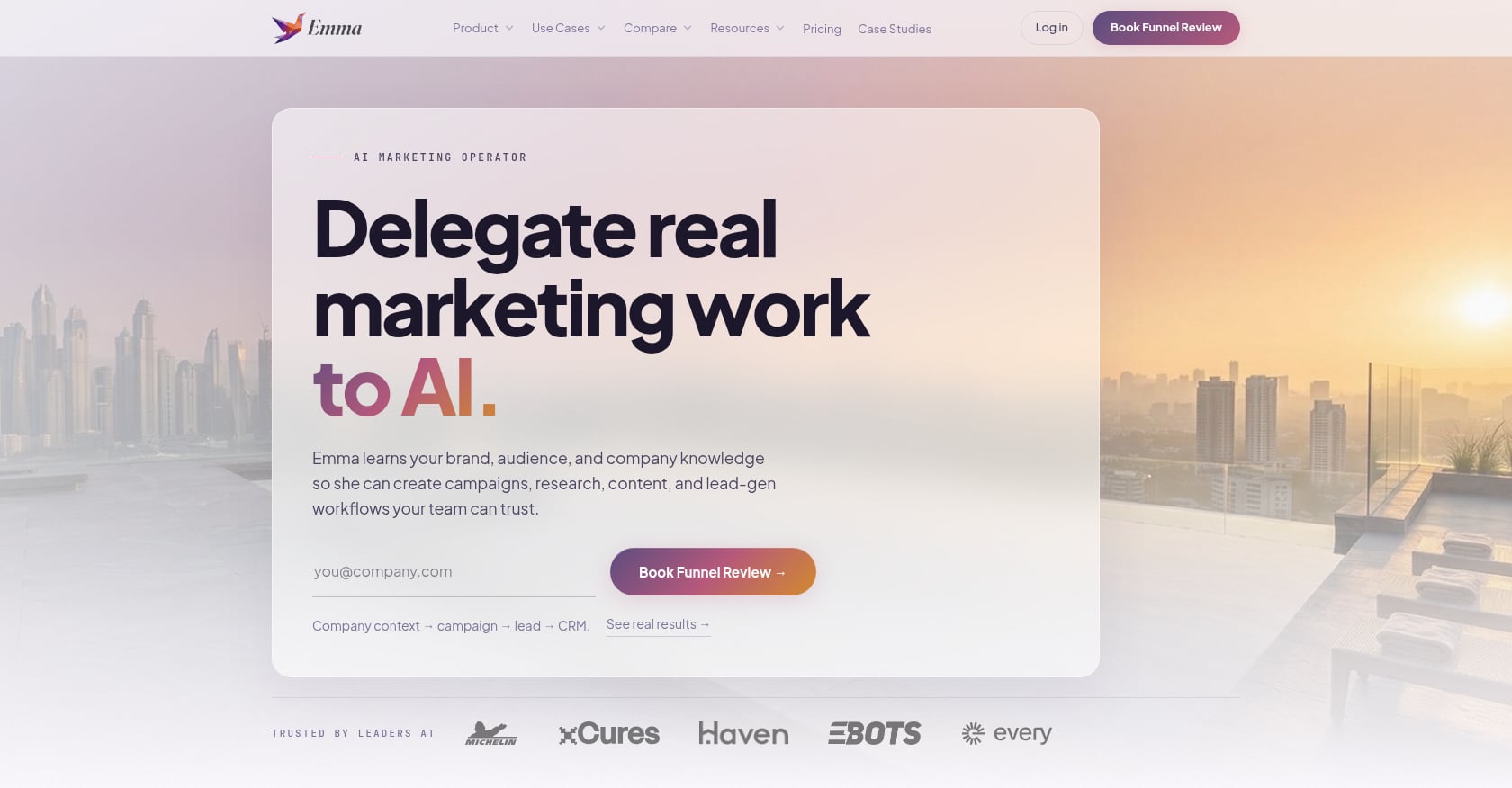
Best for: Lean US startups (pre-seed to Series A) that need an AI-native growth engine plus senior human oversight, not a traditional retainer where founders still coordinate everything.
Pricing:
- Self-serve platform: 7-day free trial, then $199/month via Stripe
- Agent-led custom workflows: seasonal pricing; contact sales
- Done-for-you Growth Ops: seasonal pricing; contact sales
- Free GTM Discovery Report available through the app
Key features:
- 90-day GTM diagnostic and plan created in Week 0
- Agentic execution with Emma across Meta, Google, LinkedIn/X, email, and outbound
- Slack/Teams workflows for one-click approvals
- AgentWeb Portal with calendar, dashboards, and optimization loops
- Founder-brand support including LinkedIn ghostwriting and executive communications
- SEO content production (up to roughly 20 assets per month)
- Weekly performance reviews and iteration
- Self-serve AI campaign templates for market research, competitive analysis, and audience insights
- Integrations with ad platforms and CRMs
- Transition path from full-service to self-serve so the system keeps running after the sprint
User sentiment:
The Nailed It case study shows 4,000+ leads and 328 add-to-carts in three months, with a 2.91% CTR and roughly $0.24 CPC. AgentWeb outperformed a competing agency running in parallel during a head-to-head test. The Cora case study shows a 13.19% CTR peak and $0.74 CPC on a $300/month ad budget, with 435+ qualified clicks in one month. Client testimonials include Nailed It founder Alex Jin, Cora co-founder Jay Agarwal, and Vivian Lee of Michelin China. No independent Reddit, G2, or review-site threads were located as of the research date.
Tradeoffs:
- Service pricing beyond self-serve is not fully public
- Third-party review coverage is limited
- Best fit assumes the team participates in weekly approvals and collaboration
- Newer brand with less external coverage than larger agencies
Choose AgentWeb if you want campaigns shipped weekly, a 90-day GTM plan, and a system your team can keep using, without hiring a full marketing department.
See the full case study library for detailed results.
2. NoGood
Best for: Funded startups and SaaS companies that want an embedded multi-channel growth squad.
Pricing:
- Clutch does not disclose minimum project size or hourly rate
- INSIDEA reports average retainers above $20,000/month source
- Conflicting third-party reports list $5K–$15K/month; verify scope and retainer floor on a sales call
Key features:
- Embedded growth squads across paid, SEO, AEO, content, CRO, social, and analytics
- Creative production and video
- AI consulting
- Mobile optimization and technical SEO
User sentiment:
Clutch shows 5.0 from 3 reviews. One revenue operations leader at an AI company said NoGood increased lead volume, MQLs, SQLs, conversion rate, and cost efficiency. Another reviewer praised ROAS and CPA improvements for paid ads.
Tradeoffs:
- Review count is very small for a major agency claim
- Pricing is opaque; significant variation across third-party sources
- Confirm depth beyond paid/media execution if you need sales-led GTM or RevOps
Choose NoGood if you are a funded team with budget to support multi-channel experimentation and want a fast, embedded squad.
3. Growth Division
Best for: Seed and early-stage companies validating which channels can scale.
Pricing:
- Clutch: $10,000+ minimum project, $50–$99/hour
- Typical retainers around £4,000–£9,000/month with fractional channel experts priced around £1,000/month per specialist
Key features:
- Fractional CMO services
- Performance marketing across paid, email, SEO, LinkedIn
- Account-based marketing and demand generation
- Structured experimentation with channel-agnostic approach
User sentiment:
Clutch shows 4.7 from 31 reviews. One featured review reports a 50% increase in leads and a 1.12% CTR on LinkedIn ads. Another reviewer praised strategic clarity and hands-on execution but noted experiment prioritization could have been sharper.
Tradeoffs:
- UK/Europe-based, which may matter for US buyers wanting local account teams
- Many parallel experiments can create complexity without tight prioritization
- Better for channel discovery than for deep scaling of a single known channel
Choose Growth Division if you need a structured, channel-agnostic process to find what works before scaling spend.
4. Ladder
Best for: Post-PMF teams that want continuous, high-velocity testing across paid, CRO, and lifecycle.
Pricing:
- Clutch: $10,000+ minimum project
- Client-reported monthly costs range from $3,500 to $11,000
- Total investments reported up to $300,000
Key features:
- PPC and social media marketing
- Conversion optimization
- Marketing strategy and mobile/app marketing
- Month-to-month learning and test velocity
User sentiment:
Clutch shows 4.4 from 14 reviews. Positive feedback highlights responsiveness, flexibility, and expertise. Critical feedback includes project management frustrations, missed deadlines, and a “rotating door” of project managers in one review.
Tradeoffs:
- Not built for teams that need strategy from zero; assumes you have enough traffic and data to test
- Mixed PM feedback means you should ask who will own cadence, reporting, and decision rules
- Experiment volume can overwhelm teams without internal prioritization discipline
Choose Ladder if you have enough traffic, budget, and operational discipline to benefit from rapid experimentation.
5. GrowthRocks
Best for: Startups and scaleups focused on product-led growth and growth hacking methodology.
Pricing:
- Third-party sources list starting from roughly $3,000/month source
- Fits the leaner experimentation tier rather than enterprise full-service retainers
Key features:
- PLG experimentation and growth sprints
- Funnel optimization, viral loops, and CRO
- Growth audits and experiment backlogs
- Training in growth methodologies
User sentiment:
ProvenExpert lists 5.0 from 4 reviews, all from Google Maps. The volume is too small to treat as a strong benchmark.
Tradeoffs:
- Limited independent review volume compared to agencies with dozens of verified Clutch reviews
- “Growth hacking” label can mean different things; ask for the actual experiment process, KPIs, and decision rules
- Less suited for teams that need a full outsourced marketing department
Choose GrowthRocks if you want a growth-hacking and PLG-oriented team that can help build a repeatable experimentation process.
6. Tuff
Best for: Startups needing performance marketing, CRO, and SEO with an embedded-team feel.
Pricing:
- Clutch: $5,000+ minimum project
- Most common project size: $50,000–$199,999 based on reviewer data
- DesignRush lists budget and hourly rate as “inquire”
Key features:
- Content marketing and conversion optimization
- PPC across Google, Bing, and YouTube
- SEO including content development, on-site optimization, and technical SEO
- Video marketing
User sentiment:
Clutch shows 3.5 from 3 reviews. Positive themes include digital marketing knowledge, responsiveness, and successful lead generation. Critical themes include delays, unmet metrics, and delivery consistency. Trustpilot shows 4.1 from 9 reviews.
Tradeoffs:
- Sentiment is mixed relative to agencies with higher verified ratings
- Clarify who owns strategy, channel prioritization, and platform/account risk before signing
- Fewer verified reviews than several alternatives on this list
Choose Tuff if you want startup-focused performance marketing support, but ask detailed questions about delivery cadence and account ownership.
7. Directive
Best for: B2B tech companies that want paid media and SEO tied to pipeline, not just traffic.
Pricing:
- Clutch: $5,000+ minimum project, $100–$149/hour
- Third-party sources report $5K–$25K+/month plus ad spend source
- Most common project size on Clutch: $10,000–$49,999
Key features:
- B2B paid media management
- SEO with pipeline reporting
- CRO and RevOps
- GTM strategy for tech companies
User sentiment:
Clutch shows 4.8 from 56 reviews. Common positive themes include high-quality work, proactivity, communication, and detail orientation. One reviewer noted the team could be more data-intensive in some areas.
Tradeoffs:
- Better fit for mature B2B tech teams than early founders still defining ICP
- Can get expensive once ad spend, creative, and coordination costs are included
- Less suited for consumer, DTC, or pre-PMF companies
Choose Directive if you are a B2B tech company ready to tie paid and organic programs to pipeline metrics.
8. Omniscient Digital
Best for: B2B SaaS companies where organic search, content, and AI-search visibility are the main growth bet.
Pricing:
- Listed from $10,000/month on the agency’s own comparison page
Key features:
- Content strategy tied to product, conversion, and revenue
- SEO and AI-search pipeline for B2B companies
- Research-led content production
User sentiment:
Third-party profiles show 4.8 from 56 Clutch reviews. Clients value research depth, content quality, and organic growth expertise. Some would prefer faster content delivery.
Tradeoffs:
- Not a paid media or full-service GTM team
- Content-led growth takes longer than paid acquisition tests
- Not the right fit if you mainly need outbound, short-form video, or a full marketing department
If you are evaluating organic-led growth, understanding content marketing for demand generation will help you compare what these agencies deliver versus what you can build internally.
Choose Omniscient Digital if organic content and AI-search visibility are your primary growth lever and you need pipeline-grade reporting.
9. Kalungi
Best for: B2B SaaS companies with enough ARR and budget to outsource a whole marketing department.
Pricing:
- Full-service reported at $50,000+/month, aimed at $5M–$50M ARR companies source
- Third-party sources also list $20K–$50K/month for Series A–B SaaS building their first marketing function
- Positioned as replacing 8–12 internal hires
Key features:
- CMO-as-a-service with fractional executive leadership
- ABM, RevOps, and HubSpot implementation
- Branding, paid media, content, SEO, and web development
- Full execution team across the marketing function
User sentiment:
Public proof through named founders and revenue leaders. Review-site comparability is limited compared to Clutch-heavy agencies on this list.
Tradeoffs:
- Too expensive for most pre-seed, seed, and early post-seed startups
- Strong fit for B2B SaaS specifically, not general startups or consumer companies
- Full-service model can be overkill if you only need channel validation or a single growth lever
Choose Kalungi if you need a full SaaS marketing department now and have the budget to replace multiple internal hires with one outsourced function.
10. Refine Labs
Best for: Series B+ B2B SaaS companies shifting from MQL volume to demand creation and revenue contribution.
Pricing:
- Paid media management from $14,000/month
- Full service from $26,000/month with a six-month minimum
- Creative from $5,000
- A six-month full-service commitment represents a $156,000 decision source
Key features:
- Demand generation strategy and demand creation
- Paid media management and ad creative
- Market research and positioning work
User sentiment:
G2 shows 4.8 from 4 reviews, which G2 itself notes is not enough for buying insight. Positive reviews mention deep market research, willingness to experiment, and helpful guidance. One reviewer cautioned that awareness work can be hard to directly measure.
Tradeoffs:
- High minimum commitment both in dollars and contract length
- Awareness and demand creation can be difficult to attribute directly
- Not ideal for early startups that still need ICP definition, positioning, or basic channel discovery
Choose Refine Labs if you are a later-stage B2B company ready to invest in demand creation and can tolerate longer attribution loops.
How Much Does a Growth Marketing Agency Cost?
Published pricing ranges for most growth marketing agencies look like this:
- One or two channels: roughly $3,000–$8,000/month
- Multi-channel programs: roughly $8,000–$25,000/month
- Enterprise programs: roughly $25,000–$75,000/month
- Full outsourced department (Kalungi-style): $50,000+/month
These numbers come from INSIDEA’s agency cost guide source.
But monthly retainers are misleading. The total cost includes ad spend (often equal to or larger than the retainer), creative production, software licenses, data enrichment tools, analytics setup, CRM cleanup, internal team time for approvals and management, and the minimum contract term.
Do the minimum commitment math before signing. Refine Labs at $26,000/month with a six-month minimum is $156,000. Kalungi at $50,000/month run for twelve months is $600,000. These are not retainers. They are investment decisions.
If a $10K–$50K/month retainer is too heavy for your current stage, compare AgentWeb’s self-serve and hybrid options starting at $199/month after a free trial.
Agency vs. In-House vs. AI Co-Pilot
The decision is not binary. Here is how the main models compare:
| Model | Strength | Weakness | Best for |
|---|---|---|---|
| Traditional full-service agency | Breadth, mature process, team depth | Expensive, slower onboarding, may need heavy founder management | Funded companies with budget and validated channels |
| Specialist agency | Deep expertise in one channel | Not full-funnel; can miss root cause | Teams that already know the channel to scale |
| In-house marketing hire | Learning stays internal, full control | $166K+ salary before overhead; long ramp time | Companies with budget and management capacity |
| Fractional CMO + contractors | Strategy plus flexible execution | Founder still coordinates tools and people | Teams with internal execution capacity |
| AI tools (DIY) | Cheap and fast | Strategy, quality, and consistency risks | Operators who already know what to build |
| AI + human model (AgentWeb) | Senior GTM plan + agentic execution + weekly review + platform handoff | Requires weekly approvals and active collaboration | Lean startups that need campaigns shipped now without building a team |
A founder in r/startups argued that agencies can be force multipliers, but internal teams should own the core growth engine while agencies extend capacity in high-skill, high-velocity areas source. This is a useful frame: think of an agency as an extension, not a replacement for understanding your own growth.
AI is accelerating this shift. HubSpot’s State of AI in Marketing data shows 86% of marketers now use AI agents, with 76% saying usage increased in the previous six months source. The CMO Survey reports AI use in marketing has more than tripled since 2022.
The practical difference: traditional agencies sell time and expertise. AI + human models like AgentWeb sell a system, one that can transition from done-for-you to self-serve so the startup keeps the workflows, templates, and operational knowledge after the engagement. For a deeper comparison, see this AI marketing agent vs. agency breakdown.
When Not to Hire a Growth Marketing Agency
Not every growth problem is solved by hiring an agency. Reddit threads and practitioner discussions point to clear warning signs.
Do not hire an agency if you have not clarified your ICP, positioning, or offer. Agencies can become generic playbook vendors when the client has not done foundational work. In r/SaaS, one founder who had hired four agencies and three freelancers concluded that most failed because the startup had not clarified its own positioning and funnel math first.
Do not hire an agency if you expect to be hands-off. Every agency on this list performs better when the founding team stays engaged in approvals, learning, and decision-making. If you want to “set it and forget it,” you will likely be disappointed regardless of which firm you choose.
Do not hire an agency if you have not validated product-market fit. Marketing cannot fix a product that people do not want. Agencies amplify what is already working; they do not create product-market fit from scratch.
If you are still preparing your GTM diagnostic, do that before evaluating agencies.
12 Questions to Ask Before Signing a Growth Marketing Agency Retainer
These questions separate real growth partners from credential-heavy firms that deliver dashboards but not direction:
- What do you believe is our primary growth constraint?
- Which channels would you not test yet, and why?
- What must be true for paid acquisition to scale profitably for us?
- How will you measure pipeline, revenue, CAC, payback period, and LTV?
- What CRM or dashboard will hold the source of truth?
- Who approves experiments, and what is the decision rule for killing one?
- What will you ship in the first 30 days?
- What costs are excluded: ad spend, creative production, software, data, landing pages?
- Who owns accounts, assets, and learnings after the engagement ends?
- Can we speak with a recent client in our stage and industry?
- What happens if the first channel fails?
- What does the transition look like, either to in-house or to a lighter engagement?
If an agency cannot answer questions 1, 4, and 6 with specifics, that is a red flag. For more on what good agency leadership looks like (and what to do when it is missing), read what to do if your agency delivers but doesn’t lead.
What a Good Growth Marketing Agency Should Do in 90 Days
Use this as a benchmark whether you hire from this list or evaluate someone else entirely.
Week 0 (Diagnostic): Clarify ICP and segments, evaluate current offer and positioning, map funnel conversion rates, identify tracking and attribution gaps, and define the fastest testable hypotheses.
Days 1 to 30 (Foundation): Clean up tracking, make landing page or offer adjustments, launch first content, paid, and outbound tests, establish baseline reporting, and run creative and messaging tests.
Days 31 to 60 (Channel learning): Make kill-or-scale decisions, shift budget toward what is working, iterate on content and creative, refine ICP and messaging based on real data, and conduct an early pipeline review.
Days 61 to 90 (Systemization): Document winning channels and playbooks, build repeatable workflows, establish a dashboard and reporting cadence, create an internal handoff or next-sprint plan, and decide whether to continue full-service or move to a self-serve or lighter model.
AgentWeb’s operating model is built around this arc. The Week-0 diagnostic produces a concrete 90-day plan, Emma executes across channels weekly, and the engagement is designed to transition into a reusable system the team can keep running.
Ready to start with a 90-day GTM plan and weekly execution? Book the AgentWeb path that matches your stage.
FAQ
What is a growth marketing agency?
A growth marketing agency helps companies find, test, and scale customer acquisition and retention systems across the funnel. This goes beyond paid ads or SEO alone, covering ICP definition, messaging, content, paid media, outbound, lifecycle marketing, CRO, analytics, and experimentation. The “growth” distinction means the agency should optimize for business outcomes (revenue, pipeline, retention) rather than channel-specific vanity metrics.
How much does a growth marketing agency cost?
Most small and mid-market retainers range from roughly $2,500 to $25,000 per month before ad spend and creative production. One or two channels typically cost $3,000 to $8,000 per month, multi-channel programs run $8,000 to $25,000, and enterprise or full-department outsourcing can exceed $50,000 per month. Always account for ad spend, creative, software, and minimum contract terms when calculating total cost.
Should I hire an agency or a marketing employee first?
If you need strategy diagnosis, channel discovery, and fast multi-channel execution without a long hiring process, an agency or AI + human model is faster. If you already know what works and need someone to own it daily with deep institutional context, a full-time hire makes more sense. Many startups start with an agency to validate channels, then hire in-house to own the proven playbook.
How do I know if a growth marketing agency is just a paid ads shop?
Ask them what they believe your primary growth constraint is. If they immediately recommend increasing ad spend without examining your offer, funnel, tracking, lifecycle, or unit economics, they are likely a paid media agency using a growth marketing label. A real growth partner diagnoses first and recommends channels second.
What metrics should a growth marketing agency report?
Look for pipeline contribution, CAC by channel, payback period, conversion rates at each funnel stage, cohort-level LTV, and revenue attribution, not just impressions, clicks, or MQLs. Practitioners on Reddit emphasize that optimizing toward pipeline and revenue is what separates growth marketing from generic digital marketing.
What is an AI growth marketing agency?
An AI growth marketing agency uses AI agents and automation to handle research, planning, content production, campaign operations, and reporting, with human operators providing strategy, oversight, and quality control. AgentWeb is an example: its AI marketer Emma executes across channels while senior human operators create the GTM plan and review performance weekly.
Is a growth marketing agency worth it for startups?
It depends on stage and bottleneck. If you have validated product-market fit and need to scale acquisition or test new channels, an agency can compress what would take months of internal hiring into weeks. If you have not clarified your ICP, positioning, or offer, most agencies will struggle to deliver results regardless of their capabilities.
Can an AI marketing agent replace an agency?
Pure AI tools are fast and cheap but carry strategy, quality, and consistency risks. A hybrid model, where AI handles execution and humans provide strategic judgment and approval loops, captures the speed of AI without the quality gaps. This is the operating model behind AgentWeb’s approach: Emma runs campaigns, and senior operators create the plan, review performance, and iterate weekly.
Or get a free AI Readiness Roadmap to see where your GTM has gaps.
Ex-Meta, Google, LinkedIn. 10+ years in ML & data science for GTM. Expert in customer acquisition and growth activation.
Get a free Stack Review.
30 min with Harsha and Matt.
We audit your last 30 days, pinpoint the highest-impact fixes, and hand you the exact playbook we'd run. No deck. No pitch unless there's a fit.