8 Best Autonomous Lead Generation Tools for 2026 Startups


TL;DR
Autonomous lead generation combines AI agents, automation, data sources, and human oversight to find, qualify, and engage prospects with minimal manual work. The best system for your startup depends on your bottleneck: strategy and execution, contact data, enrichment, sending infrastructure, or inbound nurture. This guide compares eight tools and services across pricing, features, user sentiment, and tradeoffs so you can pick the right path without assembling a fragile stack from scratch.
The Promise and Trap of Autonomous Lead Generation
Sales reps spend almost one full workday per week on prospecting. Nearly half say cold outreach is one of the worst parts of their job, and 47% say their team lacks the bandwidth to do it well. According to Salesforce’s 2026 State of Sales report, 54% of sales teams now use AI agents, 34% of teams with agents use them for prospecting, and 92% of sales pros with agents say AI benefits prospecting.
The numbers sound like a solved problem. They are not.
Autonomous lead generation sounds like a dream: define your ideal customer profile once, let AI find prospects, enrich them, write personalized outreach, follow up, and send qualified replies to your CRM. The reality is messier. The same Salesforce report warns that 46% of sales pros with agents say data quality issues hurt sales, and 51% say security concerns delayed AI initiatives. Tool silos, weak execution, and poor deliverability still kill most automated outbound.
This guide compares the tools and operating models that get closest to true autonomous lead generation, with honest pricing, real user sentiment, and the tradeoffs nobody puts on the landing page.
What Is Autonomous Lead Generation?
Autonomous lead generation is the use of AI agents, automation, data sources, and human review to continuously find, qualify, prioritize, engage, and learn from prospects with less manual work.
That definition matters because “autonomous” does not mean “no humans.” In a reliable startup GTM system, autonomy means the machine handles repeatable work while humans define the ICP, approve messaging, review edge cases, protect brand voice, and make strategic decisions.
A LinkedIn practitioner put it bluntly: AI SDRs are better understood as fast executors, not autonomous thinkers, and teams still need to define campaign strategy, lead scoring, and messaging infrastructure. The machines are fast. They are not wise.
If you want a deeper look at how agentic AI fits into marketing strategy, that piece covers the broader landscape. Here, the focus is on lead generation specifically.
The Autonomy Ladder
Not every system that calls itself “autonomous” is doing the same thing. Here is a simple hierarchy:
- Manual prospecting. Humans search, qualify, write, send, and follow up by hand.
- Basic automation. Tools automate one step, like sending emails from a list or capturing form submissions.
- AI-assisted workflows. AI writes copy, enriches records, scores leads, or summarizes conversations within a human-designed process.
- Agentic workflows. Agents take a goal, call tools, make decisions, and move leads through steps with human checkpoints.
- Managed autonomous GTM. AI handles repeatable execution while human operators govern strategy, quality, and iteration every week.
Most tools on the market sit at levels 2 or 3. A few are reaching level 4. The systems that perform best for startups tend to operate at level 5, where AI speed meets human judgment.
The 5-Layer Autonomous Lead Generation Stack
Every autonomous lead generation system, whether it is one tool or five stitched together, needs to cover these layers:
- ICP and offer layer. Who you target, why now, and what problem you lead with.
- Data and source layer. Where the system finds companies and contacts: databases, LinkedIn, website visitors, job postings, funding events, communities, or inbound forms.
- Signal and enrichment layer. How the system verifies fit, timing, intent, firmographics, technographics, and contactability.
- Engagement layer. Email, LinkedIn, ads, founder content, website chat, webinars, lead magnets, or retargeting.
- Feedback and governance layer. Reply classification, bounce tracking, unsubscribe handling, suppression lists, QA, campaign analytics, and iteration.
Practitioners on Reddit describe automated lead gen as a chain of steps rather than a single tool, with the deeper issue being that many systems still start from generic ICP lists instead of real buying signals. If your system skips any layer, it does not matter how good the AI is at writing emails.
How to Choose the Right Autonomous Lead Generation System
Start With Your Bottleneck
Before comparing features, figure out what is actually broken:
- No ICP or campaign strategy? You need GTM execution support, not another database.
- No contact data? You need a prospecting database like Apollo or ZoomInfo.
- No enrichment or signals? You need Clay or a similar workflow tool.
- No sending infrastructure? You need Instantly or Lemlist.
- No inbound nurture? You need HubSpot or a CRM with marketing automation.
- No custom workflow layer? You need n8n or a similar builder.
- No time to build any of this? You need a managed service.
If you are unsure where your go-to-market strategy is weakest, diagnosing the bottleneck matters more than picking the flashiest tool.
Build vs. Buy vs. Co-Pilot vs. Done-for-You
The real choice is not Apollo vs. Clay vs. Instantly. The real choice is: who owns the system?
| Operating model | Best fit | Main risk |
|---|---|---|
| DIY tool stack | Technical founder or GTM engineer | Time sink, fragile workflows, unclear ownership |
| Point tool | Team has one clear gap (data, sending, etc.) | Solves one step, not the full system |
| AI-led co-pilot | Lean team wants control but needs setup help | Requires an internal owner to approve and operate |
| Done-for-you growth ops | Founder-led startup needs output fast | Higher cost, requires trust and clear goals |
Total Cost of Ownership
Most listicles stop at “starts at $49/mo.” That is misleading. The real cost of an autonomous lead generation stack includes seats, contact credits, email verification, enrichment credits, sending domains, mailboxes, warmup tools, CRM sync, workflow automation, data providers, human QA, copywriting, strategy, reporting, and maintenance.
A “$49 tool” can cost $2,000 per month once you add what it takes to actually run it. And the biggest hidden cost is founder time. If you are spending 10 hours per week managing five tools instead of selling or building product, that is not cheap software. That is an expensive distraction.
For a deeper breakdown of how to centralize marketing tasks without hiring a dedicated ops person, that guide walks through the operational math.
At-a-Glance Comparison Table
Pricing changes often. Figures below were observed from public pricing and review sources in 2026 and should be verified before buying.
| Tool/System | Best for | Autonomy type | Starting price | Core strength | Main limitation |
|---|---|---|---|---|---|
| AgentWeb | Startups needing weekly GTM execution without hiring | AI + human GTM execution | $199/mo self-serve; service tiers contact sales | Combines AI marketer Emma, templates, senior operators, done-for-you growth ops | Not a raw contact database; service pricing requires contacting sales |
| Clay | GTM engineers building enrichment workflows | AI-assisted enrichment/workflow | Free plan; Starter $143/mo | 100+ data providers, AI writing, spreadsheet-style workflows | Learning curve, credits, cost at scale |
| Apollo.io | Founders needing contact data + sequences | All-in-one outbound platform | Free plan; Basic $49/user/mo | Large B2B database, sequencing, intent, integrations | Data quality varies; credit/seat complexity |
| Instantly | Cold email sending at scale | Sending + warmup + automation | Growth $37/workspace/mo | Unlimited email accounts, warmup, Unibox | Not a complete lead-gen strategy alone |
| Lemlist | Multichannel outbound (email, LinkedIn, calls, WhatsApp) | Outreach sequencing platform | Multichannel Expert $87/mo | Unified multichannel follow-ups, AI personalization | Pricing climbs with seats and senders |
| HubSpot Marketing Hub | Inbound capture and CRM-connected nurturing | CRM-native marketing automation | Free plan; Starter $20/seat/mo | Forms, email, landing pages, workflows, reporting | Cost jumps sharply at Professional ($890/mo) |
| ZoomInfo Sales | Enterprise teams needing data depth and intent | Sales intelligence + AI prioritization | Custom pricing (contact sales) | Contact/company profiles, intent, mobile numbers, Copilot | Expensive; enterprise sales process |
| n8n | Technical teams building custom workflows | DIY workflow automation | Community edition free; Cloud Starter €20/mo | Self-hosting, visual workflows, unlimited-step executions | Requires technical ownership and maintenance |
The 8 Best Autonomous Lead Generation Tools and Systems for Startups
1. AgentWeb
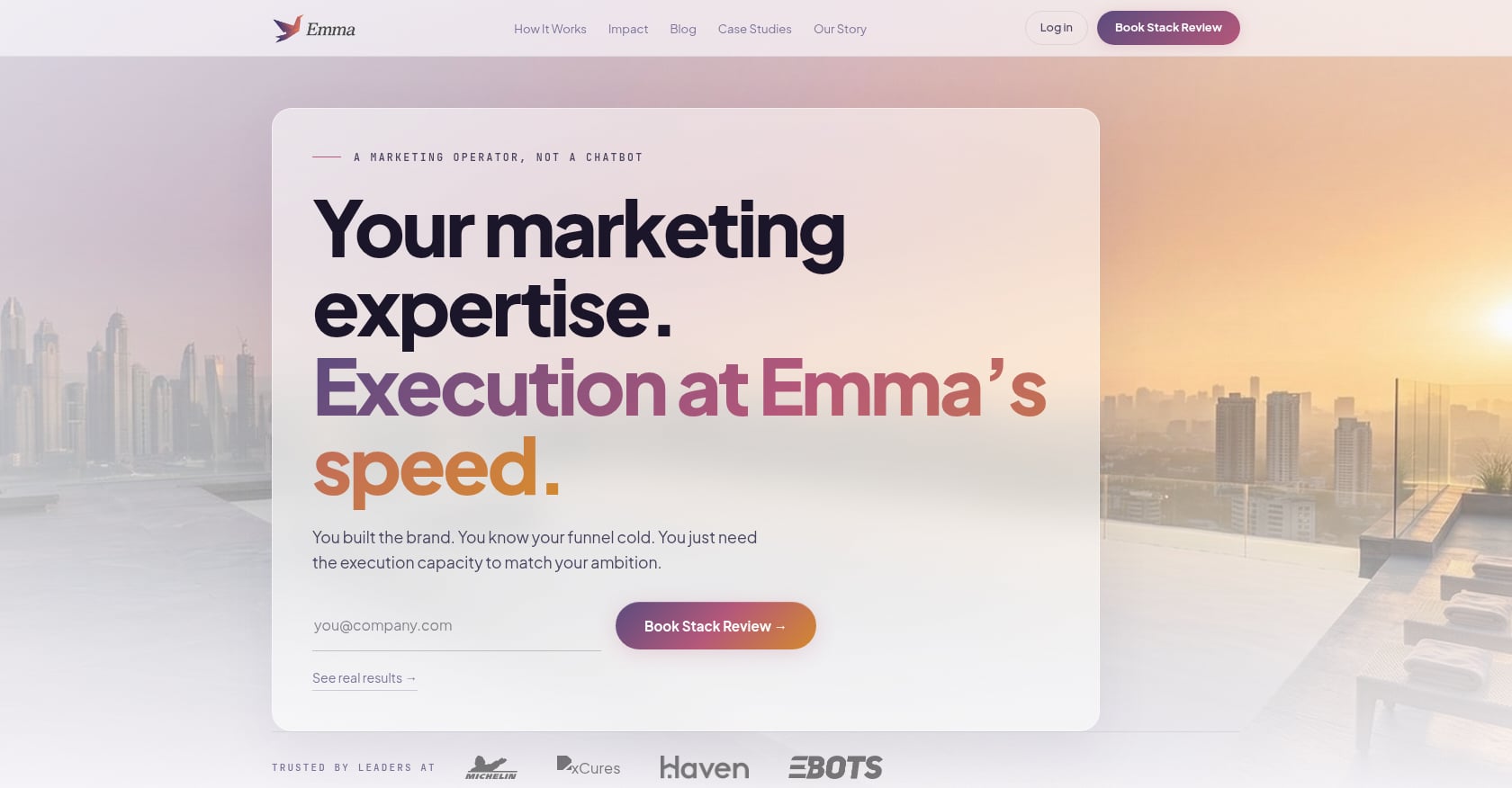
Best for: Startups that want an AI-led marketing engine with human operators behind it, especially when the team needs weekly campaign output and cannot afford to assemble a fragile stack of separate tools.
AgentWeb is not a contact database or a single-purpose automation tool. It is an AI plus human go-to-market execution service and platform that runs marketing for startups and lean teams using its agentic AI marketer, Emma, alongside a senior operator team.
Pricing:
- Self-serve platform (DIY): 7-day free trial, then $199 per month
- Custom workflows (AI-led co-pilot): seasonal pricing, contact sales at founders@agentweb.pro
- Done-for-you (human-led Growth Ops): seasonal pricing, contact sales at founders@agentweb.pro
- Done-for-you runs in 3-month sprints with the option to continue or spin down to DIY
Key features:
- Agentic AI marketer “Emma” for prompt-based campaign generation
- Prebuilt GTM workflows and templates
- On-brand content generation
- Engagement emails and performance tracking
- GTM strategy and roadmap (human-led in service tiers)
- Weekly campaign assets: social, blog, short-form video
- Founder brand support
- SEO foundation
- Weekly performance reviews
- Multichannel execution: paid, organic, email, SEO, creative asset production, lead magnets, landing pages, outbound campaigns in higher-touch plans
Tradeoffs:
- Not positioned as a cheap email finder or raw contact database
- Service-tier pricing requires contacting sales, which adds friction for self-qualifying buyers
- Best results require a founder or internal stakeholder to approve strategy, brand voice, and campaign direction
Why it fits autonomous lead generation:
Most autonomous lead-gen stacks still need someone to define the ICP, write positioning, build campaigns, check outputs, review performance, and iterate every week. AgentWeb combines its AI marketer with a senior operator team so startups can get the engine built and campaigns shipped without hiring a full marketing department. If you want to get predictable lead generation without making hires, this is the most complete path for early-stage teams.
The bottom line: If you want contacts, use a database. If you want complex enrichment workflows, use Clay or n8n. If you want cold email at scale, use Instantly or Lemlist. If you want a startup GTM engine that ships campaigns every week, AgentWeb is the more complete path.
2. Clay
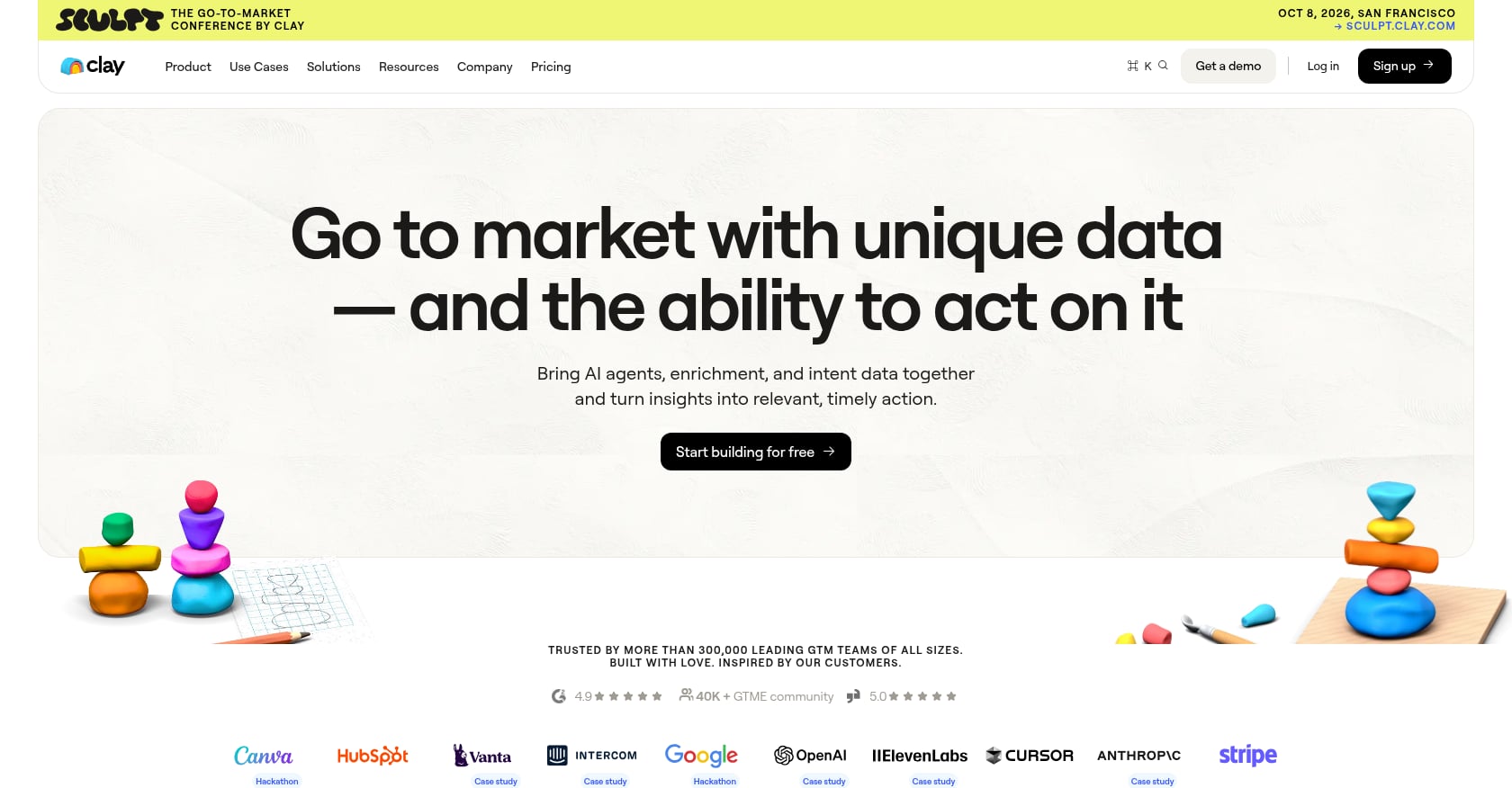
Best for: GTM engineers and technical growth operators who need custom enrichment workflows and complex signal-based targeting.
Clay aggregates data from over 100 providers into a spreadsheet-style interface where teams build enrichment and scoring logic without writing code. It is powerful, and it is popular among outbound-heavy teams that want granular control over how leads are sourced, enriched, and routed.
Pricing:
- Free plan available
- Starter: $143/mo
- G2 rating: 4.7/5 from 208 reviews
Key features:
- Aggregates 100+ data providers in one interface
- Real-time data scraping
- AI message writing
- 300+ attributes for filtering lead lists
- Integrations with Apollo, ChatGPT, Claude, HubSpot, Instantly, Make, Outreach, and Smartlead
Tradeoffs:
- Can become a full “GTM engineering” project that eats founder time
- Credit models and workflow complexity require careful monitoring
- G2 users praise automation and enrichment but note pricing becomes expensive at scale, and the learning curve is steep for new users
Real user perspective: On G2, the recurring theme is that Clay saves enormous time on enrichment and list building, but teams without a dedicated GTM engineer can get lost in the complexity. The tool rewards investment in learning it.
When to skip it: If you need someone to run the campaigns, not just enrich the data, Clay solves half the problem.
3. Apollo.io
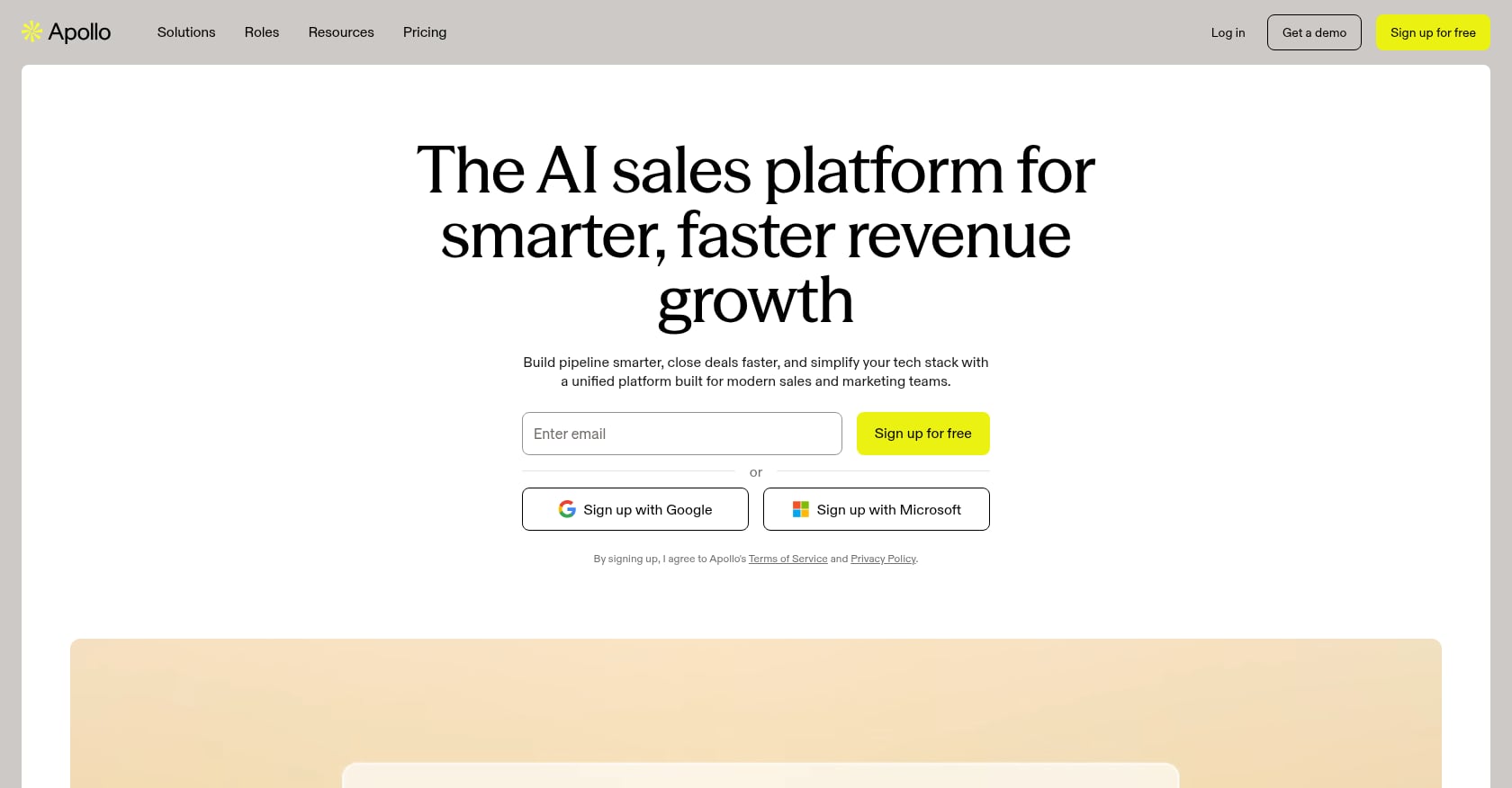
Best for: Founders and SDR teams that need one platform for prospecting, contact data, basic intent signals, sequences, and CRM-connected outbound.
Apollo is the tool most startups encounter first when searching for lead generation software. It covers a wide surface area at an accessible price point, which is both its strength and its limitation.
Pricing:
- Free plan available
- Basic: $49/user/mo
- Professional: $79/user/mo
- Organization: $119/user/mo (minimum 3 users)
- Plans include varying limits on email credits, mobile credits, exports, and buying-intent topics
Key features:
- Large B2B prospect database
- Email and mobile credits
- Sequence automation
- Buying-intent topic tracking
- LinkedIn and Gmail extensions
- Email reply and meeting tracking
- Salesforce and HubSpot integrations
- Dialer and call recordings on higher plans
Tradeoffs:
- Data freshness varies significantly by segment and geography
- Credit and seat economics get complex as teams scale
- G2 shows 4.7/5 from 9,609 reviews, with inaccurate data and missing features among the most common complaints
- Not a full autonomous GTM system by itself; still needs messaging strategy, deliverability governance, and iteration
Real user perspective: Practitioners on Reddit describe Apollo as hard to beat on price for all-in-one outbound, but users also note that teams often need manual cleanup, separate data sources, and external warmup once volume or targeting complexity increases.
When to skip it: Apollo is a strong starting point when the biggest problem is finding companies and contacts. It becomes weaker when the problem shifts to campaign strategy, brand voice, multichannel orchestration, and continuous iteration.
4. Instantly
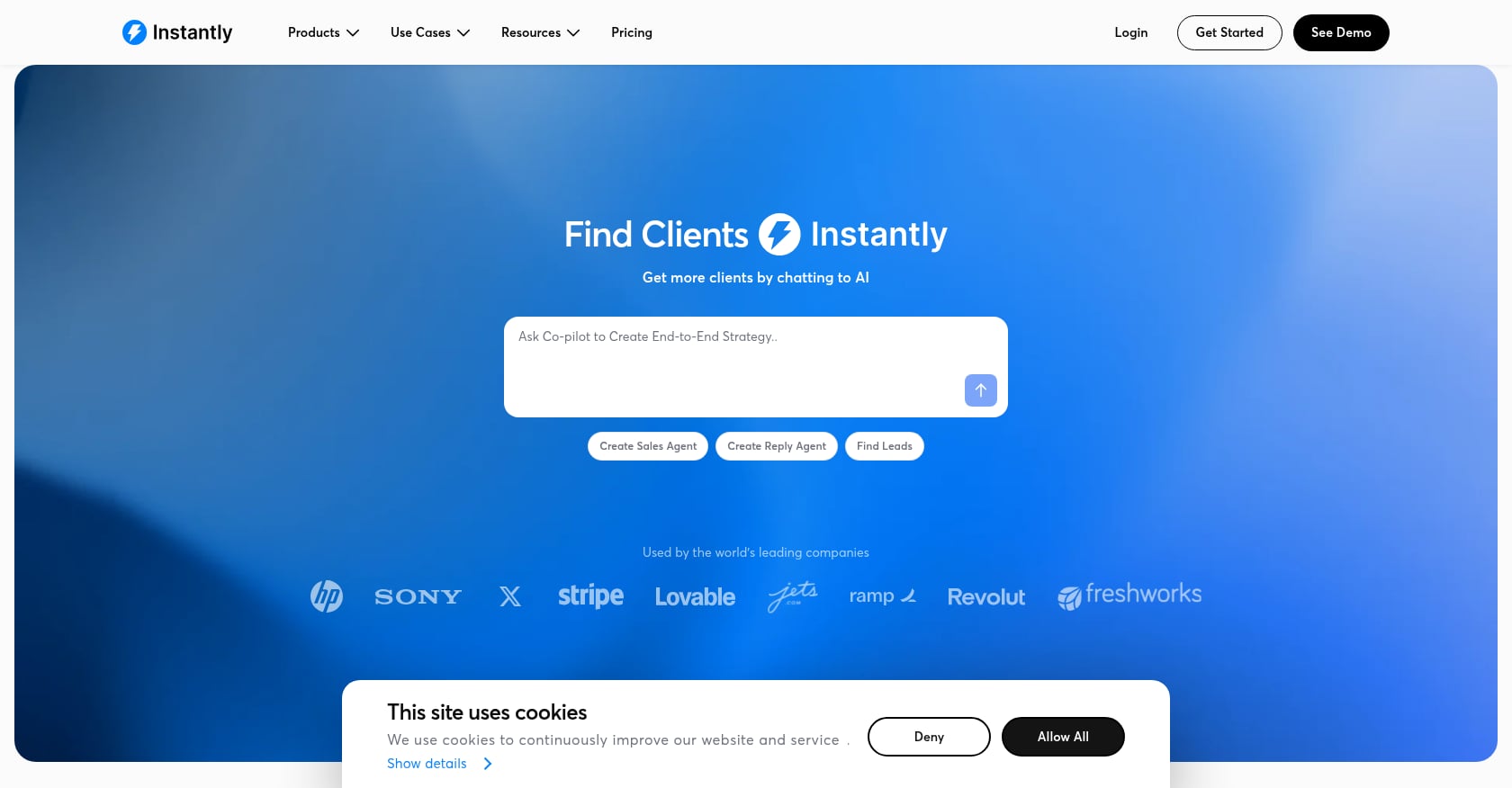
Best for: Agencies, service businesses, and outbound teams that already have lead lists and need to send, warm up inboxes, manage replies, and scale email campaigns.
Instantly has carved out a clear niche as the go-to cold email sending and deliverability platform. It does that one thing very well.
Pricing:
- Growth: $37/workspace/mo
- Hypergrowth: $97/workspace/mo
- B2B Leads Database add-on: starting at $47/mo for 1,000 verified leads
Key features:
- Unlimited email accounts
- Unlimited email warmup
- Advanced sequences
- Unibox for centralized reply management
- A/Z testing on higher tier
- API and webhooks on higher tier
- B2B lead database with keyword search, lookalike domains, and enrichment
Tradeoffs:
- Strong sending layer, but not a complete lead generation strategy
- Best when paired with good lead sourcing, enrichment, verification, and campaign messaging
- G2 shows 4.8/5 from 4,074 reviews; users praise ease of use and warmup but some complain about Microsoft email disconnections, confusing extra charges, and outdated leads in the database add-on
Real user perspective: One G2 reviewer praised email warmup, campaign management, and Unibox but noted that billing for add-ons was unclear. This is a common pattern with tools that have low base prices but layered feature costs.
For teams that want to understand email marketing automation tools more broadly, that guide covers the sending and deliverability fundamentals that matter regardless of which platform you pick.
When to skip it: If you do not have clean lists, a clear offer, and someone managing reply handling and iteration, Instantly will send a lot of emails that do not convert.
5. Lemlist
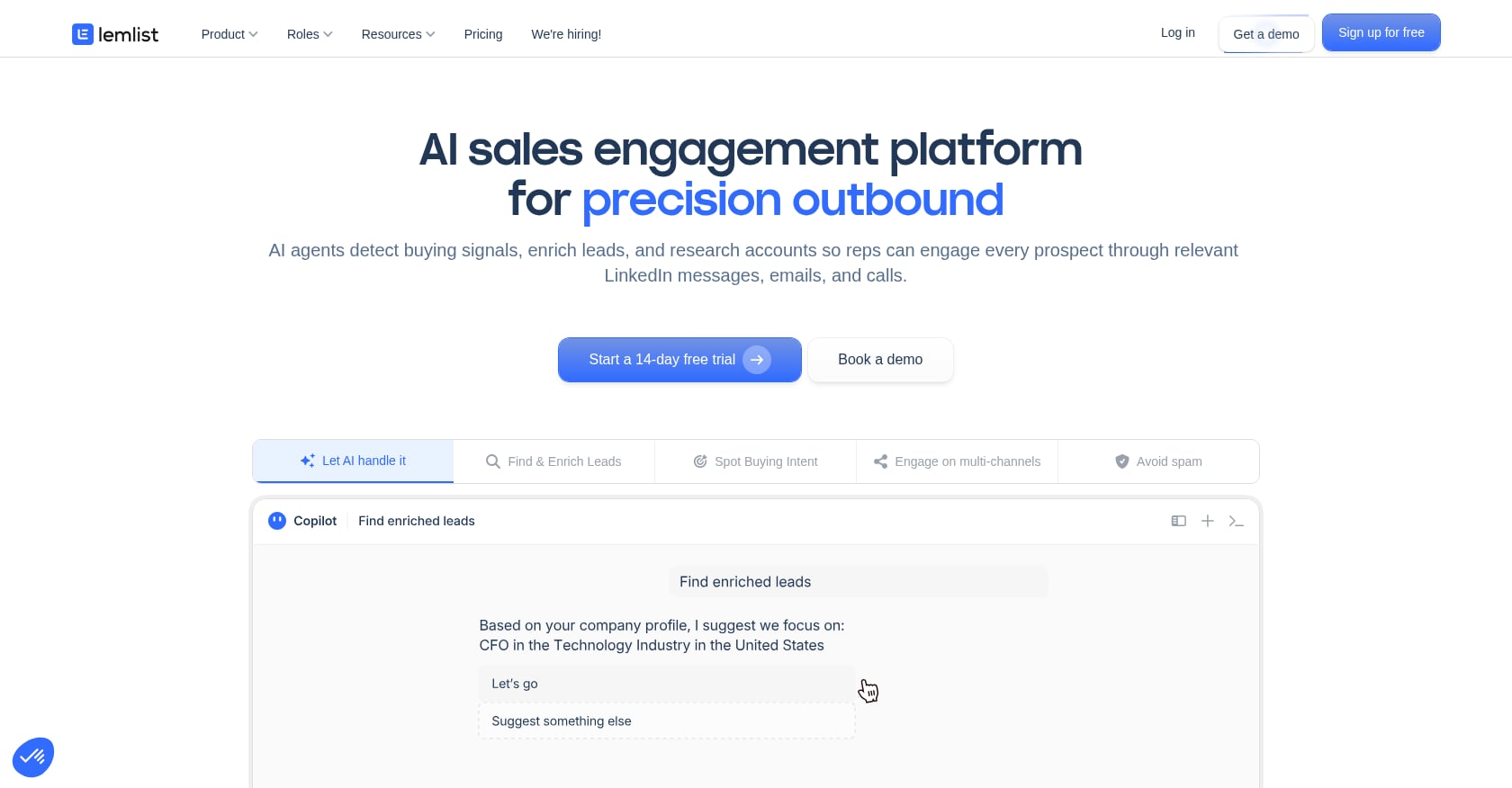
Best for: Teams that want email plus LinkedIn, calls, WhatsApp, and centralized multichannel outreach in one platform.
Lemlist’s differentiation is multichannel sequencing. Instead of just email, it lets you build follow-up flows that include LinkedIn visits, connection requests, messages, WhatsApp, and calling, all from one workflow.
Pricing:
- Free Chrome extension with limited credits
- Multichannel Expert: $87/mo
- Annual and quarterly discounts available
- Costs increase with additional seats, senders, and enrichment needs
Key features:
- Multichannel follow-ups across email, LinkedIn, WhatsApp, and calls
- AI-powered personalization
- Centralized multichannel inbox
- Leads database and enrichment credits on higher tiers
- CRM integrations, API, live support, and account manager on higher tiers
Tradeoffs:
- Better multichannel coverage than email-only tools
- G2 shows 4.6/5 from 1,487 reviews; users like the unified outreach concept but criticize pricing transparency and costs increasing at scale
- Still requires strong lead sourcing and message strategy upstream
Real user perspective: A practitioner on Reddit summarized outbound AI lead gen as three core problems: where contacts are sourced, how outreach is sequenced, and whether deliverability holds up. They mentioned Lemlist as a way to handle all three in one place, while advising teams to identify what is actually breaking before adding more tools.
If multichannel is the play but you lack the team to manage it, here is a guide on running multichannel campaigns without a dedicated team.
When to skip it: Lemlist is less compelling if you only need email sending or if the bigger gap is GTM strategy and weekly campaign execution.
6. HubSpot Marketing Hub
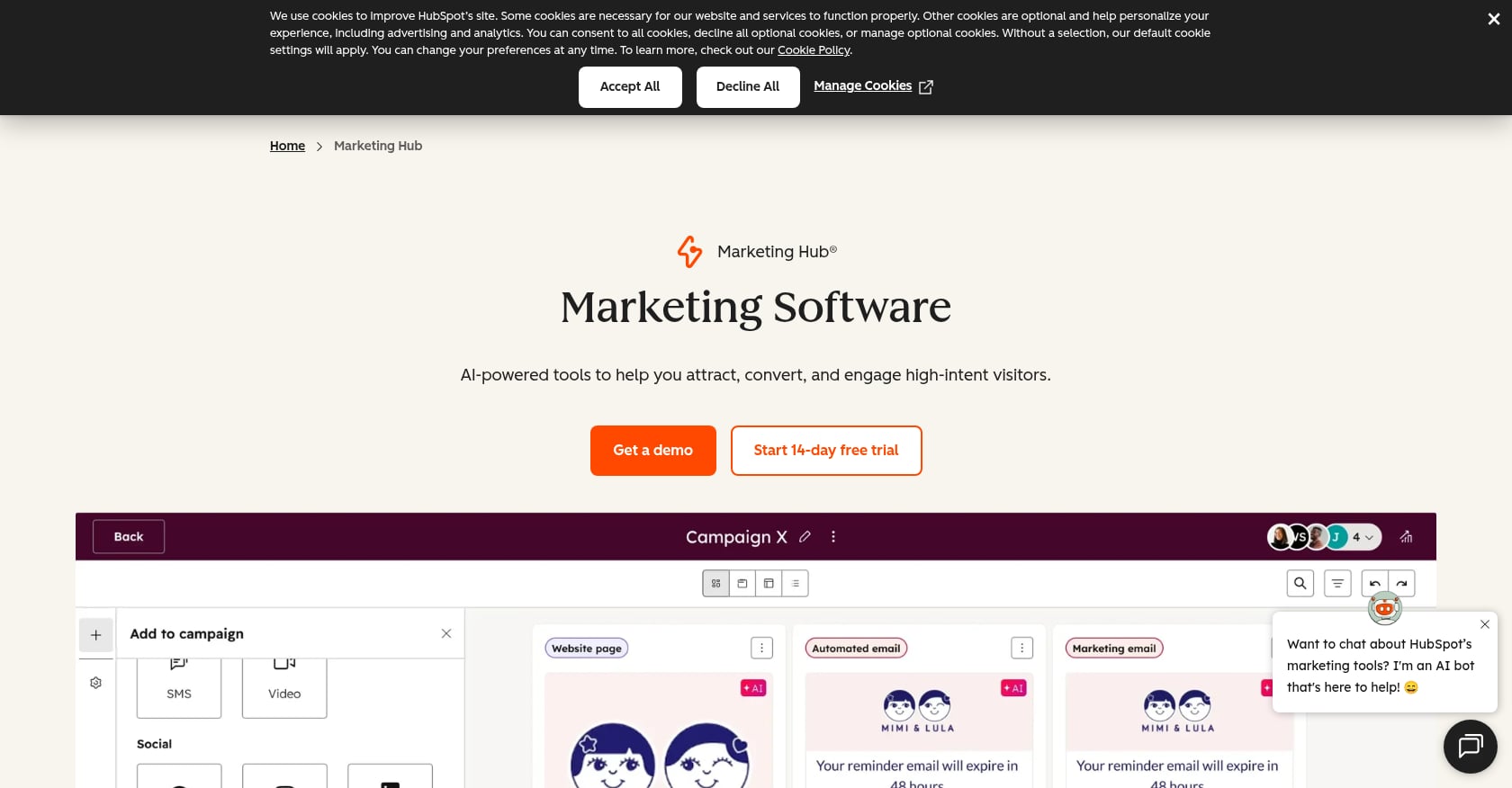
Best for: Teams that want inbound lead capture, forms, landing pages, email nurturing, CRM-connected workflows, and attribution in one system.
HubSpot is the default inbound marketing platform for a reason: it does a lot, it integrates tightly with its CRM, and the free tier is genuinely useful for getting started.
Pricing:
- Free: $0
- Starter: $20/core seat/mo
- Professional: $890/mo (3 core seats)
- Enterprise: $3,600/mo (5 core seats)
Key features:
- Forms, contact activity tracking, company insights
- Email marketing, lists, mobile optimization
- Blog/content tools, SEO, social media, CTAs, landing pages (Professional)
- Automation, goal-based nurturing, Salesforce integration, smart content, attribution (Professional)
- Multi-touch revenue attribution, predictive lead scoring, adaptive testing (Enterprise)
Tradeoffs:
- Excellent for inbound capture and lifecycle management
- The pricing jump from Starter to Professional is steep, and Reddit users frequently flag this as a frustration once teams need better automation, multiple hubs, or larger contact volumes
- Not primarily a cold outbound data engine
- HubSpot’s own ROI report says Marketing Hub customers see 3x inbound leads after six months and 54% higher lead conversion with AI features, but this is vendor-reported data, not independent benchmarks
Real user perspective: A G2 reviewer described HubSpot as an operational backbone for GTM automation, with workflows used for lead routing, lifecycle stage management, enrichment triggers, and attribution. The consensus is that it works well for inbound, but you pay significantly more once you outgrow the Starter tier.
For startups building a content marketing engine that feeds lead generation, HubSpot handles the capture and nurture side well once you have the traffic.
When to skip it: HubSpot is strong once a lead is in your ecosystem. It is less useful as a standalone autonomous prospecting engine unless paired with outbound, content, ads, or intent data.
7. ZoomInfo Sales
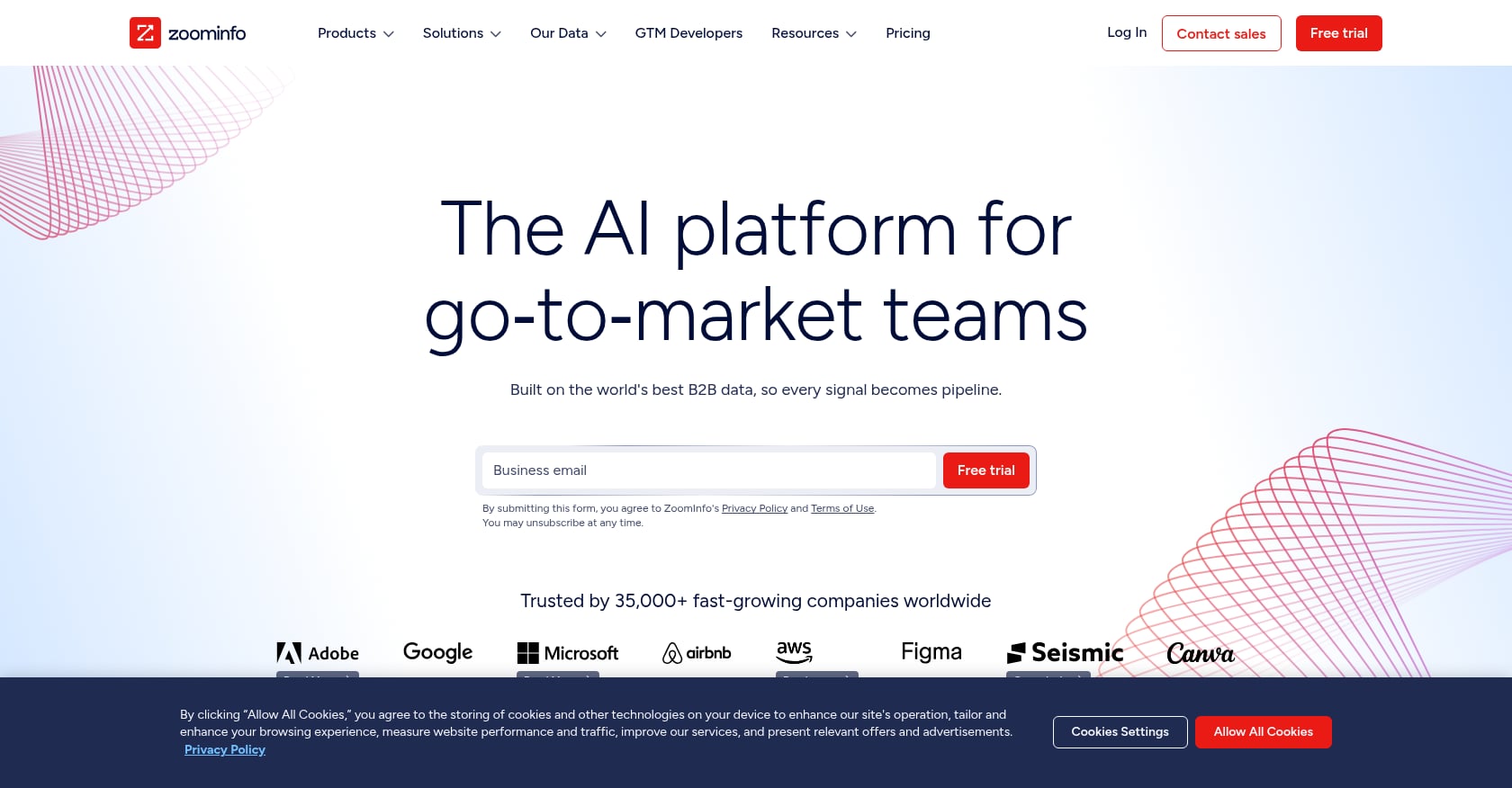
Best for: Mid-market and enterprise sales teams that need deep account data, mobile numbers, business emails, intent signals, and enterprise CRM integrations.
ZoomInfo is the heavyweight. Its data depth and intent capabilities are unmatched for teams that can afford it and operationalize it.
Pricing:
- Custom pricing across Professional, Copilot Advanced, and Copilot Enterprise
- G2 notes a high perceived cost rating and an average 14-month return on investment from review data
- Free trial available
Key features:
- Contact and company profiles with mobile numbers and business email
- Advanced search, prospect lists, and territory management filters
- CRM integrations (Salesforce, HubSpot)
- AI-powered email generation and personalization
- Copilot Advanced: account prioritization, buying intent, website visitors, champion tracking, job posting changes, GTM plays
- Copilot Enterprise: real-time buyer intent, sales activity automation, custom integrations, dedicated CSM, white-glove onboarding
Tradeoffs:
- G2 shows 4.5/5 from 9,081 reviews; users praise data depth and filters but commonly mention outdated contacts and inaccurate data
- Custom pricing and implementation complexity can slow evaluation
- Still requires a messaging, sequencing, and campaign operations layer
- Overkill for most pre-seed and seed-stage startups
Real user perspective: The consistent G2 feedback is that ZoomInfo’s contact coverage is vast, but no database is 100% accurate. Teams that succeed with it pair it with verification, suppression, and a disciplined outbound process.
When to skip it: ZoomInfo is a data advantage for teams that can afford it. It is not the leanest autonomous lead generation path for an early-stage startup.
8. n8n
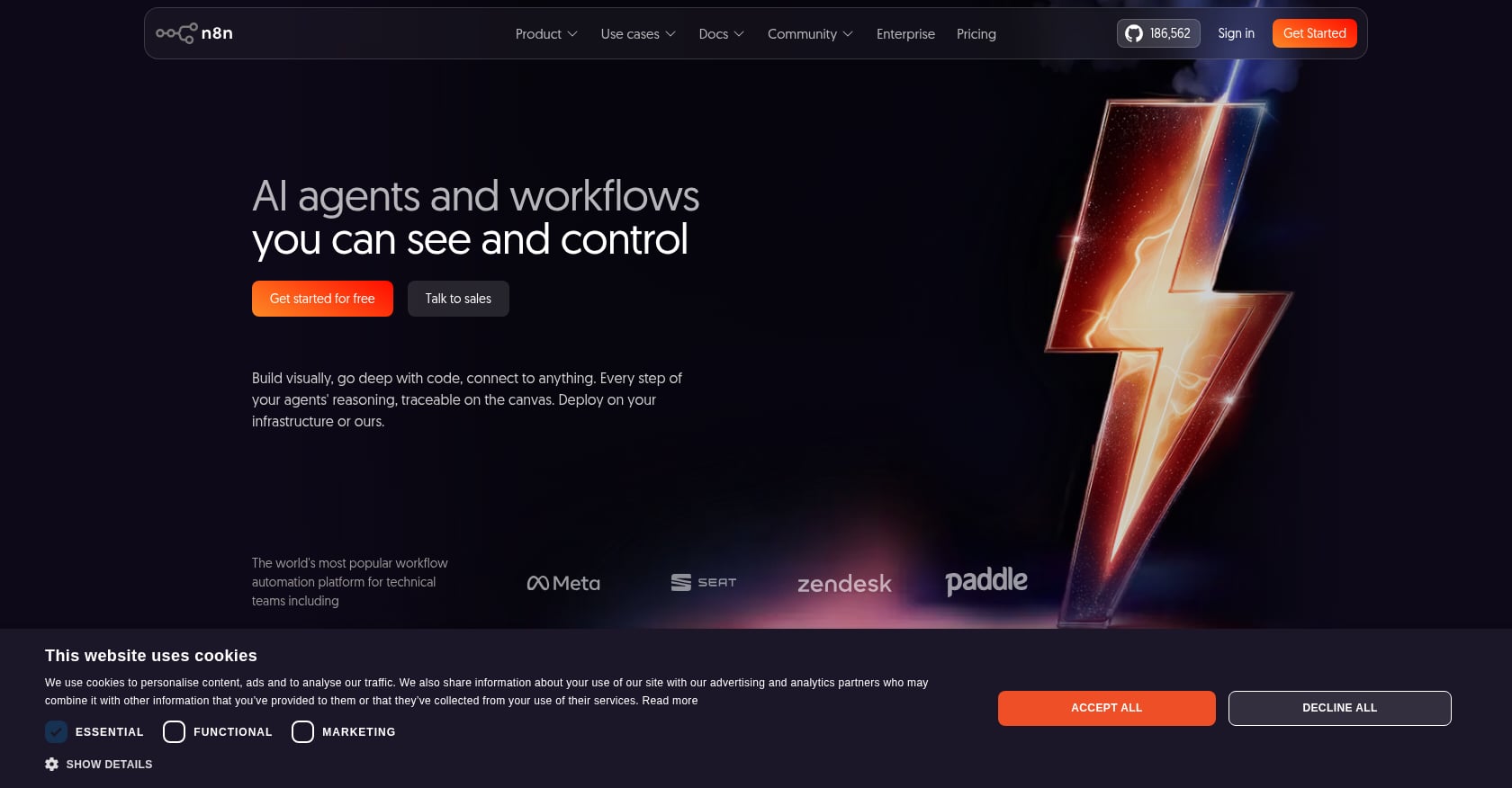
Best for: Technical founders, automation consultants, and GTM engineers who want to build custom lead generation workflows rather than buy a packaged platform.
n8n is an open-source workflow automation tool that lets you connect APIs, build logic chains, and create agentic workflows visually. For technical teams, it is the most flexible option on this list.
Pricing:
- Community edition: free (self-hosted via GitHub)
- Cloud Starter: €20/mo
- Cloud Pro: €50/mo
- Enterprise: custom pricing
Key features:
- Visual workflow builder with unlimited-step executions
- Unlimited users on Starter
- Shared projects, admin roles, workflow history on Pro
- Enterprise includes self-hosting, SSO/SAML/LDAP, Git version control, scaling options, and dedicated support
- Connects to virtually any API, data provider, or AI model
Tradeoffs:
- Extremely flexible but not beginner-friendly
- The “free” route can become expensive through APIs, data providers, hosting, monitoring, and engineering time
- G2 shows 4.7/5 from 271 reviews; users praise affordability and control but note advanced configuration requires JavaScript and data-structure knowledge
- Can create security and maintenance risk if self-hosted poorly
Real user perspective: A Reddit user building an autonomous B2B lead-gen engine in n8n described a workflow that scrapes leads, enriches and validates emails, filters and scores with an LLM, personalizes outreach, sends and follows up, and syncs to Google Sheets. The strongest reply warned against building one long workflow, recommending instead: state machines, idempotency keys, suppression lists, unsubscribe handling, bounce and out-of-office classification, catch-all handling, rate limits, SPF/DKIM/DMARC checks, retry queues, and a dead-letter table.
That level of infrastructure work is exactly what separates “I built a cool workflow” from “I have a production autonomous lead generation system.”
When to skip it: n8n is the best option if you want to own the machine. It is the wrong option if you want someone else to own the outcomes.
Recommended Autonomous Lead Generation Stacks by Startup Stage
Pre-seed founder with no marketer
Best path: AgentWeb self-serve or co-pilot tier.
Why: Templates, workflows, prompt-based campaign generation, brand consistency, and performance tracking without needing to hire. The goal at this stage is shipping campaigns, not configuring software. You can build a 90-day go-to-market plan as a solo founder with the right system behind you.
Seed-stage team validating outbound
Best path: AgentWeb co-pilot, or AgentWeb plus Apollo/Instantly for teams that want hands-on control of the data layer.
Why: Faster experimentation with human review. At this stage, you are testing ICP segments and offers, not scaling a proven motion. Speed of iteration matters more than volume.
Seed to Series A scaling a validated motion
Best path: AgentWeb done-for-you Growth Ops, or Clay plus Instantly plus CRM if the team has a GTM engineer.
Why: Weekly iteration, creative, outbound, content, and performance reviews. The 3-month sprint model lets you scale what works and spin down what does not.
Technical founder who wants to own infrastructure
Best path: n8n plus Apollo or Clay plus Instantly plus email verification plus CRM.
Why: Maximum flexibility and control. But budget 10 to 15 hours per week for setup, maintenance, QA, and troubleshooting.
Enterprise sales team
Best path: ZoomInfo plus HubSpot or Salesforce plus enrichment plus sales engagement platform.
Why: Data depth, intent signals, CRM governance, and multi-stakeholder deal cycles require enterprise-grade infrastructure.
What Autonomous Lead Generation Tools Still Do Not Solve
Every “autonomous” tool on this list leaves gaps. Here is what the software will not fix for you.
ICP clarity. No tool can target the right companies if you have not defined who they are, why they buy, and what triggers action. McKinsey research shows that genAI can help categorize leads and personalize outreach, but only after the strategic inputs are clear.
Offer quality. A perfectly targeted email with a weak offer still gets ignored.
Deliverability. Practitioners on Reddit consistently flag this as the silent failure point. Domain health, SPF/DKIM/DMARC configuration, bounce rates, inbox rotation, and warmup protocols determine whether your messages reach inboxes or spam folders.
Compliance. CAN-SPAM, GDPR, and platform-specific rules do not go away because you automated the sending.
Reply handling. Positive replies need fast, thoughtful human responses. Objections, pricing questions, partnership inquiries, and procurement conversations cannot be delegated to a bot.
Weekly iteration. Lead quality beats lead volume every time. In Reddit discussions about n8n AI workflows, commenters said the weak spot is usually lead quality, not volume, and that intent signals plus feedback loops improve timing and fit over time. That requires someone reviewing results and adjusting the system every week.
Brand voice. Automated personalization that sounds generic or off-brand damages trust. Founder-led outreach, especially on LinkedIn and in warm channels, still requires a human touch.
Data freshness. People change jobs. Companies pivot. Email addresses go stale. Every contact database degrades over time, and no enrichment tool is 100% accurate.
The best autonomous lead generation systems are not magic AI employees. They are governed workflows with clear inputs, human approvals, clean data, and feedback loops.
Autonomous Lead Generation Checklist
Before trusting any autonomous lead-gen tool, confirm these items are in place:
- [ ] ICP defined with clear firmographic, technographic, and behavioral criteria
- [ ] Exclusion criteria documented (who you do not want to reach)
- [ ] Verified data source for contacts and companies
- [ ] Signal-based scoring: fit plus intent plus timing plus reachability
- [ ] Email verification before sending
- [ ] Suppression list for existing customers, competitors, and opt-outs
- [ ] Unsubscribe handling that complies with CAN-SPAM and GDPR
- [ ] SPF, DKIM, and DMARC configured on all sending domains
- [ ] Reply classification (positive, negative, out-of-office, bounce)
- [ ] Human QA on the first 20 to 50 leads before scaling
- [ ] Weekly campaign review covering open rates, reply rates, bounce rates, and conversions
- [ ] Attribution and pipeline tracking connecting outreach to revenue
This checklist draws on the architecture advice from a Reddit n8n thread where a practitioner outlined the infrastructure that separates a demo workflow from a production system. If your current setup does not handle most of these, you are not running autonomous lead generation. You are sending unsupervised emails.
Not sure if your current GTM workflow is ready? AgentWeb’s free AI evaluation can help you identify the gaps before committing to a tool or service.
FAQ
What is autonomous lead generation?
Autonomous lead generation uses AI agents, automation, data sources, and human oversight to continuously find, qualify, engage, and learn from prospects with minimal manual intervention. It goes beyond basic automation by incorporating decision logic, feedback loops, and governance, not just scheduled tasks.
Is autonomous lead generation the same as an AI SDR?
Not exactly. An AI SDR typically automates parts of the outbound sales development role, like writing emails or scheduling follow-ups. Autonomous lead generation is broader: it covers the entire system from data sourcing and enrichment through engagement, reply handling, and iteration. An AI SDR might be one component of an autonomous lead-gen stack.
Can AI fully automate lead generation?
Not reliably. AI handles repeatable execution well: scraping, enriching, scoring, writing first drafts, and sending at scale. But ICP definition, offer strategy, brand voice, compliance decisions, complex reply handling, and weekly iteration still require human judgment. The winning model is AI execution with human oversight.
What is the best autonomous lead generation tool for startups?
It depends on the bottleneck. For startups that need complete GTM execution shipped weekly without building a team, AgentWeb offers the most integrated path. For teams that have a GTM engineer and want granular enrichment control, Clay is strong. For budget-conscious teams that mainly need contact data and sequences, Apollo is a solid starting point.
How much does autonomous lead generation cost?
Subscription prices range from free tiers to thousands per month, but the real cost includes credits, seats, email verification, enrichment, sending infrastructure, CRM sync, copywriting, strategy, human QA, and founder time. A $49/month tool can easily cost $2,000+ per month once you account for everything needed to make it work.
What is the safest way to use AI for outbound lead generation?
Configure SPF, DKIM, and DMARC on all sending domains. Use email verification before every send. Maintain suppression and unsubscribe lists. Classify replies (bounces, out-of-office, positive, negative). Start with low volume and scale only after confirming inbox placement. Have a human review the first batch of leads and messages before automation runs at full speed.
Should I build a lead generation stack or use a managed service?
Build if you have a technical operator who can maintain the system, a clear ICP that is already validated, and the time to iterate weekly. Use a managed service if you need output quickly, do not have a dedicated GTM engineer, or want someone else to own the campaign quality and iteration cycle.
What metrics should I track for autonomous lead generation?
Track reply rate (not just open rate), positive reply rate, bounce rate, unsubscribe rate, deliverability score, lead-to-meeting conversion rate, meeting-to-opportunity conversion rate, cost per qualified lead, and pipeline generated per campaign. Volume metrics alone are misleading; focus on quality signals that connect to revenue.
Get a free Stack Review.
30 min with Harsha and Matt.
We audit your last 30 days, pinpoint the highest-impact fixes, and hand you the exact playbook we'd run. No deck. No pitch unless there's a fit.